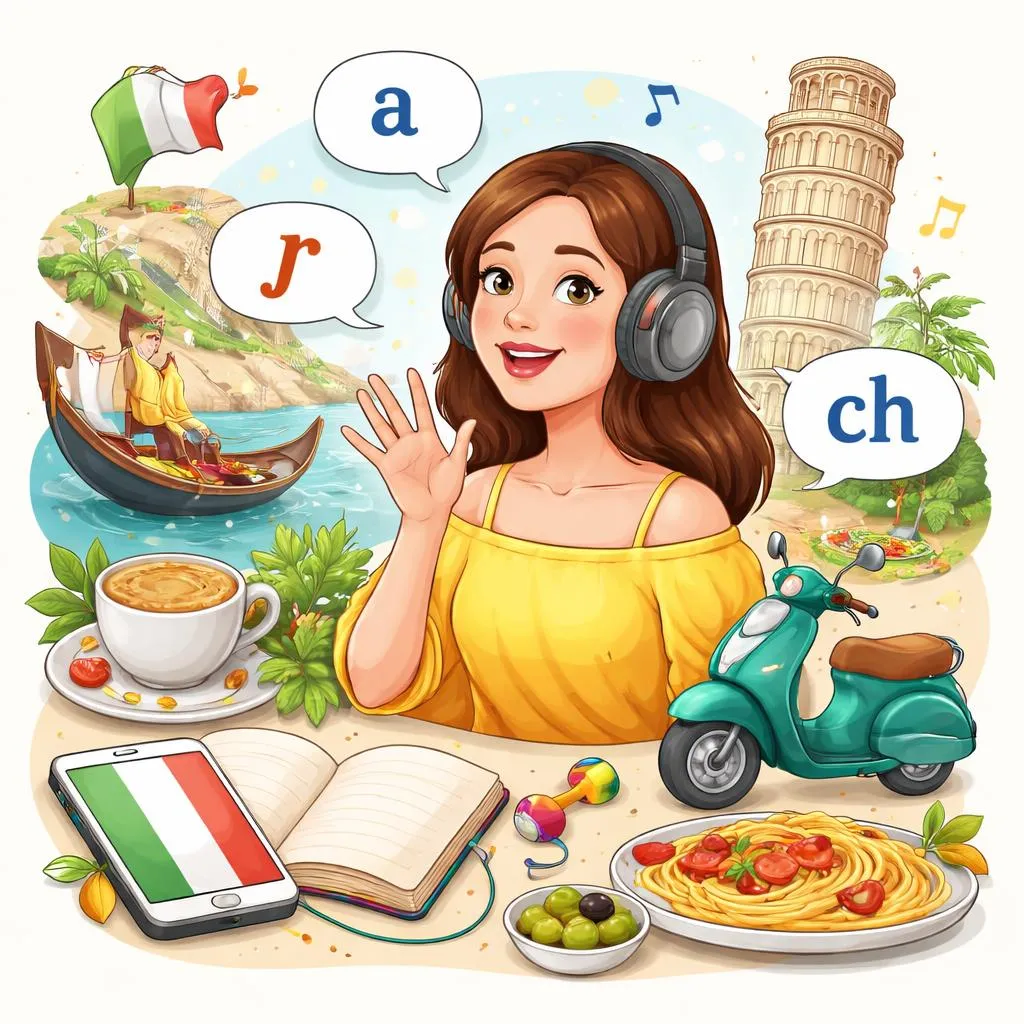

Italian sounds feel musical.
Many people notice this first. Italian pronunciation flows smoothly.
Children often enjoy hearing Italian words.
Italian pronunciation is clear and steady.
Letters usually sound the same each time. This makes learning feel friendly.
Children feel less confused.
Italian uses the Latin alphabet.
The letters look familiar. This helps beginners feel comfortable.
The sounds may feel new.
Vowels are very important in Italian pronunciation.
There are five main vowels. A E I O U
Each vowel has a clear sound.
Italian vowels do not change much.
A sounds like ah. E sounds like eh. I sounds like ee.
O sounds round. U sounds like oo.
Children enjoy clear vowel sounds.
They can hear them easily. They can repeat them easily.
Italian pronunciation supports early speaking.
Consonants also matter.
Many consonants sound similar to English. Some sound different.
Listening helps learning.
The letter C changes sound.
Before A, O, and U it sounds hard. Before E and I it sounds soft.
Children learn this by hearing words.
The letter G also changes.
It sounds strong before A, O, and U. It sounds soft before E and I.
Italian pronunciation follows patterns.
The letter H is silent.
It does not make a sound. It helps change other sounds.
Children notice this quickly.
Double letters are important in Italian pronunciation.
They sound longer. They sound stronger.
This difference matters.
For example, papa and pappa sound different.
One feels short. One feels longer.
Children enjoy clapping for long sounds.
Rolling the R is part of Italian pronunciation.
The sound comes from the tongue. It feels playful.
Children may practice slowly.
Not everyone rolls the R perfectly at first.
This is normal. Practice comes with time.
Listening helps more than forcing.
Italian words often end with vowels.
This makes the language sound open. It sounds smooth.
Children like this rhythm.
Stress is important in Italian pronunciation.
One part of the word sounds stronger. Other parts sound softer.
Stress helps meaning.
Children learn stress by listening.
They copy what they hear. They repeat phrases.
Songs help a lot.
Italian pronunciation works well with music.
Songs repeat sounds. Songs repeat rhythm.
Learning feels joyful.
Short words are good for beginners.
Mamma. Papa.
Children say these words easily.
Italian pronunciation supports clear reading.
Words are read as written. There are few surprises.
This builds confidence.
Children enjoy matching letters and sounds.
They point to letters. They say the sound.
Learning feels active.
Teachers often slow down speech.
They speak clearly. They repeat words.
Children follow easily.
Listening is key.
Children hear real Italian. They notice patterns.
Understanding grows naturally.
Italian pronunciation includes soft sounds.
The letter L sounds smooth. The letter N sounds gentle.
Words feel warm.
Some sounds feel new.
GN sounds like ny. GLI sounds like ly.
Children learn these slowly.
Pictures help with pronunciation.
A picture shows an object. The teacher says the word.
Sound and image connect.
Italian pronunciation works well with stories.
Stories repeat words. Stories use rhythm.
Children stay engaged.
Mistakes are part of learning.
Children may mix sounds. This is normal.
Correction comes gently.
Teachers model correct sounds.
They repeat naturally. They do not interrupt flow.
Children adjust over time.
Italian pronunciation supports confidence.
Clear sounds help speaking. Children feel understood.
This motivates practice.
Daily routines support learning.
Greeting words. Simple phrases.
Pronunciation improves with use.
Children may speak slowly at first.
This is good. Accuracy matters more than speed.
Italian pronunciation rewards patience.
Short phrases help beginners.
Come stai. Va bene.
Children repeat easily.
The rhythm of Italian pronunciation feels steady.
It moves forward. It does not stop sharply.
This supports fluency.
Italian pronunciation also helps listening skills.
Children recognize words faster. They follow speech better.
Understanding grows.
Games support pronunciation practice.
Echo games. Repeat after me.
Children enjoy these activities.
Italian pronunciation includes clear syllables.
Each syllable is heard. Nothing is swallowed.
Children like this clarity.
Clapping syllables helps learning.
Children clap and speak. They feel rhythm.
Movement supports memory.
Italian pronunciation appears in daily words.
Food names. Music terms.
Children recognize familiar sounds.
Learning pronunciation builds a strong base.
It supports speaking. It supports listening.
Everything connects.
Children do not need perfect pronunciation.
They need confidence. They need practice.
Progress comes naturally.
Teachers often praise effort.
They encourage speaking. They encourage listening.
This builds motivation.
Italian pronunciation becomes easier with exposure.
The more children hear it, the more natural it feels.
Over time, children recognize sounds quickly.
They do not stop to think. They just speak.
This shows growth.
Italian pronunciation stays consistent.
This helps long-term learning. It reduces confusion.
Children feel safe.
Learning sounds opens the door to words.
Words open the door to stories. Stories open the door to culture.
Language feels alive.
Italian pronunciation connects sound and meaning.
Children hear. Children speak.
Communication grows.
Each new sound adds confidence.
Each repeated word adds comfort.
Learning continues.
Little by little, Italian pronunciation becomes familiar.
The language feels friendly.
Children often like to repeat Italian sounds slowly.
They listen first. They speak next.
This order helps confidence grow.
Morning practice works well.
Children are calm. Their ears are ready.
Italian pronunciation sounds clear at this time.
Teachers may start with greetings.
Ciao. Buongiorno.
These words feel friendly and warm.
Repeating greetings builds comfort.
Children smile. They feel successful.
Language feels welcoming.
Italian pronunciation becomes easier with routine.
The same sounds appear again. Memory grows stronger.
Call and response games help a lot.
The teacher says a word. Children repeat together.
Group speaking feels safe.
Some children enjoy speaking alone.
They say a word softly. They listen to themselves.
This builds awareness.
Italian pronunciation also improves through listening games.
Children listen for a sound. They point to a picture.
Attention stays focused.
Daily objects support practice.
A table. A book.
The teacher names the object. Children repeat the sound.
Food words are very popular.
Pizza. Pasta.
Children enjoy saying these words.
Italian pronunciation feels fun with food names.
The sounds feel round. The rhythm feels light.
Learning feels playful.
Teachers often slow down tricky sounds.
They repeat calmly. They exaggerate gently.
Children follow naturally.
The sound pace matters.
Slow speech helps clarity. Fast speech comes later.
Accuracy comes first.
Italian pronunciation supports early reading.
Children sound out words. They match letters to sounds.
This builds confidence.
Short sentences help pronunciation practice.
Io mangio. Io canto.
Children repeat with ease.
Songs with clear rhythm are helpful.
They repeat sounds. They repeat patterns.
Music supports memory.
Children often move while speaking.
They clap. They tap.
Movement helps rhythm.
Italian pronunciation feels smoother with rhythm.
Words flow together. Speech feels natural.
Children enjoy this flow.
Mistakes still appear.
Children may change a sound. This is part of learning.
Gentle modeling helps.
Teachers repeat the correct sound naturally.
They do not stop the child. They keep communication going.
Learning feels safe.
Listening to short stories helps too.
Stories repeat words. Sounds become familiar.
Children stay engaged.
Italian pronunciation grows with exposure.
The more children hear, the more confident they feel.
Home practice can be simple.
Listening to songs. Repeating words.
Short moments matter.
Children feel proud when sounds feel right.
They notice improvement. They want to speak more.
Motivation grows.
Italian pronunciation supports speaking confidence.
Children speak louder. They speak clearer.
Communication improves.
Each new sound adds comfort.
Each repeated word adds strength.
Learning moves forward.
Little by little, Italian pronunciation feels natural and friendly.