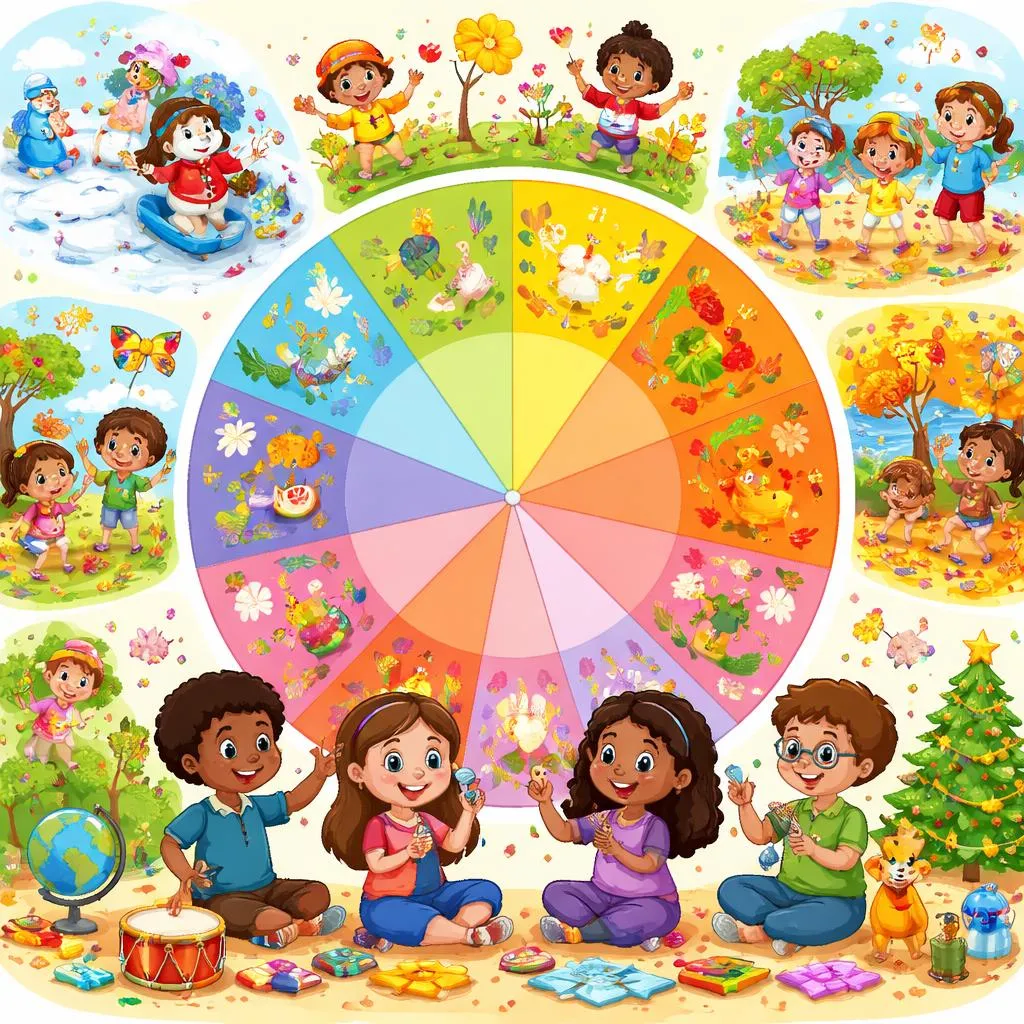

What Are the 12 Months? The 12 months are the main parts of the calendar year. Each month has a name, a number of days, and special events. The months help organize days, weeks, and seasons. Learning the 12 months is important for understanding time. Songs, games, and visual aids make it easier for children to remember. The months are repeated every year in the same order.
January starts the year and is part of winter in the Northern Hemisphere. February is known for Valentine’s Day and is usually 28 days long. March begins spring and often brings warmer weather. April has showers that help flowers grow. May is full of blooming plants and celebrations. June starts summer and longer daylight hours.
July and August are summer months with holidays and outdoor activities. September begins autumn and school usually starts. October is known for Halloween in many countries. November includes Thanksgiving in some cultures and cooler days. December ends the year with holidays like Christmas and New Year. Learning the months helps children understand seasonal changes and planning.
Meaning and Explanation Each month has unique characteristics. Months can be linked with seasons to help children understand patterns. For example, winter months are colder and often have snow. Spring months bring growth and flowers. Summer months are warm and perfect for outdoor fun. Autumn months show leaves changing color and cooler weather.
Months have cultural and traditional significance. Children can connect months to birthdays, holidays, and festivals. Learning months also develops time awareness. Months help children understand daily, weekly, and yearly routines. Songs and stories help children remember months in order. The repetition of months strengthens memory naturally.
Categories or Lists The 12 months can be grouped by seasons. Winter: December, January, February Spring: March, April, May Summer: June, July, August Autumn: September, October, November
Grouping months by season helps children connect time with nature. Lists of months also support number sequences and counting skills. Months can be matched with weather, holidays, and activities. Children learn patterns in the calendar and language simultaneously. Visual charts showing months in order are useful learning tools. Using months in lists also strengthens pronunciation and spelling skills.
Daily Life Examples Months appear in many everyday situations. Calendars, planners, and clocks all use month names. Talking about birthdays introduces children to months naturally. School schedules are organized by months. Weather reports mention months and seasonal changes. Family trips and holidays also follow the calendar months.
Children can track events and plan small projects using months. Month names appear in songs, stories, and poems. Using months in real-life contexts reinforces understanding. Children practice speaking, reading, and writing month names. Connecting months to activities increases engagement and memory. Daily exposure to months helps children internalize the calendar structure.
Printable Flashcards Flashcards can feature each month with its name, number, and season. Illustrations show weather, holidays, or typical activities for each month. Children can practice pronunciation and spelling with flashcards. Matching games with flashcards reinforce memory and order. Flashcards also support group activities and classroom learning. Teachers and parents can create fun games with month flashcards.
Learning Activities and Games “Sing the Months Song” helps children remember the order of months. “Month Matching” pairs months with seasons, holidays, or pictures. “Calendar Puzzle” asks children to put months in order on a board.
Activities combine visual, auditory, and physical learning. Games with months develop sequencing, memory, and language skills. Children learn to recognize month names and associate them with time. Interactive play supports listening, speaking, and cooperation. Songs and movement make learning months fun and memorable. Children can also create their own calendars with drawings and events.
Singing, games, and flashcards make learning the 12 months effective. Children develop vocabulary, sequencing skills, and time awareness naturally. Months also support understanding of seasons, holidays, and daily routines. The combination of repetition, rhythm, and interactive play strengthens memory. Children gain confidence in reading, speaking, and recognizing calendar words. Learning the 12 months becomes enjoyable, engaging, and educational.