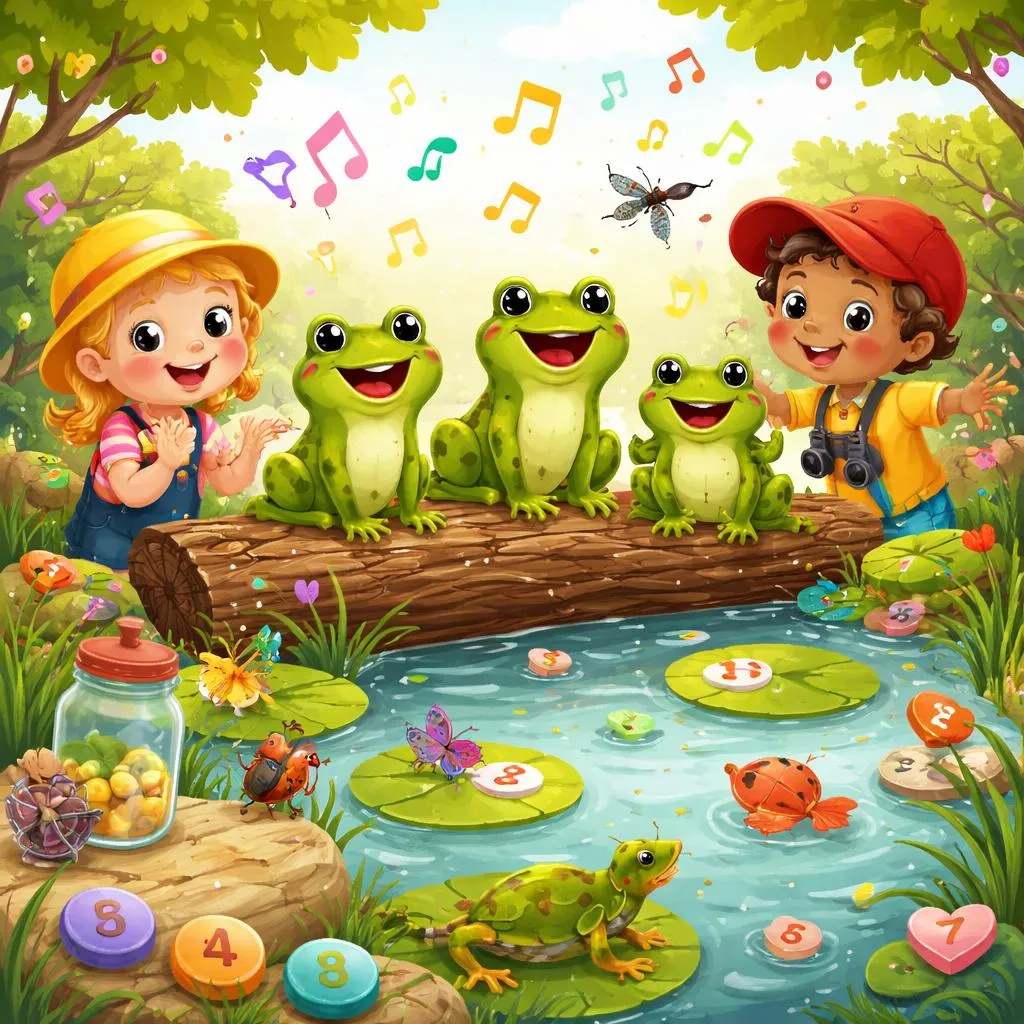

Songs create a warm and welcoming classroom. Music opens the door to language learning in a natural way. As a teacher, guiding children through songs feels joyful and meaningful. One classic song stands out for early English learning. The speckled frog nursery rhyme brings rhythm, repetition, and clear language together. This rhyme supports listening skills and early speaking skills at the same time.
In many classrooms, this rhyme becomes a daily favorite. It fits circle time. It fits story time. It fits movement time. The words feel simple. The story feels clear. The learning feels gentle and fun.
This article explores how the speckled frog nursery rhyme supports English learning. Each part focuses on teaching ideas that work well with children, parents, and teachers. The tone stays friendly and encouraging. The language stays clear and calm.
What Is the Speckled Frog Nursery Rhyme?
The speckled frog nursery rhyme is a traditional English counting song. Many people know it as “Five Little Speckled Frogs.” The song tells a short story about frogs sitting on a log. One frog jumps into a pool at a time. The number of frogs becomes smaller with each verse.
In the classroom, this rhyme works as more than a song. It becomes a learning tool. The story shows numbers going down. The actions feel easy to act out. The repeated lines help memory grow.
As a teacher, introducing this rhyme feels smooth. Children listen first. Then they join in naturally. The rhyme supports confidence without pressure.
The Lyrics of the Speckled Frog Nursery Rhyme
Lyrics matter in language learning. Clear words and steady rhythm help children follow along. Below is the most common version of the speckled frog nursery rhyme used in classrooms.
Five little speckled frogs Sat on a speckled log Eating some most delicious bugs Yum, yum
One jumped into the pool Where it was nice and cool Now there are four green speckled frogs Glub, glub
Four little speckled frogs Sat on a speckled log Eating some most delicious bugs Yum, yum
One jumped into the pool Where it was nice and cool Now there are three green speckled frogs Glub, glub
The song continues until no frogs remain on the log.
When teaching these lyrics, singing slowly helps. Clear pronunciation helps even more. Pausing between lines gives time for understanding. Actions make the meaning visible.
Vocabulary Learning Through the Rhyme
Vocabulary learning feels natural with this song. The words appear again and again. Repetition supports memory. Context supports meaning.
Important words in the speckled frog nursery rhyme include frog, log, pool, bugs, green, and jump. Each word connects to a picture or an action. That connection helps children remember.
In the classroom, pointing to pictures while singing works well. Using hand movements for jump and eat adds clarity. The word speckled becomes easier when shown with dots on a frog picture.
Teachers often repeat key words before singing. Saying frog, log, and pool slowly helps listening skills grow. The song then reinforces those words in a joyful way.
Phonics Points in the Speckled Frog Nursery Rhyme
Phonics learning begins with sound awareness. This rhyme supports that goal gently. Many words share similar sounds.
The frog and log rhyme helps children hear ending sounds. The words pool and cool support long vowel sounds. The repeated yum, yum and glub, glub add playful sound effects.
During singing time, drawing attention to these sounds feels easy. Stretching the vowel in pool helps children hear it clearly. Emphasizing the ending sound in frog and log builds rhyme awareness.
Clapping on rhyming words adds movement and focus. Listening comes first. Speaking follows naturally.
Grammar Patterns in the Rhyme
Grammar learning does not need heavy explanation. This rhyme shows grammar in action.
The phrase “one jumped into the pool” uses the past tense in a simple way. The structure “now there are four” shows present tense clearly. Numbers change, but the sentence pattern stays the same.
This repetition helps children notice patterns. Over time, those patterns feel familiar. No grammar rules need explaining. Exposure does the work.
As a teacher, repeating the sentence with different numbers supports understanding. Saying “now there are three” or “now there are two” keeps grammar clear and consistent.
Learning Activities With the Speckled Frog Nursery Rhyme
Learning grows when songs turn into activities. The speckled frog nursery rhyme offers many classroom options.
Singing with finger puppets adds visual support. Each frog puppet represents one number. Removing one puppet with each verse shows counting clearly.
Acting out the song works well too. Children can pretend to sit on a log. One child can jump into an imaginary pool. Movement supports memory and focus.
Drawing activities fit nicely after singing. Frogs, logs, and pools allow creative expression. Labeling drawings with simple words adds early writing practice.
Story retelling also works well. Using pictures to retell the rhyme builds speaking confidence. The familiar story makes sharing feel safe.
Printable Materials for Classroom and Home
Printable materials support learning beyond the song. Simple flashcards with frogs and numbers work well. Each card can show one frog on a log.
Counting sheets help children connect numbers to the story. Coloring pages with speckled frogs add calm focus time.
Lyric posters help with print awareness. Seeing the words while singing connects sound and text. Large fonts and clear spacing support early readers.
These materials fit both classrooms and homes. Parents can use them for gentle practice. Teachers can use them for centers or quiet activities.
Educational Games Based on the Rhyme
Games turn learning into play. The speckled frog nursery rhyme inspires many simple games.
A counting game works well with toy frogs. Starting with five frogs, one frog moves away each turn. Children count together aloud.
A listening game adds focus. Singing the rhyme softly or loudly encourages careful listening. Stopping before a key word invites prediction.
Matching games also support vocabulary. Matching frog pictures to words builds recognition. Matching numbers to frogs reinforces counting skills.
These games stay simple. Simplicity keeps learning joyful.
Using the Rhyme With Different Age Groups
The speckled frog nursery rhyme fits many ages. Younger children enjoy the actions and sounds. Older children enjoy the counting and patterns.
For toddlers, focusing on actions works best. Jumping and clapping hold attention. For preschoolers, counting backward adds challenge. For early primary learners, reading the lyrics adds literacy practice.
Adapting the same rhyme saves preparation time. The song grows with the learners.
Cultural Value of Nursery Rhymes
Nursery rhymes hold cultural meaning. They connect generations through shared language. The speckled frog nursery rhyme introduces children to English traditions in a friendly way.
Sharing songs from different cultures builds awareness and respect. This rhyme can sit alongside songs from many countries. Music creates common ground.
In the classroom, talking about frogs and nature opens new topics. Science and language meet naturally.
Building Confidence Through Singing
Confidence grows when learning feels safe. Singing together removes pressure. Voices blend. Mistakes disappear.
The speckled frog nursery rhyme invites participation without demand. Some children sing loudly. Some children whisper. All participation counts.
Over time, confidence appears. Words become clearer. Smiles become wider. Language feels friendly.
This feeling stays with learners. Positive early experiences shape future learning attitudes.
Supporting Parents With Simple Guidance
Parents often ask how to support English at home. This rhyme offers an easy answer.
Singing together at home strengthens connection. No special materials are needed. Hands and voices are enough.
Listening to the rhyme during daily routines works well. Bath time and clean-up time feel lighter with music.
Parents do not need perfect pronunciation. Enjoyment matters most. Children learn through shared moments.
Integrating the Rhyme Into Daily Lessons
Routine supports learning. Starting the day with a familiar song sets a calm tone. Ending the day with the same song adds comfort.
The speckled frog nursery rhyme fits transitions well. It signals change in a gentle way.
Using the rhyme regularly builds security. Familiarity supports participation. Participation supports learning.
Over time, the song becomes part of the classroom identity.
Encouraging Creativity Through the Rhyme
Creativity grows when children feel free to explore. Changing the animals or settings invites imagination.
Frogs can become ducks. Logs can become rocks. Pools can become lakes. The structure stays the same. Creativity fills the space.
Drawing new scenes or inventing new verses adds ownership. Language becomes personal and meaningful.
This creative freedom supports deeper engagement.
Why Teachers Value This Rhyme
Teachers value tools that work. The speckled frog nursery rhyme works across skills. Listening, speaking, counting, and movement come together.
Preparation stays simple. Materials stay minimal. Impact stays strong.
The rhyme brings smiles and learning together. That balance matters in early education.
Each time the song begins, attention rises. Each time the last frog jumps, laughter follows. Language learning feels alive.
In classrooms and homes, the speckled frog nursery rhyme continues to support young learners. Through song, language becomes friendly. Through rhythm, learning becomes natural. Through shared moments, English grows gently and confidently.