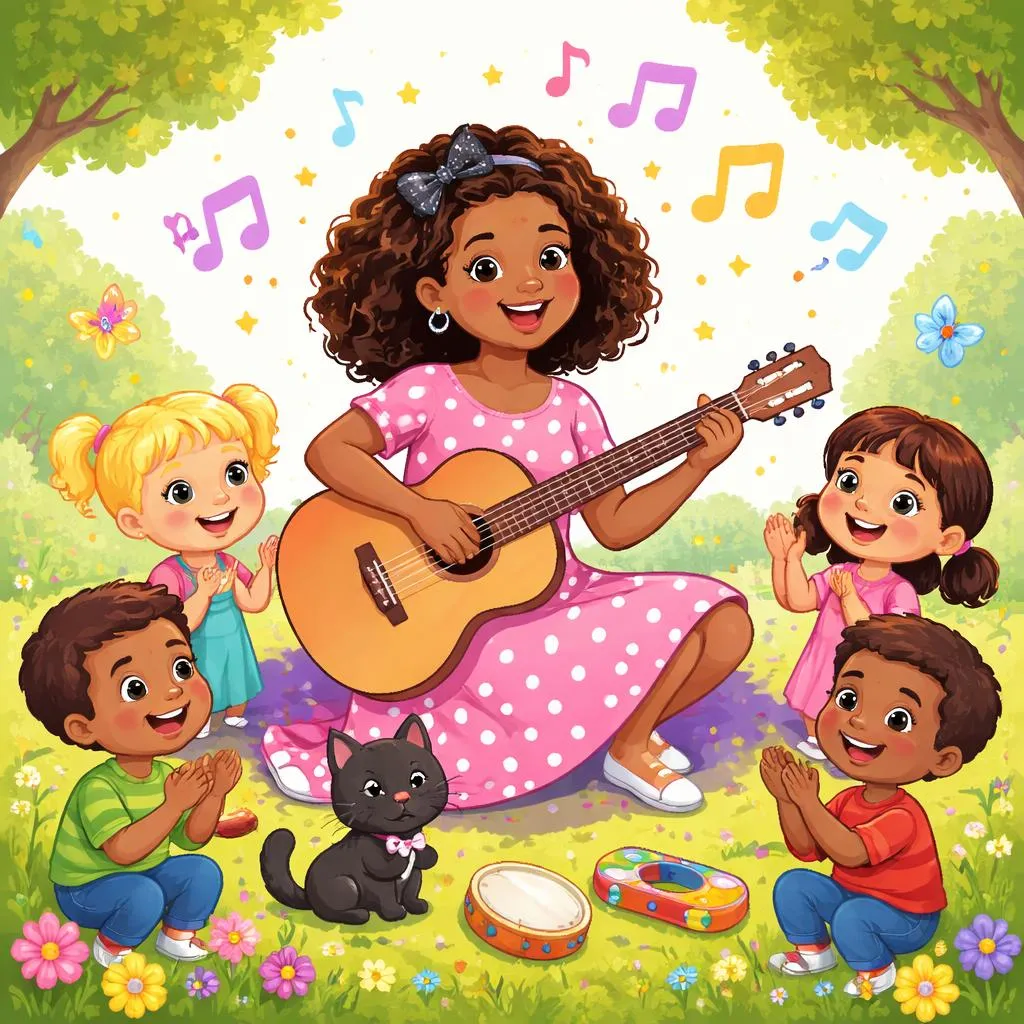

What is the Miss Mary Mack Mack Mack song? “Miss Mary Mack” is a classic clapping game song that children have sung for generations. It combines rhythm, repetition, and language learning in a fun and engaging way. The song uses simple words and a catchy melody that makes it easy to remember. Children enjoy clapping hands together while reciting the lyrics. It is popular in playgrounds, classrooms, and music activities for young learners. The song provides a natural way to introduce vocabulary, sentence patterns, and rhythm in English.
The repetitive structure helps children recognize patterns in language. Words appear several times, which supports memorization and pronunciation. Singing together encourages listening, timing, and coordination. The song also introduces playful social interaction and teamwork. Children learn how rhythm and language work together in fun activities. It is an excellent tool for teaching vocabulary and basic phonics through music.
Lyrics of the Song The lyrics of “Miss Mary Mack” are short and rhythmic: “Miss Mary Mack, Mack, Mack All dressed in black, black, black With silver buttons, buttons, buttons All down her back, back, back”
The chorus often repeats with hand-clapping patterns: “She asked her mother, mother, mother For fifty cents, cents, cents To see the elephant, elephant, elephant Jump over the fence, fence, fence”
The repetition of words and sounds makes the lyrics memorable. Children can sing multiple times and quickly learn all the words. The song emphasizes rhyming words and syllable patterns. It introduces verbs, nouns, and descriptive phrases naturally. Children practice both rhythm and pronunciation while having fun. The lyrics also support auditory learning and memory skills.
Vocabulary Learning The song introduces vocabulary related to clothing, animals, numbers, and actions. Words like “buttons,” “black,” “elephant,” and “fifty cents” appear repeatedly. Repetition strengthens word recognition and recall. Children can connect words with hand motions or gestures while singing. For example, mimicking buttons or counting coins adds meaning to the words.
Clapping games also reinforce verbs like “asked” and “jump.” Children practice action words in context, improving comprehension. Using props like coins or toy animals makes learning more tangible. Songs like this help children acquire vocabulary without formal drills. Language learning becomes interactive, playful, and multisensory. Children learn words through repetition, rhythm, and movement.
Phonics Points “Miss Mary Mack” supports phonics through syllable repetition and rhyming sounds. The repeated “ack” in “Mack,” “back,” and “black” reinforces vowel-consonant patterns. Children hear the sounds clearly while clapping and singing. The song also helps recognize consonant clusters and rhyming endings. Syllables can be emphasized through clapping, enhancing phonemic awareness.
Rhymes like “elephant” and “fence” provide opportunities to practice vowel sounds. Children learn to distinguish long and short vowels naturally. Phonics learning through music strengthens reading readiness. Rhythm and melody help children predict sounds and words. Songs turn abstract phonics rules into playful learning experiences. Children develop listening, pronunciation, and phonics skills while enjoying the song.
Grammar Patterns The song introduces basic sentence structures and verb usage. Lines like “She asked her mother for fifty cents” use subject-verb-object patterns. Children hear questions, verbs, and nouns repeatedly in context. The lyrics demonstrate word order and sentence flow in English.
The repetitive phrasing supports grammar comprehension without formal explanation. Children internalize patterns like “Miss Mary Mack all dressed in black” naturally. The song also provides examples of simple past tense and request forms. Questions and actions are combined in a playful narrative. Language learning is embedded in rhythm, making grammar less abstract. Children acquire sentence structure skills while enjoying hand-clapping activities.
Daily Life Examples The song connects with daily life through play and social interaction. Children can act out the story, pretending to button clothes or count coins. Clapping games improve coordination and timing while reinforcing language. Singing together strengthens listening, focus, and memory. Children learn teamwork and social skills alongside language development. The story in the song provides context for understanding actions and events.
Role-play activities enhance comprehension and memory. Children can pretend to see an elephant jump over a fence, linking words with visuals. Practical activities make language learning tangible and fun. Singing and movement together create an active learning environment. Children combine rhythm, language, and imagination to reinforce learning. Songs help connect English words with real-life actions and play scenarios.
Printable Flashcards Flashcards featuring key words from the song support visual learning. Cards with words like “Mack,” “buttons,” “elephant,” and “fence” are useful. Children can match cards while singing or playing clapping games. Visual aids help connect words to actions, reinforcing understanding.
Flashcards can also include gestures or symbols for each word. Games with flashcards make learning interactive and playful. Repeated exposure through song and visual aids improves retention. Teachers and parents can adapt cards to children’s levels. Combining visual and auditory learning strengthens memory and vocabulary. Children can review words independently or in groups while enjoying music.
Learning Activities and Games The song works well with interactive games for language learning. “Clap and Repeat” encourages children to mimic the clapping pattern while saying words. “Word Match” uses flashcards to identify words in the song. “Act It Out” has children pretend to perform actions from the lyrics.
Games reinforce vocabulary, pronunciation, sentence structure, and rhythm. Children enjoy learning through movement and playful competition. Group activities promote listening skills, coordination, and teamwork. Repetition through games and singing strengthens memory and fluency. Music-based learning combines cognitive, auditory, and physical skills. Children develop language, rhythm, and social skills while having fun.
Regular practice with “Miss Mary Mack Mack Mack” encourages language development. The song helps children recognize word patterns, rhymes, and sentence structures. Music, movement, and repetition create an engaging learning environment. Singing together supports vocabulary, phonics, grammar, and memory. Children experience English learning as a joyful and creative activity. Songs like this turn language practice into a playful, interactive experience.