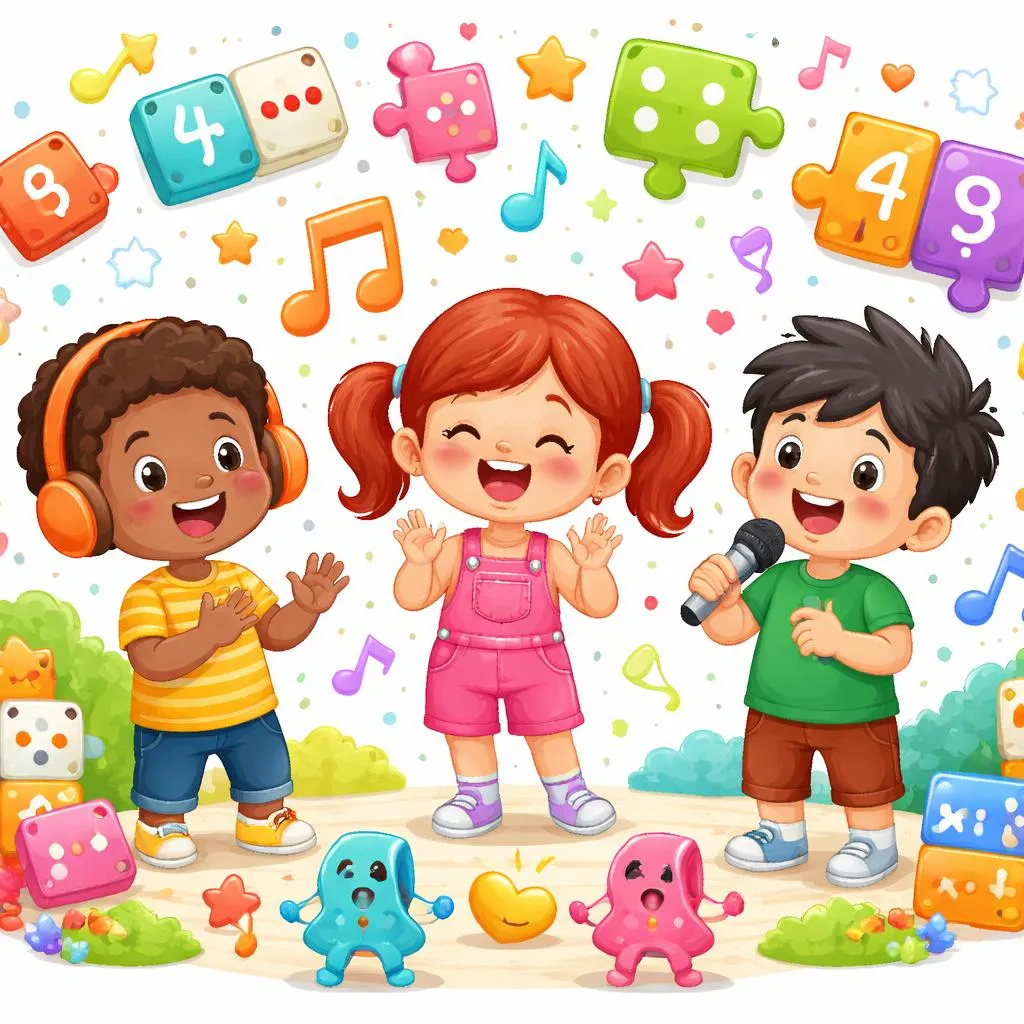

What is Doubles Song? The doubles song is a fun and musical way to learn basic addition. It focuses on doubles facts, like 1+1, 2+2, 3+3, and so on. Children hear each sum sung with rhythm and melody. Music and repetition help remember facts quickly. This song is widely used in classrooms and at home. The doubles song makes math enjoyable and interactive.
Numbers become familiar through melody. Rhythm helps children recall answers naturally. Children participate actively by singing or clapping. Teachers and parents use the song to strengthen math skills. The song builds confidence in adding numbers quickly. Doubles song combines learning and play effectively.
Meaning and Explanation Doubles facts are sums where the same number is added to itself. For example, 4 + 4 equals 8. The doubles song teaches these sums in a memorable way. Children hear the numbers, see visuals, and repeat the answers. Music supports auditory learning and memory retention. Repetition helps children recall sums without effort.
The song is usually lively and engaging. Catchy tunes make math less intimidating. Children enjoy practicing sums while moving or clapping. Singing the song frequently strengthens math fluency. Doubles song introduces addition patterns that support later math skills. It also encourages a positive attitude toward numbers and math.
Categories or Lists of Doubles Songs Doubles songs come in various styles and formats. Some focus only on sums from 1+1 to 10+10. Others include visuals or animation to reinforce learning. Examples include:
Classic classroom song with piano or guitar
Animated videos with numbers and characters
Group singing activities in school
Interactive apps or online versions
Songs may use rhythm, hand movements, or instruments. This helps children engage multiple senses. Visuals show the numbers being added together. Teachers select versions suitable for children’s age and skill level. Parents can play the song at home during learning sessions. Music and visuals together enhance understanding and recall.
Daily Life Examples Doubles song can be used during lessons, morning routines, or free time. Children may sing sums while playing with blocks or counting objects. It helps with practical math skills in everyday situations. Singing the song during playtime combines learning with fun. Parents can encourage children to sing while cooking or organizing toys. Daily repetition makes doubles facts familiar without stress.
Children often sing along naturally after repeated listening. The song becomes part of the routine, reinforcing addition facts. It can be used before or after math exercises. Songs make abstract numbers more concrete and relatable. Children can also sing the song during small breaks. Music turns math into an enjoyable experience rather than a chore.
Printable Flashcards Flashcards complement the doubles song effectively. Each card shows a sum and the answer. Children can sing the doubles song while pointing to cards. Cards may include visual aids, like dots or objects.
Flashcards support repetition and memory. They can be used in games or individual practice. Teachers and parents can create or print cards for home use. Matching cards with sums and answers reinforces understanding. Children enjoy interactive learning with cards and song combined. Flashcards make learning doubles facts tangible and engaging.
Learning Activities or Games Doubles song works well with interactive games. “Jump the Sum” has children jump to numbers while singing. “Sum Match” involves matching cards while listening to the song. “Clap the Answer” uses claps or beats for each sum.
Games reinforce addition facts while keeping children active. Group activities encourage cooperation and participation. Repetition through movement and music strengthens retention. Games allow children to practice without feeling pressured. Activities can be adjusted to children’s skill levels. Song and play together create a full learning experience.
Vocabulary Learning The doubles song introduces math vocabulary naturally. Terms like sum, add, plus, equals appear in the song. Children become familiar with mathematical language early. Vocabulary exposure prepares children for formal math lessons.
Repeating words during song helps with comprehension. Children hear context while learning the meaning of terms. Music helps children remember both numbers and vocabulary. Vocabulary builds alongside addition skills. Songs introduce language in a fun and meaningful way. Children absorb math terms without formal instruction.
Phonics Points Singing the doubles song also supports phonics. Numbers and math terms are pronounced clearly. Children mimic sounds through singing and repetition. Pronunciation practice is integrated with math learning.
Hearing and repeating words improves listening and speaking skills. Music rhythm enhances auditory recognition. Phonics practice complements numerical understanding. Children develop confidence in speaking math-related words. Songs combine auditory and cognitive learning for better results. Pronunciation becomes natural through repeated singing.
Grammar Patterns Simple sentences appear in doubles songs. For example, “Two plus two equals four.” Children learn subject-verb-object structure in context. Repetition helps internalize sentence patterns.
Some songs include questions, like “What is three plus three?” Children respond with answers while singing. Grammar and sentence structure are absorbed naturally. Music reinforces word order and comprehension. Children learn both math and language patterns simultaneously. Songs provide an engaging and holistic learning experience.
Educational Games Doubles song can extend into math games. “Sing and Solve” asks children to answer sums while singing. “Number Hop” combines music and movement to find answers. “Sum Race” encourages friendly competition to reinforce learning.
Games enhance listening, speaking, and motor skills. Children remain active while practicing math facts. Repetition, rhythm, and movement strengthen retention. Song-based games make doubles facts fun and interactive. Children develop confidence in solving sums quickly. Music, games, and flashcards work together for complete learning.
Daily practice with the doubles song improves speed and accuracy. Children recognize patterns in addition and develop problem-solving skills. Music turns learning math into a joyful and memorable experience. Doubles song makes math accessible, engaging, and exciting for young learners.