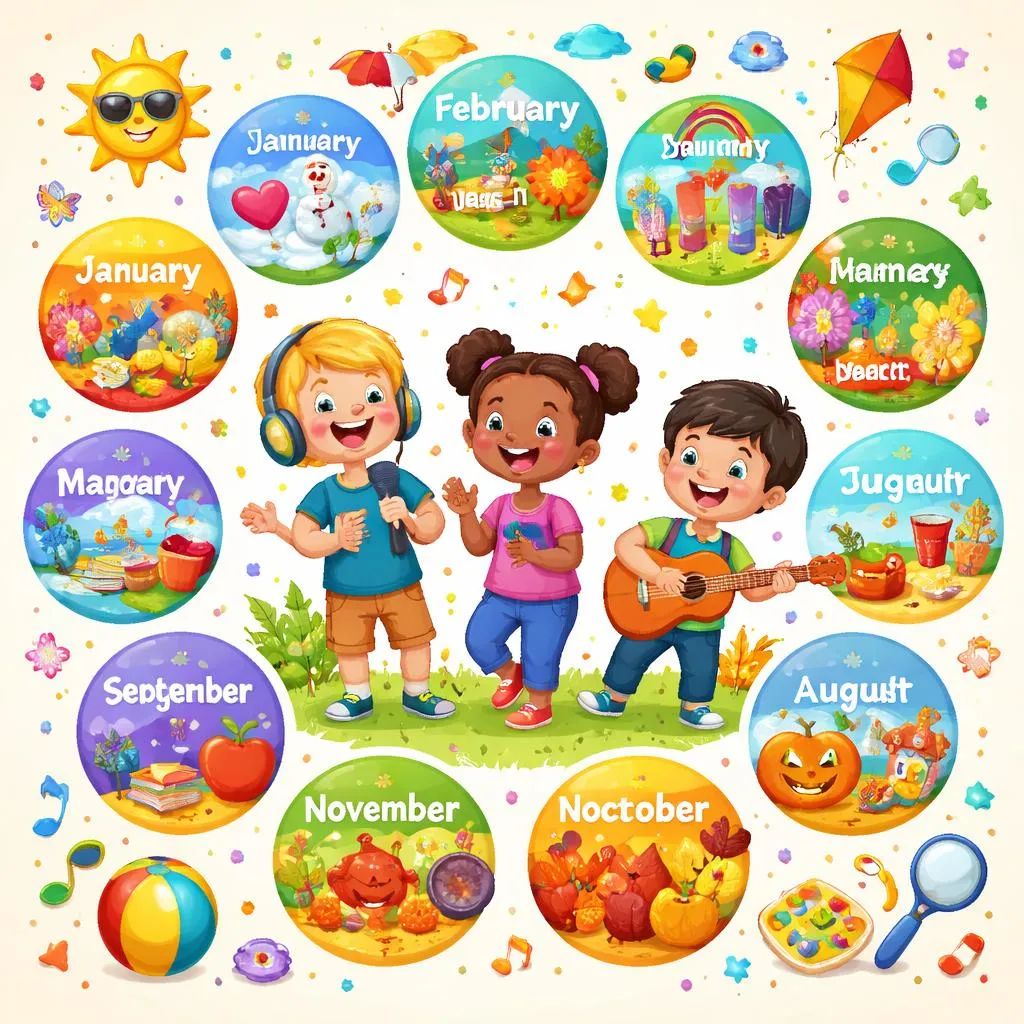

What Is the Month of Year Song? The month of year song is a fun and musical way to learn all 12 months. It helps children remember the order of months quickly. Songs use rhythm, rhyme, and repetition to make learning easier. Singing improves memory, pronunciation, and confidence in English. Children can listen, sing, and move to the beat while learning. The song also connects months to seasons, holidays, and events.
This song is popular in classrooms and at home. It is suitable for children of all ages. Using music supports auditory and linguistic learning. Children naturally repeat words in songs, which strengthens recall. The month of year song can be combined with gestures or dances. This combination makes learning more engaging and interactive.
Lyrics of the Month of Year Song The lyrics of the month of year song list all twelve months. January, February, March, and April start the song. May, June, July, and August follow in the middle. September, October, November, and December end the song. The lyrics are simple and easy to pronounce. Repeating the song daily helps children internalize the month order.
Songs can include questions or activities. For example, children can clap when they hear a summer month. Teachers can pause the song and ask, “Which month comes next?” Using lyrics actively promotes listening comprehension. Children also learn spelling and vocabulary by singing along. The lyrics become a tool for reading and speaking practice.
Vocabulary Learning Through the Song The month of year song teaches more than month names. Children learn related words like season, holiday, and birthday. January can connect with winter and New Year. July can be linked to summer and vacation. October can teach about Halloween traditions. Vocabulary expands naturally when using the song in context.
Visual aids can reinforce vocabulary learning. Pictures of snow, flowers, sun, or leaves help children connect months to images. Flashcards with month names and symbols can be used along with the song. Children match words with pictures while singing. This multi-sensory learning improves retention. It also makes abstract concepts like time more concrete and understandable.
Phonics Points The month of year song helps children notice letter sounds. Each month name has unique pronunciation patterns. January begins with the soft “J” sound. February has the “br” blend in the middle. Children practice long and short vowel sounds in March and May. Singing makes it easier to repeat tricky sounds.
Listening to the song repeatedly improves phonics awareness. Children start to recognize spelling patterns in spoken words. Teachers can highlight beginning, middle, or ending sounds while singing. Phonics practice builds strong foundations for reading and writing. Songs make phonics practice enjoyable and memorable. Children learn naturally without feeling like it is a lesson.
Grammar Patterns in the Song The month of year song introduces simple grammar patterns. It often uses the word “is” to link months with seasons. For example, “January is cold” or “June is warm.” This teaches subject-verb agreement in context. Short sentences in the song make grammar clear and easy. Children learn how to describe time and weather in simple sentences.
Songs can also include prepositions of time. For example, “in January” or “in December.” This shows how month names function in sentences. Children can then use these patterns in their own speech. Grammar learning becomes natural through repetition and rhythm. The song supports both vocabulary and sentence structure development.
Learning Activities With the Song Children can sing the song while pointing to a calendar. Games like “Find the Month” make learning interactive. Teachers can ask, “Which month is your birthday in?” while singing. Children can create hand motions or dances for each month. These activities strengthen memory and physical coordination. Using movement with songs keeps children engaged and focused.
Children can also make a personal calendar. They write month names and draw pictures for each month. Singing the song while pointing to their calendar reinforces learning. Group activities can include passing a ball for each month sung. These interactive exercises combine music, movement, and memory. Learning through songs becomes playful and highly effective.
Printable Materials Printable materials complement the month of year song. Flashcards with month names, numbers, and illustrations support learning. Worksheets can include matching months to seasons or events. Coloring pages with month themes make learning hands-on. Teachers and parents can create a visual chart for daily review. Printable materials also encourage independent learning at home.
Children can use these materials while listening or singing. The combination of print, music, and movement strengthens recall. Visual aids also help children who learn best through seeing. Songs plus printable materials make a complete learning system. These resources support reading, writing, speaking, and listening skills. Learning becomes multi-sensory, engaging, and fun for children.
Singing the month of year song every day builds confidence. Children learn the order of months naturally while enjoying music. Vocabulary, phonics, and grammar develop without stress. Combining songs, visuals, and games supports different learning styles. Children feel motivated to participate and remember new concepts. The month of year song transforms learning into an enjoyable daily routine.