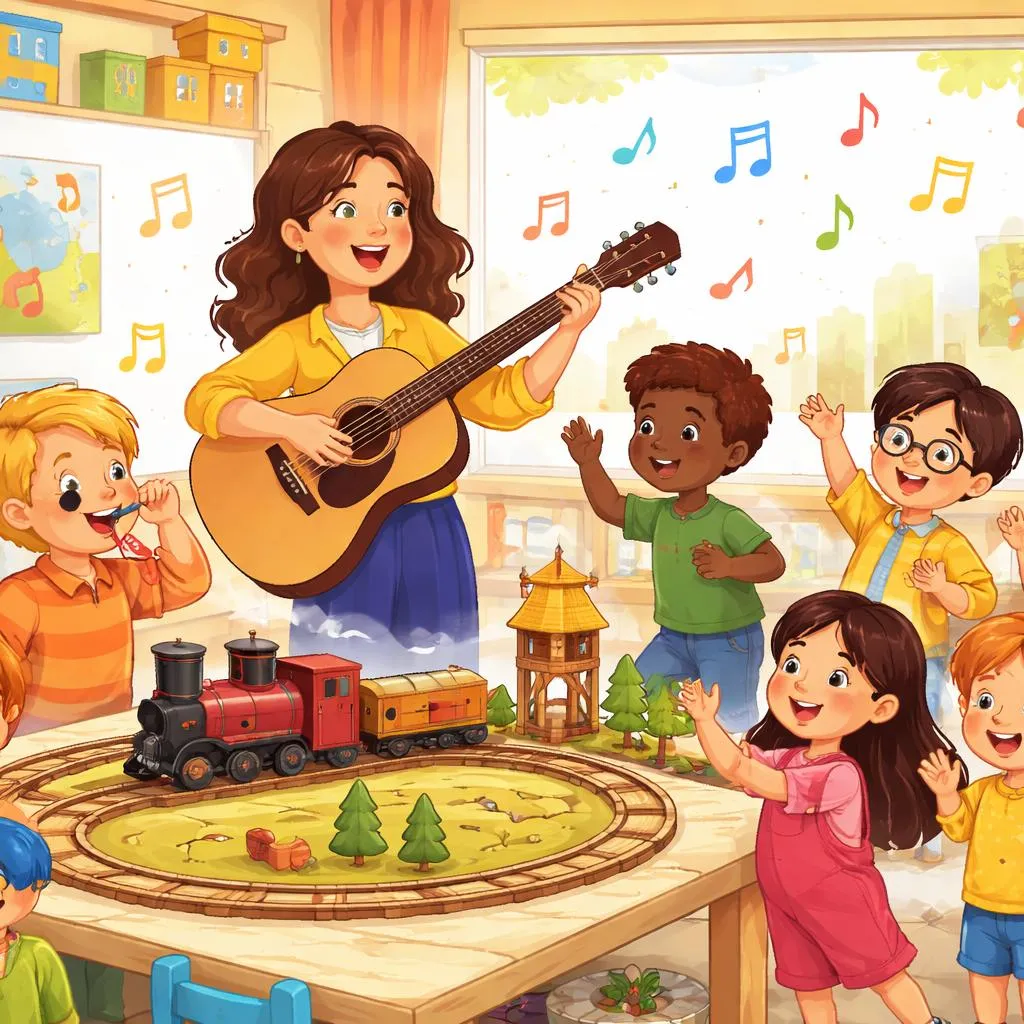

What Is the Rhyme?
“i've been working on the railroad song lyrics” belong to one of the most famous traditional English songs. The song has a simple rhythm, clear pronunciation, and repeated patterns. These features make it perfect for English learning environments.
This song comes from American folk culture. It reflects daily life, work, and movement. It uses simple verbs and clear sentence structures. It also introduces rhythm and stress in natural spoken English.
In language learning, songs like this work as natural teaching tools. They help with listening skills. They support pronunciation. They build memory through repetition. They connect language with emotion and rhythm.
This rhyme is not only music. It is also language input. It is also cultural knowledge. It is also a storytelling form.
The lyrics of nursery rhymes
Here are the classic “i've been working on the railroad song lyrics”:
I've been working on the railroad All the livelong day I've been working on the railroad Just to pass the time away
Don't you hear the whistle blowing Rise up so early in the morn Don't you hear the captain shouting Dinah, blow your horn
Dinah, won't you blow Dinah, won't you blow Dinah, won't you blow your horn
This version shows repetition. It shows rhythm. It shows simple grammar. It shows everyday vocabulary.
The structure makes the song easy to remember. The melody supports memory. The repetition supports language storage.
Vocabulary Learning
The song introduces useful English words.
“working” shows an action word. It connects with daily activities. It builds understanding of verbs.
“railroad” introduces a place and object word. It connects language to transportation. It builds real-world meaning.
“whistle” introduces a sound word. It helps with listening vocabulary.
“captain” introduces a role word. It supports social vocabulary.
“morning” introduces time vocabulary. It supports daily routine language.
“blow your horn” introduces action phrases. It supports phrase learning.
Each word can connect with pictures. Each word can connect with actions. Each word can connect with daily life.
Vocabulary learning becomes natural through music.
Phonics Points
The rhyme supports phonics development.
The long vowel sound in “day” supports vowel awareness. The long vowel sound in “away” supports rhyme recognition.
The “or” sound in “horn” supports sound blending. The “sh” sound in “whistle” supports consonant patterns.
The “ing” ending in “working” supports grammar and phonics at the same time.
Rhyming patterns like “day” and “away” build sound memory. Repeated sounds improve pronunciation clarity.
Songs provide natural phonics exposure. They teach sound without stress. They teach rhythm and stress naturally.
Grammar Patterns
The song introduces simple grammar forms.
“I’ve been working” shows present perfect continuous structure. This introduces the idea of actions over time.
“All the livelong day” shows time expressions. This supports sentence expansion.
“Don’t you hear” introduces question structure. This supports listening questions.
“Won’t you blow” introduces polite request forms. This supports functional English.
Grammar appears in context. Grammar appears in meaning. Grammar appears in sound patterns.
This makes grammar easier to absorb.
Learning Activities
Singing activities support listening. Clapping supports rhythm. Movement supports memory. Actions support understanding.
Role-play can use the song story. One role becomes the captain. One role becomes Dinah. One role becomes the worker.
Sound games can use “whistle” and “horn.” Voice games support pronunciation practice. Echo reading supports sentence rhythm.
Drawing activities can show railroad scenes. Story drawing supports language connection.
These activities connect language, music, and movement.
Printable Materials
Printable word cards can support vocabulary. Picture cards can match words. Lyric strips can support reading order. Sentence cards can support grammar.
Coloring pages can use railroad themes. Matching games can connect words and pictures. Tracing sheets can support writing.
Simple worksheets can use:
railroad whistle captain morning working horn
These materials support multi-sensory learning. They support visual learning. They support memory building.
Educational Games
Sound matching games build listening skills. Word rhythm games build stress awareness. Echo singing builds pronunciation skills.
Lyric ordering games build reading flow. Picture matching builds comprehension. Movement games build coordination.
Music-based learning builds confidence. It reduces fear of speaking. It supports natural language use.
Language becomes playful. Learning becomes joyful. English becomes friendly.
This song supports English foundations. It supports listening. It supports speaking. It supports reading. It supports phonics. It supports grammar. It supports culture.
“i've been working on the railroad song lyrics” work as a complete language learning tool. Music becomes the bridge between sound and meaning. Language becomes experience, not memorization. Learning becomes natural, warm, and inspiring.