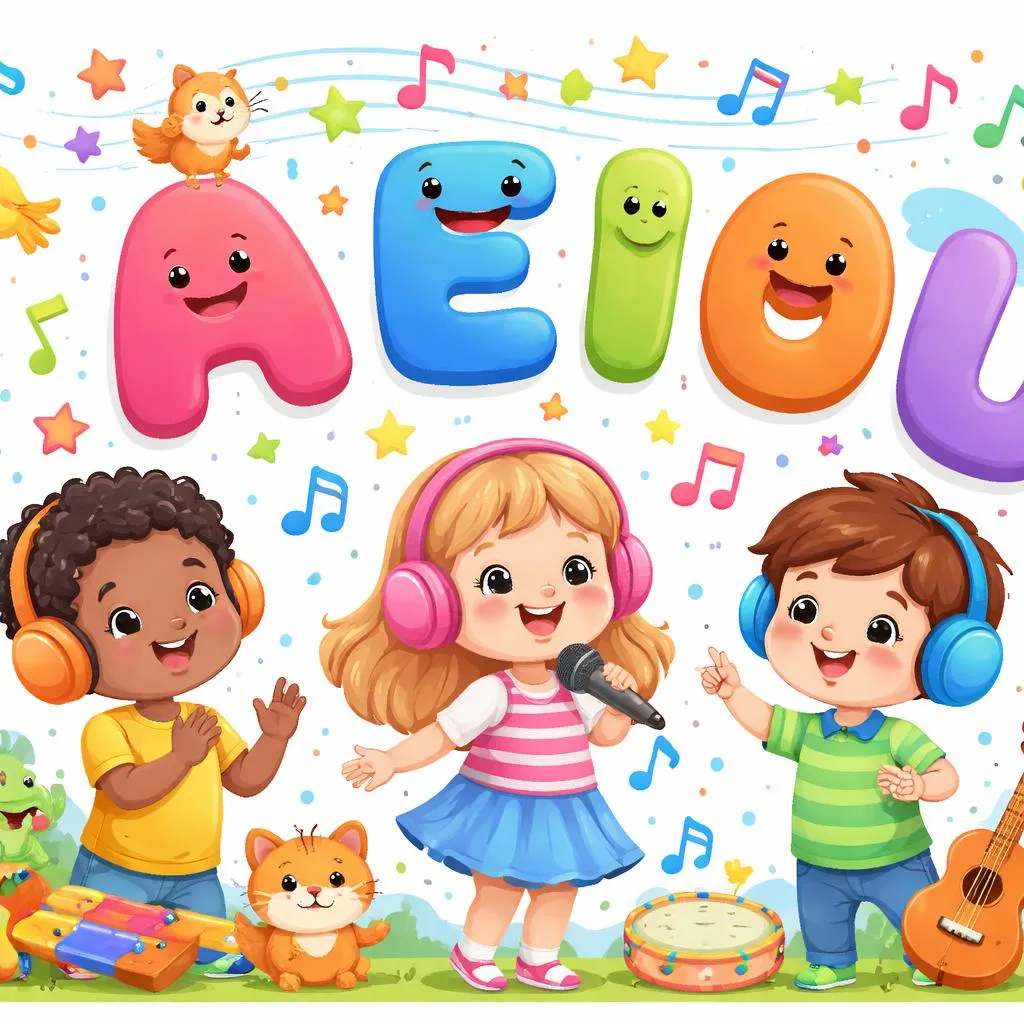

What Is the aeiou song?
The aeiou song is a simple and well-known learning song that introduces the five main vowels in the English language. These vowels are A, E, I, O, and U. In early English education, vowel sounds play a key role in reading, speaking, and listening.
The aeiou song presents these letters through rhythm and melody. Singing allows vowel sounds to stand out clearly. The song usually follows a repeating pattern, which helps learners remember both the letter names and their sounds.
This type of song often becomes one of the first phonics tools used in English learning spaces.
Why Vowels Matter in English Learning
Vowels appear in almost every English word. Understanding vowel sounds supports pronunciation, spelling, and reading.
In many English words, vowels change how words sound. Early exposure to these sounds helps learners recognize patterns later. The aeiou song creates that exposure in a friendly and simple way.
Clear vowel awareness builds a strong foundation for literacy.
Meaning and Purpose of the aeiou song
The purpose of the aeiou song is to introduce vowels in a memorable way. Instead of teaching vowels through explanation, the song allows learners to hear, repeat, and enjoy the sounds.
Music lowers stress. Melody supports memory. Together, they help language feel natural and accessible.
The meaning of the song stays focused on sound awareness rather than complex vocabulary.
The Structure of the aeiou song
Most versions of the aeiou song follow a predictable structure. The vowels appear in order. Each vowel receives equal attention.
Some versions include example words. Others focus only on the sounds. Both formats support phonics learning.
The simple structure makes the song easy to repeat and adapt.
The Lyrics of the aeiou song
The lyrics of the aeiou song usually include the five vowels sung clearly and slowly. Some versions add sample words such as apple, egg, igloo, octopus, and umbrella.
These example words connect sounds to meaning. Singing the lyrics helps learners hear how vowel sounds appear at the start of words.
Repetition makes the lyrics easy to remember.
Vocabulary Learning Through the Song
Vocabulary learning begins with sounds. When example words appear in the aeiou song, vocabulary grows naturally.
Words linked to vowels often represent common objects. This makes understanding easier. Visual support can strengthen this connection.
Vocabulary learned through song stays longer in memory.
Phonics Points in the aeiou song
Phonics focuses on the relationship between letters and sounds. The aeiou song highlights this relationship clearly.
Each vowel has at least one main sound. Singing helps isolate these sounds. Hearing them repeatedly supports sound recognition.
Phonics learning becomes auditory and enjoyable.
Short Vowel Sounds and the Song
Many aeiou songs focus on short vowel sounds. These sounds appear frequently in early reading words.
Short vowel sounds such as /a/ in cat or /e/ in bed become easier to hear through singing. The song slows down pronunciation.
Clear sound modeling supports accurate reading later.
Long Vowel Sounds and Extended Versions
Some versions of the aeiou song include long vowel sounds. These sounds often appear in later learning stages.
Long vowel songs introduce patterns like silent e or vowel teams. Singing helps highlight these changes.
Extended versions of the song support growing learners.
Rhythm and Melody as Learning Tools
Rhythm helps organize sound. Melody supports memory. Together, they make vowel learning effective.
The steady pace of the aeiou song allows time to hear each vowel clearly. Pauses between sounds add clarity.
Music supports attention and focus.
Listening Skills Developed Through the Song
Listening plays an important role in phonics. The aeiou song trains ears to notice sound differences.
Hearing similar but distinct sounds sharpens listening skills. This skill supports future reading and spelling.
Listening improves through repeated exposure.
Speaking and Pronunciation Practice
Singing encourages vocal participation. Pronunciation improves through repetition and modeling.
The clear vowel sounds in the song support mouth movement awareness. This helps with accurate speech.
Singing feels safer than speaking alone.
Movement and Gestures With the aeiou song
Adding gestures supports understanding. Hand movements for each vowel can add visual cues.
Movement connects sound to action. This multisensory approach strengthens learning.
Physical involvement increases engagement.
Learning Activities Inspired by the aeiou song
Many activities grow from this song. Matching vowel letters to pictures supports recognition.
Sound sorting activities help identify vowel sounds in words. Singing before activities prepares the brain for learning.
Activities extend the value of the song.
Educational Games Using Vowel Sounds
Games make phonics fun. Vowel bingo games support listening. Memory games support sound recognition.
Games based on the aeiou song encourage active participation. Learning feels playful.
Games reinforce skills without pressure.
Printable Flashcards for Vowel Practice
Printable vowel flashcards support visual learners. Each card can show a vowel and a picture.
Using flashcards after singing reinforces learning. Visual repetition strengthens memory.
Printables provide structure and review.
Using the Song in Small Groups
Small group singing reduces anxiety. Voices blend together. Confidence grows.
Small groups allow closer observation of pronunciation and participation.
Group learning supports social interaction.
One-on-One Support With the Song
Individual singing or listening sessions support focused learning. Gentle repetition supports accuracy.
One-on-one use helps address specific needs. The song adapts easily.
Personalized learning builds confidence.
Integrating the aeiou song Into Daily Routines
The song fits well into daily routines. It works as a warm-up or transition activity.
Short songs reset attention. Familiar routines support comfort.
Daily repetition strengthens sound awareness.
Cross-Topic Learning Opportunities
Vowels connect to many topics. Alphabet lessons benefit from vowel focus. Reading lessons depend on vowel knowledge.
Art activities can include vowel crafts. Storytime can highlight vowel sounds.
One song supports many learning goals.
Cultural Use of Phonics Songs
Phonics songs appear in English learning worldwide. The aeiou song represents a shared learning experience.
Understanding this song supports familiarity with English teaching traditions.
Culture and language develop together.
Creating a Safe Learning Environment Through Song
Songs reduce fear of mistakes. Everyone sings together. Individual errors feel less noticeable.
A safe environment encourages experimentation with sound.
Confidence grows through comfort.
Observing Progress Through Singing
Progress appears in clearer pronunciation. Faster recognition of vowel sounds shows growth.
Observation during singing provides insight without testing.
Assessment feels natural.
Supporting Parents and Teachers With the Song
The aeiou song is easy to use at home and in learning spaces. Simple lyrics make it accessible.
Shared use supports consistency. Familiar songs strengthen learning connections.
Collaboration supports progress.
Extending Learning Beyond the Song
After singing, vowel sounds can be found in books, labels, and everyday words.
Pointing out vowels in the environment strengthens awareness.
Language learning continues beyond the song.
Building Confidence Through Familiar Phonics Songs
Familiar songs provide predictability. Knowing what comes next builds confidence.
Confidence leads to participation. Participation leads to learning.
This cycle supports long-term success.
The Lasting Value of the aeiou song in English Learning
The aeiou song remains a powerful tool because it keeps learning simple and joyful. Vowel sounds form the heart of English phonics. Introducing them through music creates a strong foundation.
Through repetition, rhythm, and shared singing, vowel sounds become familiar and clear. Language learning begins with sound awareness, and the aeiou song offers a gentle and effective starting point. Music, movement, and phonics come together to support confident, curious, and successful English learners.