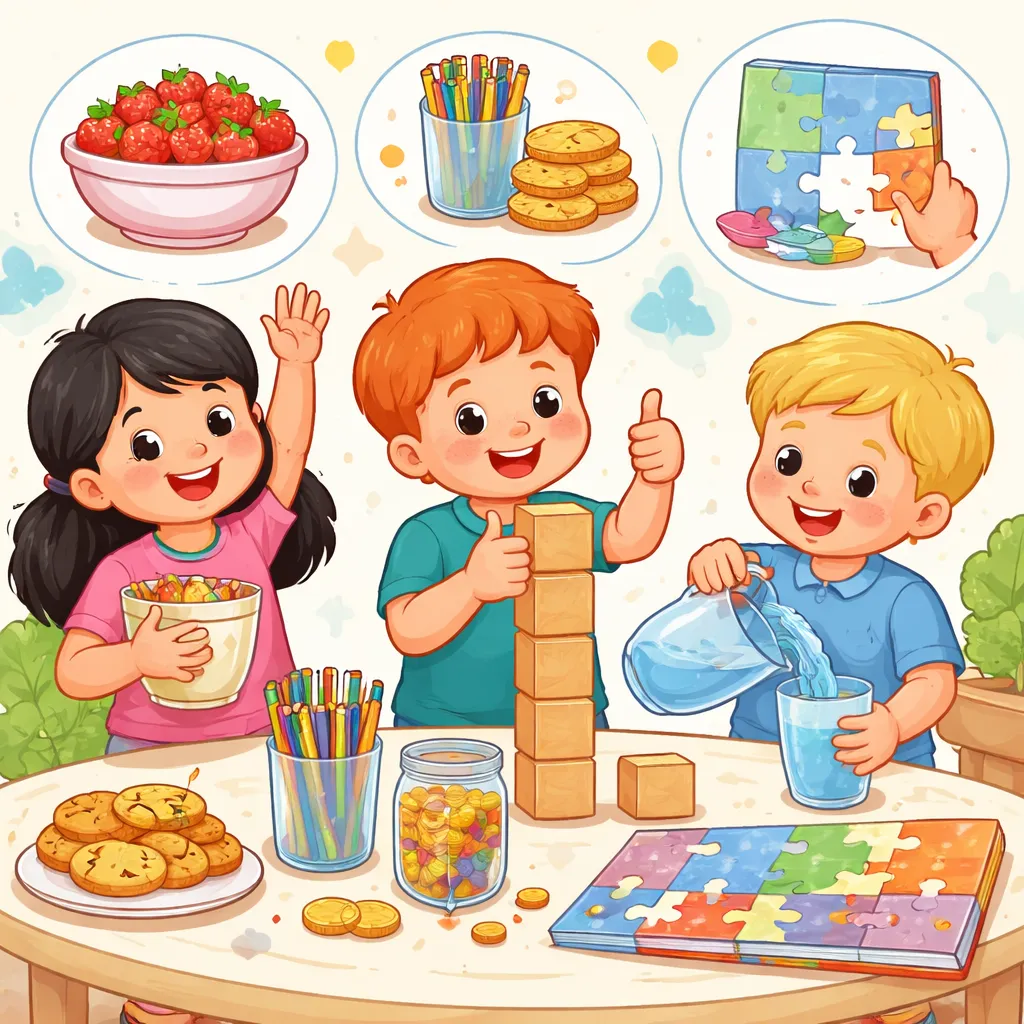

What Is Using 'Enough'?
In English, enough is a versatile word used to express sufficiency, quantity, or degree. It is commonly used to show that something meets a certain requirement or standard. Whether it’s describing how much of something is needed, how well something is done, or how suitable something is, enough plays a key role in making statements more precise.
For example:
"I have enough food for dinner." "Is this shirt big enough for you?"
In these examples, enough helps to clarify that there is a sufficient amount of food or that the shirt fits the person properly. Understanding how to use enough will help children communicate more effectively in different contexts.
Rules of Using 'Enough'
When using enough in a sentence, there are a few key rules to remember. These rules help ensure that enough is used correctly, depending on the structure and meaning of the sentence.
Enough + Noun When enough is used with a noun, it typically comes before the noun to show that there is a sufficient amount of that thing. Example: "We have enough pencils for the class." In this case, enough comes before the noun pencils, indicating that there are sufficient pencils. Enough + Adjective When enough is used with an adjective, it typically comes after the adjective to show that something meets a certain standard or degree. Example: "The box is big enough." Here, enough follows the adjective big, indicating that the box is of a sufficient size. Enough + Adverb Enough can also be used with adverbs to describe how well an action is done. In this case, enough is placed after the adverb. Example: "She runs fast enough to win the race." In this sentence, enough comes after the adverb fast, meaning that her speed is sufficient to win. Position of Enough in Negative Sentences In negative sentences, enough still follows the same rules, but it is important to keep in mind that the meaning of sufficiency is often reversed when used with negative words. Example: "I don’t have enough money." The negative word don’t shows that there isn’t a sufficient amount of money. Enough + To + Infinitive Enough is often used with an infinitive verb to express that someone has the ability or resources to do something. Example: "He is enough smart to pass the test." This construction shows that he has the intelligence required to pass the test.
By understanding these rules, children can use enough in a wide range of situations and express themselves more clearly.
How to Use 'Enough'
Knowing how to use enough in sentences will improve a child’s ability to describe quantities, qualities, and actions. Here’s how to do it step by step:
Using Enough with Nouns: To talk about the quantity of something, use enough before a noun. Example: "Do you have enough apples?" This shows a question about quantity: Are there enough apples for what is needed? Using Enough with Adjectives: When expressing suitability or degree, use enough after an adjective to describe something as being sufficient in quality. Example: "The movie was exciting enough to watch again." In this example, enough follows the adjective exciting, meaning the movie was sufficiently exciting. Using Enough with Adverbs: To describe how well an action is performed, use enough after the adverb. Example: "He spoke loudly enough for everyone to hear." This tells us that his speaking was sufficiently loud for others to hear. Using Enough in Negative Sentences: When something is not sufficient, use enough in negative sentences to convey that something is lacking. Example: "There aren’t enough chairs for everyone." This means there is a shortage of chairs. Using Enough with Infinitives: To express the capacity to do something, combine enough with to and an infinitive verb. Example: "She is enough experienced to handle the project." This shows that she has sufficient experience to manage the task.
By following these patterns, children will be able to form sentences using enough in various contexts.
Examples of Using 'Enough'
Here are some more examples to help your child understand the different ways enough is used:
Enough + Noun: "We don’t have enough time to finish the homework." "There isn’t enough space in the room for all the furniture." Enough + Adjective: "This cake is sweet enough for me." "The water is warm enough to swim." Enough + Adverb: "He sings well enough to become a professional." "She is working fast enough to finish before the deadline." Enough + To + Infinitive: "I am enough tall to reach the shelf." "She has enough time to read the book." Negative Sentences: "There aren’t enough cookies for everyone." "I don’t have enough money to buy that toy."
These examples showcase how enough can be used to express sufficiency in a variety of ways.
Common Mistakes with Using 'Enough'
As children learn to use enough, they may make a few common mistakes. Here are some of the most frequent errors and how to avoid them:
Incorrect Word Order: Sometimes, children might place enough in the wrong part of the sentence, especially when using adjectives or adverbs. Incorrect: "The box big is enough." Correct: "The box is big enough." Using Enough with Countable and Uncountable Nouns: Enough can be used with both countable and uncountable nouns, but children may forget to adjust the noun appropriately. Incorrect: "I don’t have enough water bottles." Correct: "I don’t have enough water." Confusing Enough with Too: Enough shows sufficiency, while too indicates excess. Children might use them incorrectly, thinking they mean the same thing. Incorrect: "The room is too big enough." Correct: "The room is big enough." Forget to Use Enough in Negative Sentences: Sometimes, children forget to use enough in negative sentences, which can change the meaning. Incorrect: "I don’t have time to play." Correct: "I don’t have enough time to play."
By paying attention to these details, children can avoid common mistakes and use enough correctly in different situations.
Practice Exercises
Here are some practice sentences. Can you complete them by adding enough in the correct place?
She didn’t have ______________ money to buy the book. We didn’t get ______________ sleep last night. This dress isn’t ______________ for the party. The chair is ______________ comfortable to sit on for hours. There are ______________ pencils for everyone to write. Answers and Explanations
Let's go over the answers to the exercises:
She didn’t have enough money to buy the book. Enough comes before the noun money to indicate sufficiency. We didn’t get enough sleep last night. Enough follows the noun sleep to show that there wasn’t a sufficient amount. This dress isn’t enough for the party. Here, enough follows the adjective enough to show that the dress isn’t suitable. The chair is enough comfortable to sit on for hours. Correct use of enough with the adjective comfortable. There are enough pencils for everyone to write. Enough comes before the noun pencils to show sufficient quantity. Learning Tips
To help your child master using enough, here are some tips:
Practice with Everyday Examples: Encourage your child to use enough in daily conversations. For example, talk about how much food is enough for a meal or how enough sleep is important for good health. Use Visual Aids: Create flashcards with enough and its different uses. This can help children visually connect enough with different nouns, adjectives, and adverbs. Role Play: Practice making sentences using enough with your child. Have them express needs, desires, and quantities by using the word enough. Read Together: While reading books, highlight the use of enough in sentences. This can give children a better understanding of how to use it in context.
With consistent practice, children will learn how to use enough in the right way and in the right context, helping them become more confident in their English communication.