
What Does “Same Word, Different Forms” Mean? One root word can grow into four gathering forms. “Collect, collection, collective, collector” share one meaning. That meaning is “to bring things together.” Each form has a different job in a sentence. One word shows an action. One word names a group of things. One word describes a group effort. One word names a person who gathers. Learning these four forms builds hobby and teamwork vocabulary.
Personal Pronouns Change Their Form This rule applies to pronouns like “they, them, their.” But word families work the same way for other words. “Collect” is a verb. “Collection” is a noun. “Collective” is an adjective or a noun. “Collector” is a noun. Each form answers a different question. What action? Collect. What group of things? Collection. What kind of effort or group? Collective. What person? Collector.
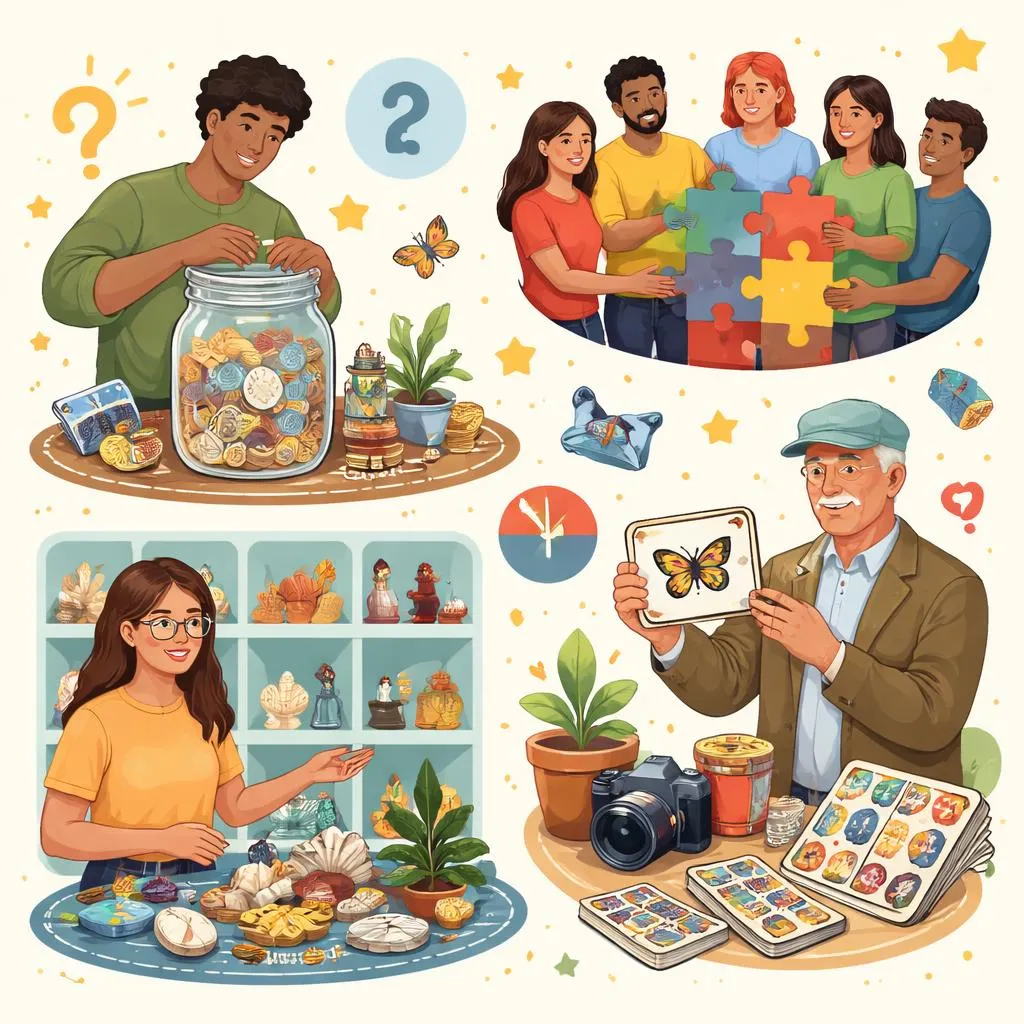
From Verb to Noun to Adjective to Adverb – One Family, Many Words This family starts with the verb “collect.” You collect stamps, shells, or toy cars. You collect leaves in the fall. From “collect,” we make the noun “collection.” “Collection” names a group of items gathered together. Example: “Her seashell collection filled a whole shelf.” From “collect,” we make the adjective “collective.” “Collective” describes something done by a group together. Example: “The collective effort of the team won the game.” From “collect,” we make another noun “collector.” “Collector” names a person who collects things. Example: “The art collector bought three new paintings.”
One Root, Many Roles – How Words Grow from Actions to Qualities Think of a child who loves rocks. The child will “collect” rocks from the driveway. That is the verb. The pile of rocks is a “collection.” That is the noun. If the whole family helps, that is a “collective” effort. That is the adjective. The child is a “collector.” That is the person noun. The root meaning stays “to bring together.” The role changes with each sentence.
Same Meaning, Different Jobs – Is It a Verb or a Noun? “Collect” is always a verb. It shows the action of gathering things. Example: “Please collect your papers before you leave.” “Collection” is always a noun. It names a group of gathered items. Example: “The library has a large book collection.” “Collective” is usually an adjective. It describes a group action or shared ownership. Example: “The collective decision was to go to the park.” “Collective” can also be a noun meaning a group. Example: “The worker’s collective voted together.” “Collector” is always a noun. It names a person who collects. Example: “The stamp collector had stamps from twenty countries.” Same family. Different jobs.
Adjectives and Adverbs – When Do We Add -ly? This family does not have a common adverb. You could say “collectively,” which comes from “collective.” Example: “The team collectively decided to try again.” That is a bonus form for later learning. The -ly rule applies to “collective” becoming “collectively.” But this lesson focuses on “collect, collection, collective, collector.” Focus on these four main forms for now.
Watch Out for Tricky Spelling Changes (Double Letters, y to i, and More) “Collect” has a double “l” in the middle. Collect – C o l l e c t. Yes: double “l,” then “ect.” When we add “-ion,” we keep both l’s. Collect + ion = collection (double l). When we add “-ive,” we keep both l’s. Collect + ive = collective (double l). When we add “-or,” we keep both l’s. Collect + or = collector (double l). A common mistake is writing “collect” with one “l” (colect). The correct spelling has double “l.” Another mistake is writing “collector” with an “e” (collecter). The correct spelling ends with “or” – collector. Write slowly at first. Remember: collect, collection, collective, collector.
Let’s Practice – Can You Choose the Right Form? Try these sentences with your child. Fill in the blank with collect, collection, collective, or collector.
Let’s _______ leaves of different colors.
My grandmother has a large _______ of teacups.
The _______ sigh from the class showed they were tired.
The stamp _______ had over one thousand stamps.
Please _______ your books and put them in your bag.
The toy _______ is displayed in glass cases.
The team made a _______ decision to practice longer.
He is a _______ of antique coins.
Answers:
collect
collection
collective
collector
collect
collection
collective
collector
Go through each answer slowly. Ask your child why the word fits. Praise effort and gathering spirit. Keep practice short and fun.
Tips for Parents – Help Your Child Learn Word Families in a Fun Way You can teach “collect, collection, collective, collector” through daily life. Use hobbies, chores, and teamwork.
At home, say “Let’s collect the dirty laundry.” Ask “What action are we doing?”
When you see a group of toys, say “That is a nice collection.” Ask “What makes a group of things a collection?”
When the family cleans together, say “This is a collective effort.” Ask “What does collective mean?”
If your child loves rocks, say “You are a rock collector.” Ask “What does a collector do?”
Play a “group it” game. Write the four words on sticky notes. Say a sentence. Let your child hold up the correct word. Example: “We collect shells.” Child holds “collect.” “This is a shell collection.” Child holds “collection.” “It was a collective choice.” Child holds “collective.” “She is a shell collector.” Child holds “collector.”
Draw a four-part poster. Write “collect” with a picture of hands picking up items. Write “collection” with a picture of a shelf of toys. Write “collective” with a picture of a group of children. Write “collector” with a picture of a person with a magnifying glass. Hang it on the wall.
Use a “find the collector” game. Ask “Who in our family collects something?” Let your child answer. Then say “That is their collection.”
Keep each session under five minutes. Repeat games on different days. Children learn through playful gathering and grouping.
When your child makes a mistake, smile. Say “Good try. Let me show you again.” Use the correct word in a simple sentence. Then continue.
No need for grammar drills. No need for tests. Just warm examples and real collections every day. Soon your child will master “collect, collection, collective, collector.” That skill will help them talk about hobbies, teamwork, and the joy of gathering things.