
Original Poem:
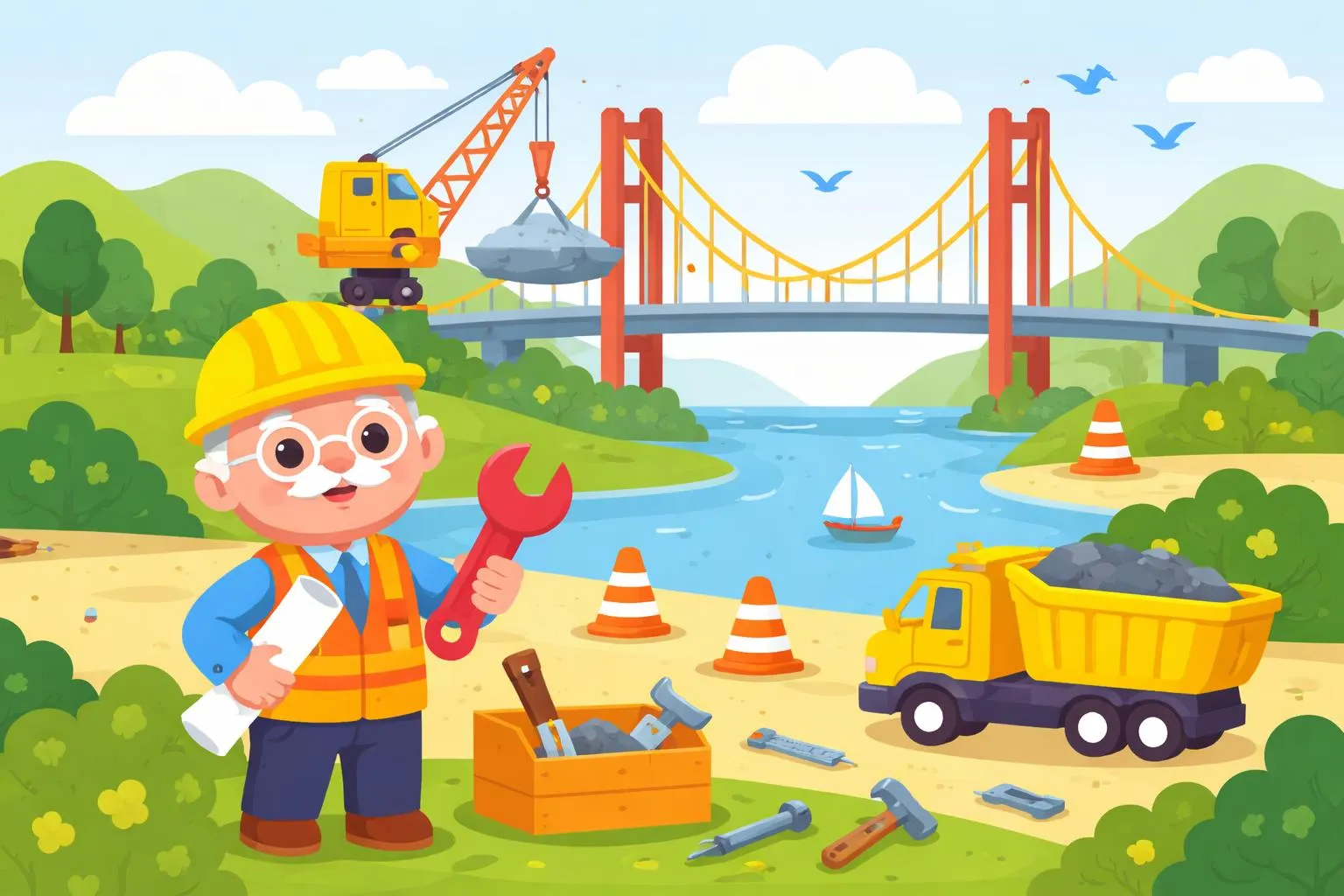
A bridge engineer, Mr. Crumpett,
Built a bridge for the good River Bumpett.
A mistake in the plan
Left a gap in the span,
But he said, “Well, they'll just have to jump it.”
English Expansion and Analysis
Translation and Meaning
This short, humorous poem tells the story of Mr. Crumpett, a bridge engineer who constructs a bridge over the River Bumpett. However, due to an error in his design, the bridge has a gap in its span. Instead of fixing the problem, Mr. Crumpett nonchalantly suggests that people will simply have to jump over the gap. The poem uses playful rhyme and rhythm to create a lighthearted tone.
Interpretation and Appreciation
At its core, this poem humorously highlights human error and the sometimes absurd ways people respond to mistakes. The character of Mr. Crumpett represents a figure who either refuses to acknowledge his error or tries to downplay it with a quick fix that is clearly impractical. The rhyme scheme (AABBA) and the playful language make the poem memorable and enjoyable, especially for children. It also subtly encourages readers to think critically about problem-solving and responsibility.
Background and Author Introduction
This poem belongs to a tradition of light verse and nonsense poetry often enjoyed by children and adults alike. While the author of this particular poem is not specified here, such works are reminiscent of writers like Edward Lear or Hilaire Belloc, who specialized in witty, whimsical poetry with a moral or humorous twist. These poems were typically written to entertain children while also encouraging imagination and linguistic play.
Reflections and Personal Response
Reading this poem brings a smile due to its clever use of language and the amusing situation it describes. It reminds us that mistakes happen, but how we respond to them can be quite telling. Mr. Crumpett’s attitude might be seen as irresponsible, yet it also opens a conversation about creativity in problem-solving—even if sometimes the "solution" is unrealistic. This poem encourages a lighthearted approach to errors, which can be comforting for children learning to navigate challenges.
Learning Points and Educational Value
What Children and Students Can Learn
- Rhyme and Rhythm: The poem is an excellent example of the AABBA rhyme scheme, helping students recognize and appreciate poetic structure.
- Vocabulary: Words like engineer, bridge, span, and jump introduce basic engineering and physical concepts in a fun context.
- Problem-Solving: It encourages discussion about how to approach mistakes and the importance of responsibility in fixing errors.
- Humor and Creativity: Shows how humor can be used effectively in writing to engage readers and make learning enjoyable.
- Critical Thinking: Students can analyze the feasibility of Mr. Crumpett’s suggestion and propose better solutions.
Practical Applications and Life Lessons
- In school projects, students can learn the importance of careful planning and checking their work to avoid mistakes.
- In daily life, the poem teaches that ignoring problems or offering impractical solutions is not helpful; instead, one should seek real fixes.
- Encourages creative thinking by imagining alternative ways to solve problems, even if the first idea seems funny or unrealistic.
- Helps children understand the role of engineers and builders in society, fostering interest in STEM fields.
Reading Comprehension Exercises
Questions
- Who built the bridge in the poem?
- What was wrong with the bridge?
- How did Mr. Crumpett suggest people deal with the problem?
- What kind of poem is this (serious, humorous, sad, etc.)?
- What lesson can we learn from Mr. Crumpett’s attitude?
- Can you think of a better way to fix the bridge?
Answers
- Mr. Crumpett, the bridge engineer, built the bridge.
- There was a gap in the span of the bridge because of a mistake in the plan.
- Mr. Crumpett said that people would just have to jump over the gap.
- The poem is humorous and lighthearted.
- The lesson is that ignoring problems or offering impractical solutions is not responsible; we should try to fix mistakes properly.
- Possible answers include rebuilding the missing part of the bridge, adding a temporary plank, or closing the bridge until it is safe.
This poem serves as a delightful introduction to poetry, engineering concepts, and problem-solving skills, making it a valuable resource for educators and students alike.