
Original Poem:
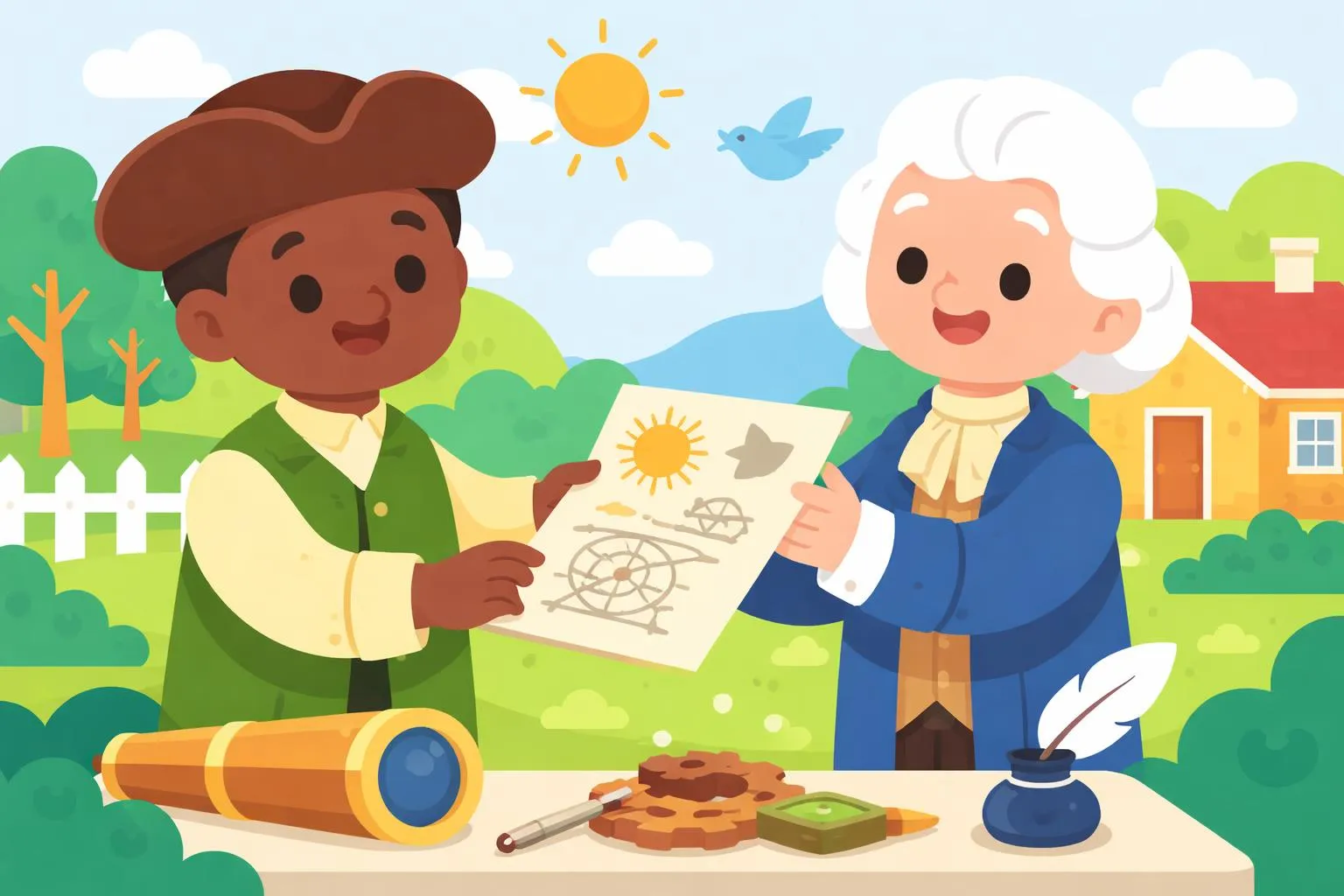
Old now,
your eyes nearly blank
from plotting the light's
movement over the years,
you clean your
Almanac
and place it next
to the heart of this letter.
I have you in mind,
giving a final brush and twist
to the difficult pages,
staring down the shape of the numbers
as though you would find a flaw
in their forms.
Solid, these calculations
verify your body on God's earth.
At night,
the stars submit themselves
to the remembered way you turn them;
the moon gloats under your attention.
I, who know so little of stars,
whose only acquaintance with the moon
is to read a myth, or to listen
to the surge
of songs the women know,
sit in your marvelous reading
of all movement,
of all relations.
So you look into what we see
yet cannot see,
and shape and take a language
to give form to one or the other,
believing no form will escape,
no movement appear, nor stop,
without explanation,
believing no reason is only reason,
nor without reason.
I read all of this into your task,
all of this into the uneasy
reproof of your letter.
Surely, there must be a flaw.
These perfect calculations fall apart.
There are silences
that no perfect number can retrieve,
omissions no perfect line could catch.
How could a man but challenge God's
impartial distributions?
How could a man sit among
the free and ordered movements
of stars, and waters, beasts and birds,
each movement seen or accounted for,
and not know God jealous,
and not know that he himself must be?
So you go over the pages again,
looking for the one thing
that will not reveal itself,
judging what you have received,
what you have shaped,
believing it cannot be strange
to the man you address.
But you are strange to him
—your skin, your tongue,
the movement of your body,
even your mysterious ways with stars.
You argue here with the man and God,
and know that no man can be right,
and know that no God will argue right.
Your letter turns on what the man knows,
on what God, you think, would have us know.
All stars will forever move under your gaze,
truthfully, leading you from line to line,
from number to number, from truth to truth,
while the man will read your soul's desire,
searcher, searching yourself,
losing the relations.
Analysis and Interpretation
This poem explores the profound relationship between human understanding, the cosmos, and faith. It depicts an aged figure who has spent years studying the movements of light and stars, meticulously recording and calculating their patterns in an almanac. The poem’s speaker reflects on this person’s dedication and the tension between scientific precision and spiritual mystery.
The almanac, a symbol of human effort to measure and predict natural phenomena, represents the desire to impose order on the universe. The aged figure’s "final brush and twist" to the difficult pages suggests a lifelong quest for truth and perfection in understanding. Yet, the poem acknowledges that despite these "perfect calculations," there are silences and omissions—things beyond human grasp or numerical explanation.
The poem also touches on the spiritual dimension of this quest. The stars and moon are not just objects to be measured but entities that "submit themselves" to the observer’s gaze, implying a dynamic relationship between the observer and the cosmos. The speaker contrasts their own limited knowledge of stars and myths with the deep, almost mystical reading of the universe by the almanac keeper.
The tension between man and God is palpable. The poem questions how a man could challenge the divine order, yet it also shows the human impulse to seek flaws, to question, and to argue with both man and God. This struggle is portrayed as natural and inevitable, as no man or god can claim absolute correctness.
Ultimately, the poem suggests that the pursuit of knowledge is both a search for truth and a search for self-understanding, where the seeker risks "losing the relations"—the connections between facts, beliefs, and emotions that make meaning whole.
Background and Author Introduction
This poem is often associated with themes of astronomy, philosophy, and spirituality. The author, whose identity is not specified here, likely draws on a deep appreciation for both scientific inquiry and poetic reflection. The poem’s tone and imagery suggest an author who is fascinated by the natural world and its mysteries, as well as by the human condition of seeking meaning.
The poem may have been inspired by historical figures such as astronomers or mathematicians who dedicated their lives to understanding the cosmos, blending empirical study with existential contemplation. It reflects a tradition in literature where science and poetry intersect, inviting readers to consider the limits of knowledge and the role of faith.
Reflections and Personal Response
Reading this poem invites one to think about the balance between certainty and doubt, between the measurable and the ineffable. It reminds us that even the most rigorous scientific work is embedded in a human context filled with questions and uncertainties. The poem’s portrayal of the almanac keeper’s struggle is moving and relatable—everyone who seeks understanding faces moments of frustration and wonder.
The poem also highlights the humility required in the pursuit of knowledge. It suggests that acknowledging what we do not know is as important as celebrating what we do. This humility opens the door to deeper insight and perhaps a more compassionate view of ourselves and the universe.
Educational Value and Learning Points
For children and students, this poem offers several valuable lessons:
- Interdisciplinary Learning: It bridges science (astronomy, mathematics) and the arts (poetry, mythology), encouraging students to appreciate how different fields can enrich each other.
- Critical Thinking: The poem challenges readers to think about the limits of knowledge and the importance of questioning assumptions.
- Language and Imagery: Students can learn how poetic devices like metaphor, personification, and symbolism work to convey complex ideas.
- Philosophical Inquiry: It introduces themes of faith, doubt, and the human search for meaning, suitable for discussions in literature, philosophy, or religious studies.
- Perseverance and Curiosity: The figure’s dedication to understanding the stars models persistence and curiosity, important traits for lifelong learning.
Practical Applications and Inspirations
- Science Education: Teachers can use the poem to inspire interest in astronomy and the history of scientific discovery.
- Creative Writing: Students can write their own poems or essays about nature, time, or the universe, using this poem as a model.
- Philosophical Discussions: The poem can serve as a starting point for debates on the relationship between science and spirituality.
- Personal Reflection: Readers can relate the poem’s themes to their own experiences of learning, doubt, and growth.
Reading Comprehension Exercises
- What is the significance of the almanac in the poem?
- How does the poem describe the relationship between the man and the stars?
- Why does the speaker believe there must be a flaw in the calculations?
- What tension does the poem highlight between man and God?
- How does the poem portray the pursuit of knowledge?
Answers
- The almanac symbolizes the man’s effort to record and understand the movements of light and stars, representing human attempts to bring order to the universe.
- The stars are described as submitting themselves to the man’s gaze, indicating a dynamic and respectful relationship where the man studies and interprets their movements.
- The speaker suspects a flaw because no perfect calculation can capture all silences or omissions, suggesting limits to human understanding.
- The poem highlights a tension where man challenges God’s impartial order, yet recognizes that neither man nor God can claim absolute correctness.
- The pursuit of knowledge is shown as a complex search that involves both scientific rigor and spiritual questioning, with moments of doubt and self-reflection.
This poem offers a rich exploration of human curiosity, the mysteries of the cosmos, and the delicate balance between faith and reason, making it a valuable resource for both literary and scientific education.