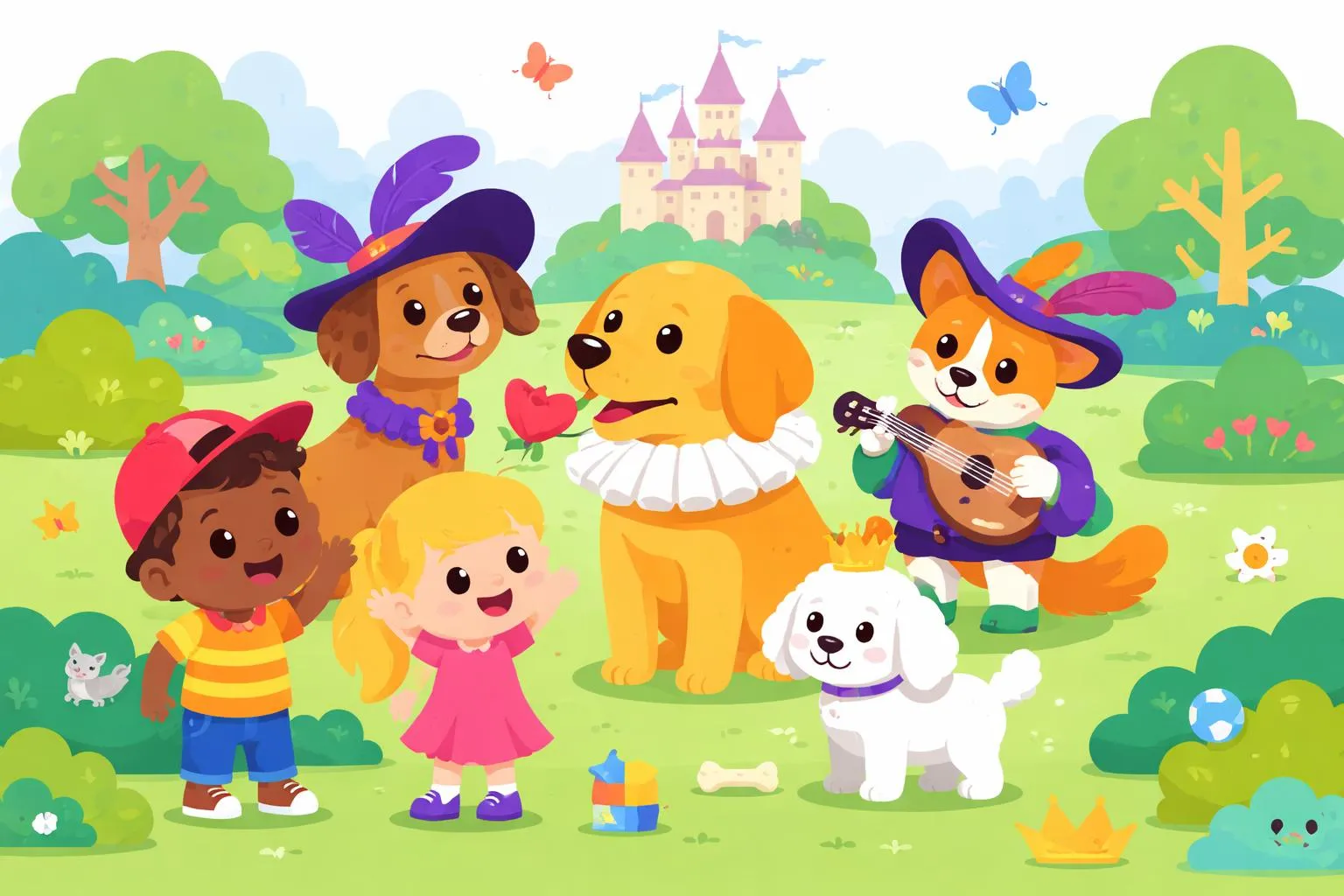

Original Poem:
Dogs are Shakespearean, children are strangers.
Let Freud and Wordsworth discuss the child,
Angels and Platonists shall judge the dog,
The running dog, who paused, distending nostrils,
Then barked and wailed; the boy who pinched his sister,
The little girl who sang the song from
Twelfth Night
,
As if she understood the wind and rain,
The dog who moaned, hearing the violins in concert.
—O I am sad when I see dogs or children!
For they are strangers, they are Shakespearean.
Tell us, Freud, can it be that lovely children
Have merely ugly dreams of natural functions?
And you, too, Wordsworth, are children truly
Clouded with glory, learned in dark Nature?
The dog in humble inquiry along the ground,
The child who credits dreams and fears the dark,
Know more and less than you: they know full well
Nor dream nor childhood answer questions well:
You too are strangers, children are Shakespearean.
Regard the child, regard the animal,
Welcome strangers, but study daily things,
Knowing that heaven and hell surround us,
But this, this which we say before we’re sorry,
This which we live behind our unseen faces,
Is neither dream, nor childhood, neither
Myth, nor landscape, final, nor finished,
For we are incomplete and know no future,
And we are howling or dancing out our souls
In beating syllables before the curtain:
We are Shakespearean, we are strangers.
Interpretation and Analysis of the Poem
This evocative poem explores the mysterious and profound nature of dogs and children, portraying them as "Shakespearean" and "strangers"—figures both familiar and unknowable. The poet invites us to consider these beings through the lenses of great thinkers like Freud and Wordsworth, blending psychology, literature, and philosophy to deepen our understanding.
The poem contrasts the innocence and complexity of children with the natural instincts and emotional depth of dogs. The animals and children are described as possessing a kind of enigmatic wisdom that adults, including intellectual authorities, cannot fully grasp. Both are portrayed as creatures caught between worlds—neither fully understood nor fully explainable by reason or science.
The repeated phrase "children are Shakespearean" suggests that children, like Shakespeare’s characters, embody a rich mixture of innocence, complexity, and theatricality. They are strangers to adults, just as dogs are strangers in their own way—both evoke feelings of sadness and wonder in the observer.
The poem also reflects on the limits of human knowledge and understanding. It questions whether childhood dreams and natural instincts are merely superficial or if they hold deeper truths. The poet implies that neither dreams nor childhood can provide definitive answers to life’s mysteries. Instead, we all remain incomplete, uncertain of the future, and engaged in a continuous performance of existence—"howling or dancing out our souls / In beating syllables before the curtain."
Background and Author Introduction
While the poem does not specify its author, its references to Freud, Wordsworth, and Shakespeare place it within a tradition of literary and philosophical reflection on childhood, nature, and the human condition. The poem likely emerges from a modern or contemporary context, where psychological theory and classical literature intersect to explore themes of identity, innocence, and alienation.
The poem’s allusions to Freud suggest an interest in psychoanalysis and the unconscious mind, while Wordsworth’s presence evokes Romantic ideas about nature and childhood as sources of spiritual insight. Shakespeare’s influence highlights the dramatic and poetic complexity of human experience.
Reflections and Insights
This poem invites readers to embrace the mystery of childhood and animal life rather than trying to reduce them to simple explanations. It encourages a respectful curiosity toward the "strangers" in our midst—children and dogs—who live with a blend of innocence and wisdom that adults often overlook.
The poem’s melancholic tone reminds us of the fragility and fleeting nature of life, urging us to appreciate the beauty and complexity of beings who are both close to us and fundamentally unknowable.
Educational Value and Learning Points for Children and Students
From this poem, children and students can learn:
- The richness of language and metaphor: Understanding how poets use literary devices to express complex ideas.
- Philosophical and psychological themes: Introducing concepts like the unconscious mind (Freud), the Romantic idealization of childhood and nature (Wordsworth), and the dramatic complexity of life (Shakespeare).
- Empathy and observation: Encouraging students to observe and appreciate the behavior and emotions of animals and children, recognizing their depth and individuality.
- Critical thinking: Questioning assumptions about childhood, dreams, and natural instincts.
- Cultural literacy: Familiarity with important figures in literature and psychology.
Practical Applications and Life Lessons
- In daily life: Encourages empathy toward children and animals, understanding their perspectives as unique and valuable.
- In learning environments: Inspires creative writing and discussions about human nature, literature, and psychology.
- Emotional intelligence: Helps students recognize and respect emotions and behaviors that might seem strange or puzzling.
- Philosophical inquiry: Motivates students to explore big questions about identity, knowledge, and existence.
Reading Comprehension Questions
- Why does the poet describe dogs and children as "Shakespearean" and "strangers"?
- What role do Freud and Wordsworth play in the poem?
- How does the poem portray the relationship between dreams, childhood, and knowledge?
- What emotions does the poet express when observing dogs and children?
- What does the phrase "howling or dancing out our souls / In beating syllables before the curtain" suggest about human existence?
- How can this poem help us better understand children and animals in our lives?
Answers to Reading Comprehension Questions
- The poet calls dogs and children "Shakespearean" because they embody complexity, innocence, and theatricality, and "strangers" because they remain mysterious and not fully understood by adults.
- Freud represents psychoanalytic understanding of the child’s mind, while Wordsworth symbolizes the Romantic view of childhood and nature. Both offer different perspectives on the child’s nature.
- The poem suggests that neither dreams nor childhood provide clear answers to life’s mysteries; they are part of a larger, incomplete human experience.
- The poet feels sadness and wonder when seeing dogs and children, recognizing their mysterious and profound nature.
- This phrase implies that human life is a continuous, expressive performance full of emotion and vitality, yet ultimately incomplete and uncertain.
- It encourages empathy and respect for the unique perspectives and emotional lives of children and animals, recognizing their depth beyond surface appearances.