
Original Poem:
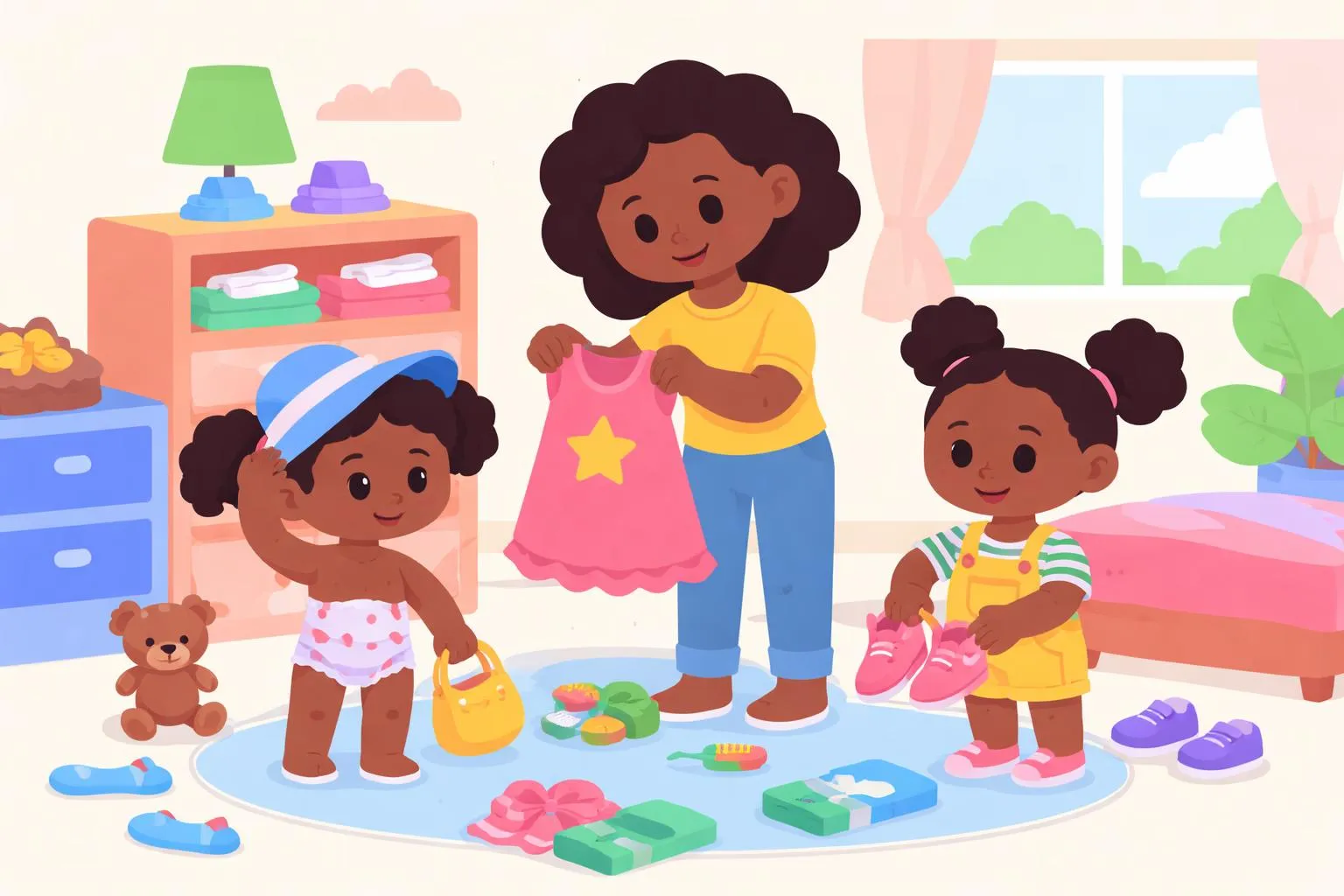
One girl a full head taller
Than the other—into their Sunday dresses.
First, the slip, hardly a piece of fabric,
Softly stitched and printed with a bud.
I’m not their mother, and tangle, then untangle
The whole cloth—on backwards, have to grab it
Round their necks. But they know how to pull
Arms in, a reflex of being dressed,
And also, a child’s faith. The mass of stuff
That makes the Sunday frocks collapses
In my hands and finds its shape, only because
They understand the drape of it—
These skinny keys to intricate locks.
The buttons are a problem
For a surgeon. How would she connect
These bony valves and stubborn eyelets?
The filmy dress revolves in my blind fingers.
The slots work one by one.
And when they’re put together,
Not like puppets or those doll-saints
That bring tears to true believers,
But living children, somebody’s real daughters,
They do become more real.
They say, “Stop it!” and “Give it back!”
And “I don’t want to!” They’ll kiss
A doll’s hard features, whispering,
“I’m sorry.” I know just why my mother
Used to worry. Your clothes don’t keep
You close—it’s nakedness.
Clad in my boots and holster,
I would roam with my six-gun buddies.
We dealt fake death to one another,
Fell and rolled in filth and rose,
Grimy with wounds, then headed home.
But Sunday ... what was that tired explanation
Given for wearing clothes that
Scratched and shone and weighed like a slow hour?
That we should shine—in gratitude.
So, I give that explanation, undressing them,
And wait for the result.
After a day like Sunday, such a long one,
When they lie down, half-dead,
To be undone, they won’t help me.
They cry, “It’s not my fault.”
Analysis and Interpretation of the Poem
This poem vividly captures the intimate, yet sometimes challenging, experience of dressing children in their Sunday best—the special clothes worn for church or formal occasions. The narrator describes the process of putting two girls into their dresses, highlighting the contrast between the physical awkwardness of the task and the children's natural understanding and patience. The poem explores themes of childhood innocence, the ritual of dressing up, and the tension between freedom and constraint symbolized by the restrictive clothing.
The poem opens with a simple scene: one girl taller than the other, both being dressed in their Sunday dresses. The narrator struggles with the delicate fabric and buttons, emphasizing the complexity and care involved. The children’s cooperation is described as a "child’s faith," suggesting trust and acceptance even when the process is uncomfortable or confusing.
The poem also contrasts the freedom of childhood play—roaming with "six-gun buddies," playing rough and getting dirty—with the formal, restrictive nature of Sunday clothes that "scratched and shone and weighed like a slow hour." This contrast reflects the tension between the natural, carefree world of children and the expectations imposed by society or tradition.
The closing lines reveal the children's exhaustion after the long day and their reluctance to be undressed, crying, "It’s not my fault." This humanizes the children and evokes empathy, showing how the experience of dressing up and conforming can feel burdensome even to the young.
Background and Author Introduction
While the poem itself does not specify the author, the style and themes suggest a writer deeply familiar with childhood experiences and family dynamics. The poem likely comes from a modern or contemporary poet who reflects on everyday moments with sensitivity and insight. The focus on detailed imagery and emotional nuance is characteristic of poets who explore family life, childhood, and identity.
The poem’s setting and tone suggest it may be inspired by personal memories or observations of caregiving, perhaps from the perspective of an older sibling, a relative, or a caretaker. The mention of "boots and holster" and "six-gun buddies" evokes a nostalgic image of childhood games, possibly drawing from mid-20th century or rural American childhood experiences.
Reflections and Personal Response
Reading this poem brings a strong sense of nostalgia and tenderness. It reminds us how small, everyday moments—like dressing children—are filled with layers of meaning and emotion. The poem’s honest portrayal of the struggle and love involved in caregiving resonates deeply with anyone who has cared for young children.
The poem also invites reflection on the rituals of childhood and how they shape identity and family bonds. It raises questions about the balance between freedom and conformity, innocence and responsibility, and how children navigate these tensions.
Educational Value and Learning Points for Children and Students
This poem offers rich material for students to explore several important concepts:
- Imagery and Sensory Detail: Students can learn how the poet uses vivid descriptions ("softly stitched," "filmy dress," "bony valves and stubborn eyelets") to create a sensory experience.
- Theme Exploration: The poem provides a way to discuss themes such as childhood innocence, family relationships, and the contrast between play and formality.
- Emotional Intelligence: The poem encourages empathy by portraying the children’s feelings and the narrator’s perspective.
- Vocabulary Building: Words like "drape," "valves," "eyelets," and "collapses" offer opportunities to expand vocabulary in context.
- Narrative Perspective: Students can analyze how the poem’s first-person narrator shapes our understanding of the scene and emotions.
Practical Applications in Life and Learning
- In Life: Understanding the poem helps children appreciate the care and effort involved in family routines, fostering gratitude and patience.
- In Learning: Teachers can use the poem to teach descriptive writing, narrative voice, and poetry analysis.
- Social Skills: Discussing the poem can help children articulate feelings about rules, expectations, and personal boundaries.
- Cultural Awareness: The poem opens discussion about traditions such as wearing special clothes for church or events, encouraging respect for different customs.
Reading Comprehension Exercises
-
What is the main activity described in the poem?
a) Playing outside
b) Dressing two girls in Sunday dresses
c) Cooking dinner
d) Going to church -
How does the narrator feel about putting on the dresses?
a) It is easy and quick
b) It is complicated and requires patience
c) It is boring
d) It is unpleasant and painful -
What do the children do when they are dressed?
a) They become like puppets
b) They become more real and alive
c) They cry and refuse to move
d) They run outside immediately -
What contrast does the poem draw between Sunday clothes and playtime?
a) Sunday clothes are comfortable; playtime is restrictive
b) Sunday clothes are heavy and formal; playtime is free and messy
c) Playtime is boring; Sunday clothes are exciting
d) There is no contrast mentioned -
What do the children say when they are being undressed after Sunday?
a) “Thank you”
b) “It’s not my fault”
c) “I want to play more”
d) “Stop it!”
Answers
- b) Dressing two girls in Sunday dresses
- b) It is complicated and requires patience
- b) They become more real and alive
- b) Sunday clothes are heavy and formal; playtime is free and messy
- b) “It’s not my fault”
This poem offers a beautiful glimpse into the complexity of childhood rituals and the tender moments that shape family life. Through its rich imagery and emotional depth, it invites readers to reflect on the interplay between innocence, responsibility, and love.














