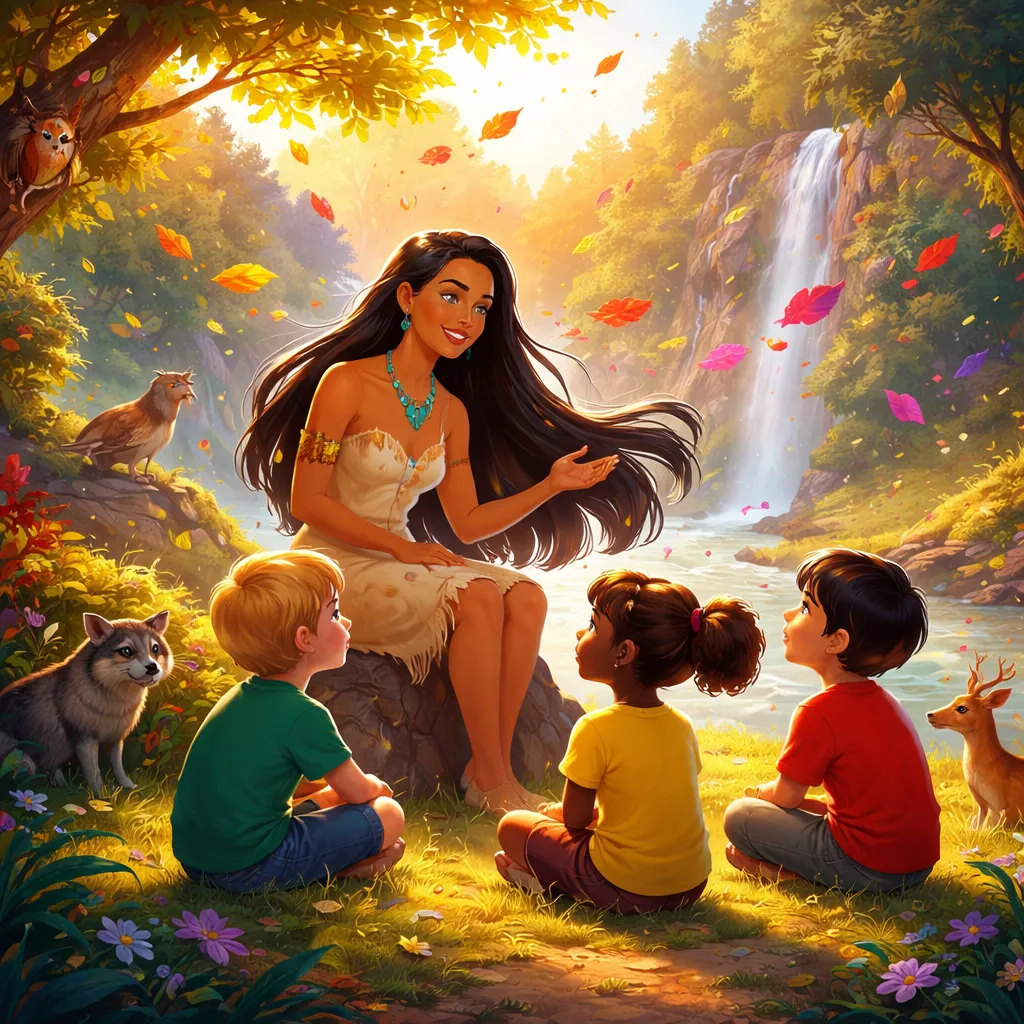

Music opens doors to new worlds. The English song: Colors of the Wind (from Pocahontas) invites listeners into a world of nature, respect, and understanding. This beautiful song asks us to see the earth differently. For families learning English together, it offers rich language and deep meaning. The melody carries the words gently, making them easy to remember. Let us explore how this song can become a special part of your family's language journey.
What Is the Story Behind This Famous Song?
The English song: Colors of the Wind (from Pocahontas) comes from the Disney film Pocahontas. The movie tells the story of a young Native American woman who meets English settlers in Virginia. This song appears at a key moment. Pocahontas sings to John Smith, an English explorer. She tries to help him understand her people's connection to the land. She explains that every rock, tree, and creature has a spirit and a purpose.
The song carries a powerful message about respect for nature. It asks us to look beyond what we own or use. It invites us to feel the world around us. Alan Menken composed the music, and Stephen Schwartz wrote the lyrics. Together, they created a song that won an Academy Award and a Grammy. For language learners, it provides a gentle way to explore big ideas through simple, beautiful words.
The Complete Lyrics of the Song
Reading the words helps us understand the song's beauty. Here are the lyrics to the English song: Colors of the Wind (from Pocahontas). Let us look at them in sections.
Think you own whatever land you land on Earth is just a dead thing you can claim But I know every rock and tree and creature Has a life, has a spirit, has a name
Think the only people who are people Are the people who look and think like you But if you walk the footsteps of a stranger You learn things you never knew you never knew
Have you ever heard the wolf cry to the blue corn moon? Or asked the grinning bobcat why he grinned? Can you sing with all the voices of the mountain? Can you paint with all the colors of the wind? Can you paint with all the colors of the wind?
Come run the hidden pine trails of the forest Come taste the sun-sweet berries of the earth Come roll in all the riches all around you And for once, never wonder what they're worth
The rainstorm and the river are my brothers The heron and the otter are my friends And we are all connected to each other In a circle, in a hoop that never ends
How high does the sycamore grow? If you cut it down, then you'll never know And you'll never hear the wolf cry to the blue corn moon Or whether we are white or copper-skinned We need to sing with all the voices of the mountain We need to paint with all the colors of the wind You can own the earth and still all you'll own is dust Until you can paint with all the colors of the wind
Learning New Words from the Song
The English song: Colors of the Wind (from Pocahontas) introduces many beautiful words. Let us explore them together.
First, the song asks about the "wolf cry". A cry can mean a loud call or shout. Wolves howl to communicate. The song asks if we have ever really listened to nature's sounds.
Next, we meet the "grinning bobcat". A bobcat is a wild cat with a short tail. Grinning means smiling widely. This line invites us to wonder about nature's mysteries. Why do animals act the way they do?
The song mentions "hidden pine trails". A trail is a path through the forest. Pine refers to the trees with needles that stay green all year. Hidden means not easy to find. This phrase describes secret paths waiting to be discovered.
Another beautiful word is "sycamore". A sycamore is a type of tall tree with broad leaves. The song asks how high it grows. This reminds us that nature has limits we cannot see.
The song also uses "heron" and "otter". A heron is a bird with long legs that stands in water. An otter is a playful animal that swims in rivers. Learning animal names through song makes them easier to remember.
Exploring Pronunciation and Connected Speech
When we listen to the English song: Colors of the Wind (from Pocahontas), we hear how words flow together. The singer, Judy Kuhn, pronounces words clearly but naturally. This helps learners catch new sounds.
Listen to the line "You learn things you never knew you never knew". In natural speech, this becomes smooth and connected. The words "never knew you" blend together. The "k" sound in "knew" connects to the "y" sound in "you". It sounds like "never knew-you". Practicing this line helps children hear these natural connections.
Another example is "Can you paint with all the colors". The phrase "paint with" flows together. The "t" at the end of "paint" almost disappears when followed by "with". This is common in English. Learning to hear these small changes helps with understanding real conversations.
Finding Grammar Patterns in the Lyrics
The English song: Colors of the Wind (from Pocahontas) offers many chances to explore grammar. One clear pattern is the use of questions. The song asks "Have you ever heard the wolf cry?" This uses the present perfect tense. We use this tense to talk about life experiences. We do not say exactly when something happened. We just ask if it ever happened.
The song also uses the modal verb "can". "Can you sing with all the voices?" This asks about ability. We use "can" to talk about what someone is able to do. For example, "Can you hear the music?" or "Can you see the stars?"
Another pattern appears in the line "We are all connected". This uses the present simple tense with the verb "to be". It describes a truth that does not change. We use this structure for facts. For example, "We are a family" or "We are learning together".
The song also gives commands in a gentle way. "Come run the hidden pine trails" uses the imperative form. This gives an invitation or suggestion. We use this form when we want to encourage someone to do something.
Fun Learning Activities for the Whole Family
Listening to the English song: Colors of the Wind (from Pocahontas) can inspire many family activities. Here are some ideas to try together.
First, go on a nature listening walk. Play the song before you go outside. Then walk in a park or garden. Ask everyone to listen for sounds like birds, wind, or water. When you return, talk about what you heard. Use simple sentences like "I heard a bird" or "The wind made sound". This connects the song's message to real life.
Second, try a nature art project. Listen to the song again. Give everyone paper and crayons or paints. Ask them to draw something from nature that the song makes them think of. It could be a tree, a river, or an animal. After drawing, each person describes their picture. This builds vocabulary and creativity together.
Third, have a family discussion about respect. The song teaches us to respect nature and people who are different. Ask questions like "How can we show respect to trees?" or "How do we learn from new friends?" Keep the conversation simple and positive.
Creating Printable Materials at Home
Families can make simple learning tools based on the English song: Colors of the Wind (from Pocahontas). These activities help reinforce new words and ideas.
Create a nature vocabulary booklet. Fold several pieces of paper together to make a small book. On each page, write a word from the song like "wolf", "river", or "mountain". Draw a picture or find a printed image. Write a simple sentence using the word. Review this booklet together during the week.
Make a matching game with animal names and pictures. On one set of cards, write animal names from the song. On another set, draw simple pictures or print images. Mix them up and match each name to its picture. This game builds reading and vocabulary skills.
Create a fill-in-the-blank page using song lyrics. Choose a few lines and remove key words. Leave blanks where those words belong. Listen to the song together and try to fill in the missing words. This activity builds listening and spelling skills.
Connecting the Song to Daily Life
The English song: Colors of the Wind (from Pocahontas) teaches lessons we can use every day. It reminds us to notice the small wonders around us. After listening, take a moment to look outside. What do you see? Maybe a bird on a branch or clouds in the sky. Use English words to describe these things together.
The song also teaches us about respect for others. Pocahontas asks John Smith to understand her way of life. In our daily lives, we meet people who think and look different from us. We can use the song as a starting point for conversations about kindness and curiosity. Ask children "What can we learn from someone new today?"
Parents can model using new vocabulary from the song. When you see a tall tree, you might say "Look at that sycamore" or "I wonder how high it grows". When you hear wind, you might say "Can you hear the wind singing?" Using these phrases makes language learning natural and fun.
Educational Games to Play Together
Games make learning with the English song: Colors of the Wind (from Pocahontas) exciting. Here are some simple games to try.
Play nature sound charades. Write different nature words on small papers. Words can include wolf, river, wind, rain, or bird. Take turns picking a paper and making the sound of that thing. The other players guess what it is. This game builds vocabulary through listening and fun.
Try a sentence chain game. One person says a simple sentence about nature. For example, "I see a tree." The next person adds something. "I see a tall tree with green leaves." Continue adding details. This builds descriptive language skills together.
Play the question game. Take turns asking questions like the song does. "Have you ever heard the wind?" "Can you sing like a bird?" "Have you ever seen a bobcat?" Answer with full sentences. This builds confidence with question forms and new vocabulary.
Why This Song Helps English Learning
The English song: Colors of the Wind (from Pocahontas) works well for language learners. The tempo is gentle and clear. The singer's voice is easy to understand. Each word carries meaning and emotion.
The song also uses repetition effectively. The question "Can you paint with all the colors of the wind?" repeats throughout. Repetition helps new language stick in our memory. When we hear a phrase many times, it becomes familiar. Eventually, we can use it ourselves.
The emotional connection is powerful too. This song touches our hearts. It makes us feel wonder and respect. When we feel connected to a song, we want to understand every word. This natural motivation is the best fuel for learning.
Making Music Part of Your Routine
Families can make listening to English songs a regular habit. Choose one song each month to explore deeply. Listen during breakfast or while driving. Talk about the words and their meanings. Sing along when you feel comfortable.
The English song: Colors of the Wind (from Pocahontas) can become a family favorite. After you know it well, choose another song from a Disney movie or a nature-themed album. Each new song adds more words and ideas to your family's English world.
Remember that learning happens slowly. Celebrate every small step. Maybe your child remembers one new animal name this week. That is wonderful. Maybe the whole family sings the chorus together. That is real progress. Keep listening, keep talking, and keep enjoying the music together.