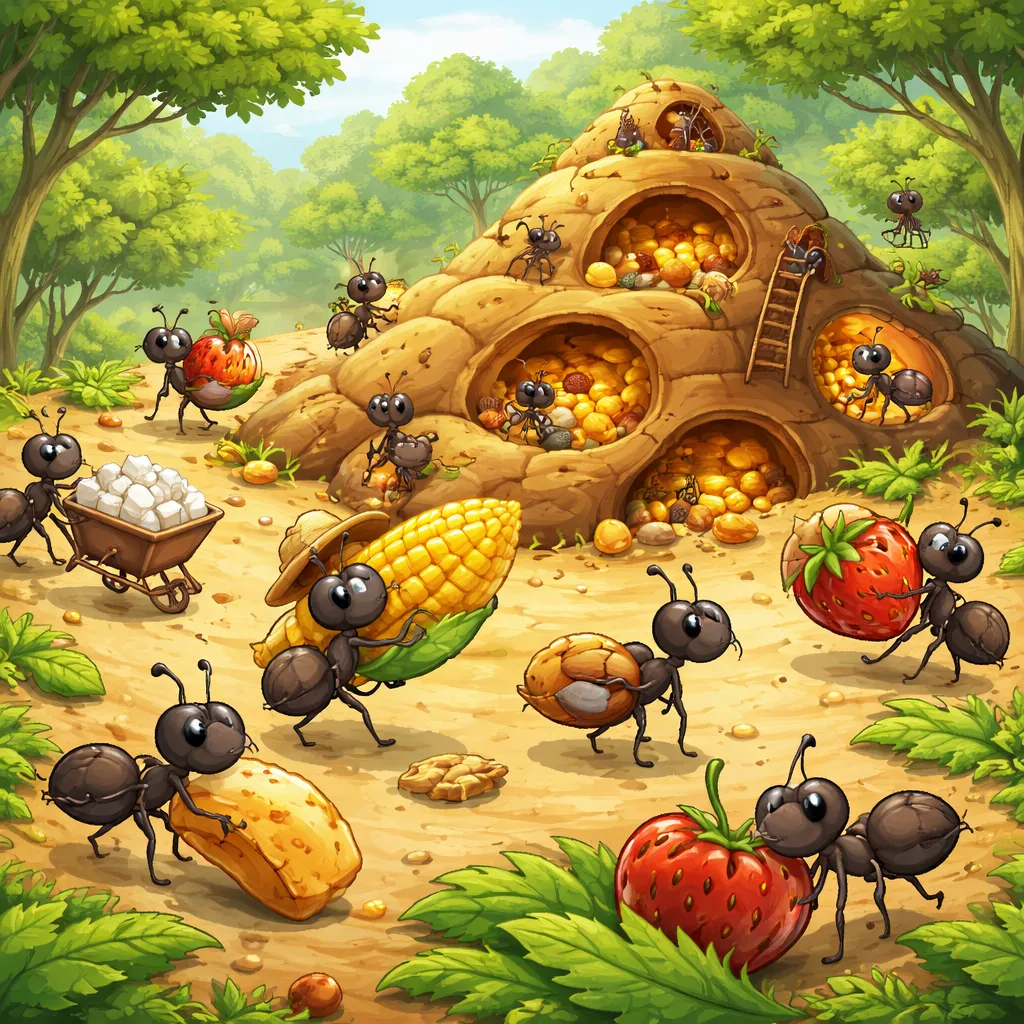

Have you ever watched a line of tiny ants marching across the ground, each one carrying a crumb many times its own size? They never seem to stop, moving with a clear purpose. In Korea, a country that values hard work and harmony, there is a famous song that celebrates these incredible little workers. Let’s follow the line and learn the Korean Song: The Little Ant (개미).
About the Song
Here are the classic, hard-working lyrics of this beloved song in Korean and English:
개미야 개미야 열심히 일하네
(Gaemiya gaemiya yeolsimhi ilhane)
Ant, ant, works diligently
먹이를 나르고 집을 짓고
(Meogireul nareugo jibeul jitgo)
Carrying food, building a home
서로 도와가며 열심히 사네
(Seoro dowagamyeo yeolsimhi sane)
Living diligently, helping each other
부지런한 우리 개미
(Bujireonan uri gaemi)
Our diligent little ant
This song’s original Korean name is “개미” (Gaemi), which means “ant.” It is a very popular and traditional Korean children’s song. The song is a tribute to the ant’s incredible work ethic and teamwork. The music is often steady, rhythmic, and full of purposeful energy, like the march of an ant colony. The Korean Song: The Little Ant (개미) is a musical lesson in diligence, cooperation, and the power of many small efforts coming together.
What the Song is About
The song is a song of praise for the ant’s way of life. First, we call out to it: “Ant, ant, works diligently.” We see the two main jobs of the ant: “Carrying food, building a home.” We can picture an ant struggling with a large breadcrumb and others working together to build their underground tunnels. The most important line is about how they work: “Living diligently, helping each other.” The ants don’t work alone; they cooperate. The song ends by calling it “our diligent little ant,” making the ant a role model for everyone. The whole song is about the values of hard work, planning for the future, and the strength found in community.
Who Made It & Its Story
This song is a traditional Korean folk song, passed down through generations. The original creator is unknown, as it comes from the people’s observation of nature and the lessons it provides. The ant is a powerful symbol in many cultures, and in Korea, it represents 근면 (geunmyeon), or diligence, a highly respected virtue. The Korean Song: The Little Ant (개미) is adored for three important reasons. First, it turns a common insect into a heroic example of positive values. Second, it teaches children about the importance of cooperation and helping others. Third, its melody is steady, repetitive, and easy to march to, making the message of steady work easy to remember and embody.
When to Sing It
You can sing this song while cleaning up your toys, pretending each toy is a piece of food for the ant colony. It’s perfect to chant with friends when working on a group project, to encourage teamwork. You could also sing it while walking in a line with your family, pretending to be a troop of busy ants on a mission.
The Korean Song: The Little Ant (개미) shows us the power of small, steady efforts. But to work as smartly as an ant, we need to learn too. This song is our guide to knowledge. It introduces us to new words, shows us how to connect actions, and shares a core cultural value. Let’s get to work and see what we can build.
What Children Can Learn
Vocabulary
This song helps us learn words for work, community, and character.
Diligence: Careful and persistent work or effort. The ant is the perfect example of diligence.
Colony: A group of animals of the same type living together. Ants live in a colony.
Cooperation: The process of working together to achieve a common goal. Ants survive through cooperation.
Persistence: The quality of continuing to do something despite difficulty. Carrying a heavy load shows persistence.
Provision: The act of providing or supplying something for use. Gathering food is a form of provision.
Synergy: The combined effect of a group that is greater than the sum of their individual efforts. An ant colony shows synergy.
Language Skills
This song is a wonderful example of using Connecting Actions with “And” (하고, -고). In the song, the suffix “-고” (-go) is used to connect verbs, meaning “and” for actions. In English, we use “and” to connect actions that happen together or in sequence.
What Is It?: Think of “and” as your action connector. It links two or more actions that the same subject is doing.
Finding the Secret: Look for a list of actions (verbs) connected by the word “and.” Ask: “Is the same person or thing doing more than one action?”
Using It:
◦   Formula: [Subject] + [verb 1] + and + [verb 2].

◦   Examples: “The ant carries food and builds a home.” “I read books and play outside.”

◦   In the song: “Carrying food, and building a home.” The little ant is doing multiple jobs.
Sounds & Rhythm Fun
Listen to the marching rhythm! The Korean Song: The Little Ant (개미) has a very steady, walking, and repetitive beat. It sounds like the determined, synchronized steps of a line of ants. The melody is simple and easy to follow, perfect for singing while doing a repetitive task. This steady, workmanlike rhythm makes the message of diligence and cooperation easy to remember and helps you feel the power of many small steps. You can use this same marching, steady rhythm to make up a song about any group activity, like cleaning up or walking to school.
Culture & Big Ideas
This song connects to the deep Korean cultural value of 근면 성실 (geunmyeon seongshil), which means diligence and sincerity. This is a virtue taught from a young age. A traditional Korean proverb says, “개미구멍이 둑을 무너뜨린다” (An ant hole can collapse a dam), meaning that small, neglected problems can lead to big disasters, highlighting the importance of attending to small things diligently. The Korean Song: The Little Ant (개미) teaches three foundational ideas. First, Strength in Unity: One ant is small, but a colony is powerful. Our combined efforts achieve great things. Second, The Dignity of Work: All work, no matter how small it seems, is valuable and contributes to the community. Third, Preparation and Teamwork: Working together and planning ahead (gathering food, building a home) ensures the survival and happiness of the whole group.
Values & Imagination
Imagine you are a little ant in the colony. What is your job? Are you a forager, a builder, or a caretaker for the babies? How do you communicate with your friends? This song teaches you the value of doing your part, no matter how small it seems. It shows that helping others makes the whole group stronger. A simple idea: The next time you have a chore, break it into tiny “ant-sized” pieces. Do one piece, then another. See how your small efforts add up to a big result. You are practicing diligence.
Your Core Takeaways
The Korean Song: The Little Ant (개미) is a powerful lesson in diligence, teamwork, and community. You learned words like “diligence,” “colony,” and “cooperation.” You discovered how to use “and” to connect actions that someone is doing. You marched to the song’s steady, purposeful rhythm. You also connected the ant to the Korean value of hard work and the wisdom of proverbs. Most importantly, the song teaches that small, steady efforts create big results, that we are stronger when we work together, and that every job, done well, helps build a happy home for everyone.
Your Practice Missions
- Be an “Action Connector.” With a family member, do two simple chores together, like putting away toys and then wiping a table. As you do them, say what you are doing using “and.” Example: “I am picking up blocks and putting them in the box.” This practices connecting actions in the present.
- Build a “Teamwork Ant Colony.” With a few friends or family members, choose a small project, like building a tower with cups or drawing a big mural. Assign each person a small, specific job (like the cup-passer, the stacker, the color-chooser, the drawer). Work silently for 5 minutes, just like ants, focusing on your task and helping each other. After, look at what you built together. Discuss how cooperation helped. This shows the power of a colony.