
Original Poem:
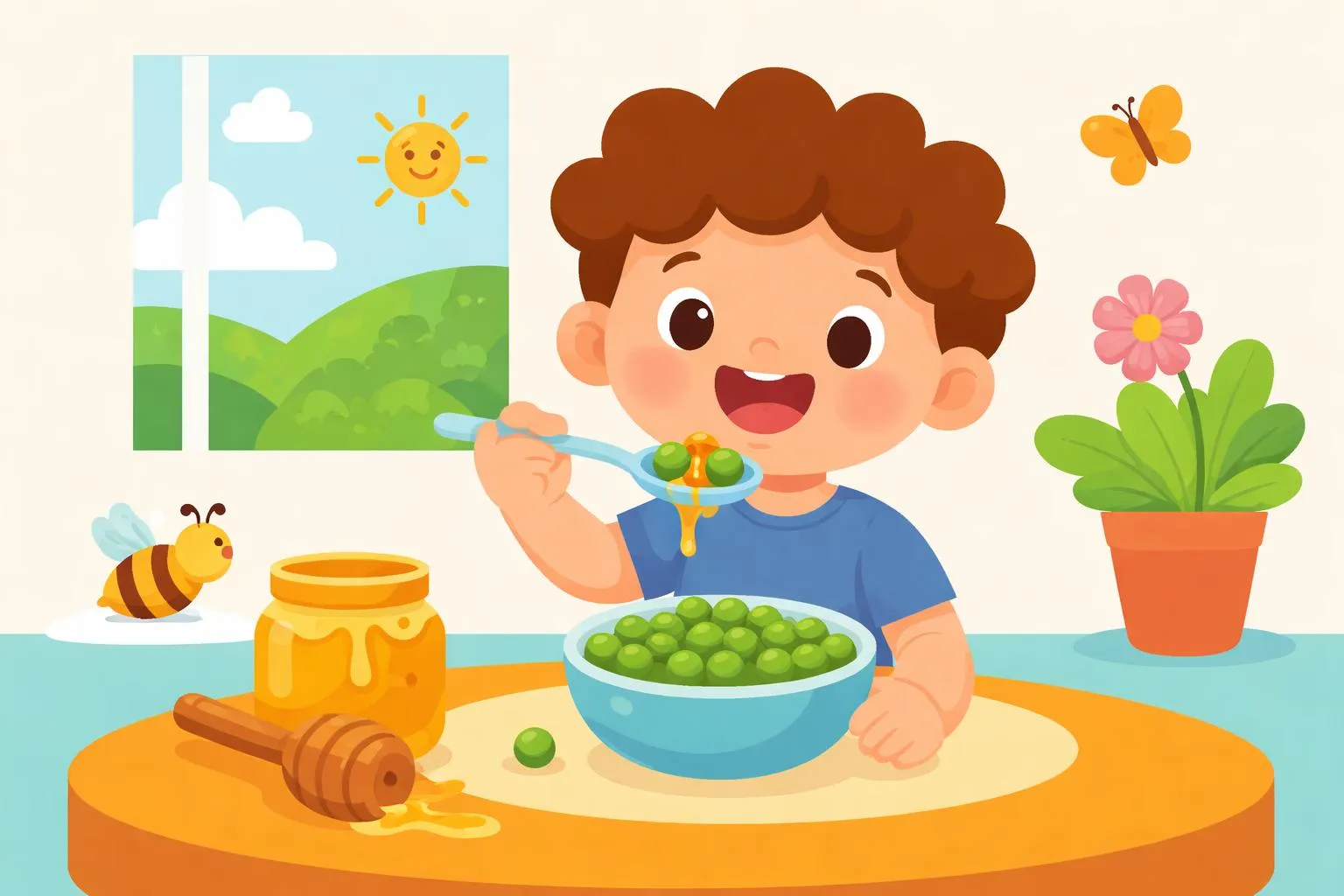
I eat my peas with honey;
I've done it all my life.
It makes the peas taste funny,
But it keeps them on the knife.</p>
Explanation and Interpretation
This short and playful poem describes a unique way of eating peas—by adding honey. The speaker admits to having eaten peas with honey their entire life. Although this combination makes the peas taste unusual or "funny," it serves a practical purpose: it helps the peas stick to the knife, making them easier to eat. The poem uses simple language and rhyme, making it appealing and memorable for children.
The poem highlights a child's imaginative approach to a common food, turning an ordinary eating experience into something whimsical. It reflects a blend of creativity and practicality, showing how small changes can make a routine task more enjoyable.
Background and Author Introduction
This poem is a classic example of children's poetry that uses humor and rhyme to engage young readers. It is often attributed to Ogden Nash, an American poet known for his light verse and witty, unconventional style. Nash's poems frequently challenge everyday norms with humor and clever wordplay, making them favorites in children's literature.
The poem's creation likely stems from a desire to make everyday experiences fun and relatable for children. It encourages kids to think differently and find joy in simple things, such as eating vegetables, which are often disliked by children.
Reflection and Appreciation
Reading this poem invites us to appreciate the imagination and innocence of childhood. It reminds adults of the small joys and creative solutions children devise to make life more enjoyable. The humor in the poem also shows how language can be playful and expressive, which is important in developing a love for reading and poetry.
The poem's rhythm and rhyme make it easy to memorize and recite, which helps children develop their language skills and phonemic awareness. It also encourages children to experiment with language and their own ideas.
Learning Points for Children and Students
From this poem, children can learn several valuable lessons and skills:
- Creativity and Imagination: The poem encourages thinking outside the box, showing that even something as simple as eating peas can be made fun and interesting.
- Language Skills: The use of rhyme and rhythm helps children recognize sounds and patterns in English, which supports reading fluency.
- Problem Solving: The idea of using honey to keep peas on the knife demonstrates practical problem-solving in everyday life.
- Appreciation for Food: It subtly promotes trying new ways to enjoy healthy food, which can help children develop better eating habits.
Practical Applications in Life and Learning
- In the classroom: Teachers can use this poem to introduce rhyme schemes and encourage students to write their own playful poems.
- At home: Parents can use the poem as a conversation starter about food preferences and creativity in the kitchen.
- In social settings: Children can share the poem with friends, practicing public speaking and memorization.
- In learning English: The poem is a useful tool for ESL learners to practice pronunciation and vocabulary in a fun context.
Comprehension Questions
- What unusual ingredient does the speaker use to eat peas?
- Why does the speaker eat peas with honey?
- How does the honey affect the taste of the peas?
- What is the benefit of eating peas with honey according to the poem?
- Who is the likely author of this poem?
- What can children learn from this poem?
Answers
- The speaker uses honey to eat peas.
- The speaker eats peas with honey because it helps keep the peas on the knife.
- The honey makes the peas taste funny or unusual.
- The benefit is that the honey keeps the peas from falling off the knife, making them easier to eat.
- The poem is likely written by Ogden Nash.
- Children can learn about creativity, language skills, problem solving, and appreciating healthy food.
This poem is a delightful example of how simple language and humor can inspire children to think creatively and enjoy learning. It also serves as a reminder that even everyday activities can be made special with a little imagination.














