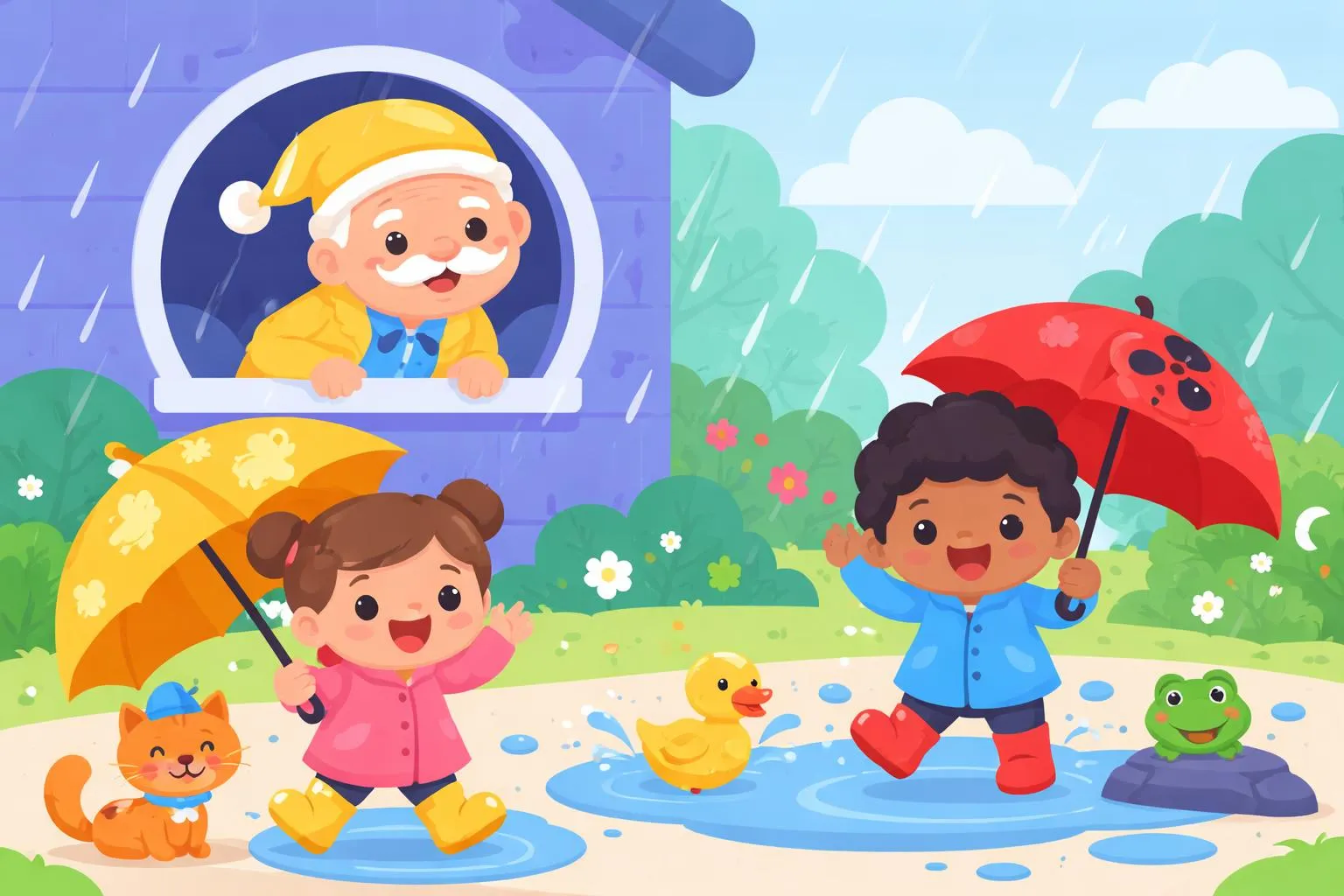

Original Poem:
It’s raining, it’s pouring,
The old man’s snoring.
He got into bed
And bumped his head
And couldn’t get up in the morning.
Introduction and Explanation of the Poem
This short and simple nursery rhyme is a classic example of traditional English children’s poetry. The poem describes a rainy night during which an old man goes to bed, but unfortunately bumps his head and is unable to get up the next morning. The rhyme uses a rhythmic and repetitive structure that makes it easy for children to remember and recite.
The poem’s meaning is straightforward: it portrays a humorous and slightly unfortunate incident involving the old man. The rain sets a gloomy or sleepy atmosphere, and the old man’s snoring adds a touch of everyday life humor. The bump on the head and the inability to get up the next day introduce a gentle cautionary element, reminding children about being careful, especially when going to bed.
Background and Author Information
The author of this nursery rhyme is unknown, as is common with many traditional nursery rhymes that have been passed down orally through generations. It is believed to have originated in England and has been part of children’s literature for many years. The rhyme’s simple language and catchy rhythm have helped it endure as a popular piece for early childhood education.
Nursery rhymes like this one often served multiple purposes: entertaining children, teaching language skills, and sometimes conveying subtle lessons or warnings. This rhyme, with its vivid imagery and playful tone, fits well within the tradition of oral storytelling and early childhood learning.
Interpretation and Appreciation
The charm of this poem lies in its simplicity and rhythm. The repetition of sounds in "It’s raining, it’s pouring" creates a musical effect that is engaging for young listeners. The unexpected twist—that the old man bumps his head and cannot get up—adds humor and a memorable ending.
From an educational perspective, this poem helps children develop phonemic awareness through rhyming words such as "pouring" and "snoring." It also introduces the concept of cause and effect in a gentle way: the old man bumps his head, which leads to a consequence.
Lessons and Knowledge Points for Children and Students
Children and students can learn several important things from this poem:
- Vocabulary Development: Words like "pouring," "snoring," and "bumped" expand a child’s vocabulary.
- Rhyming and Phonetics: The poem’s rhyming scheme helps children recognize sounds and patterns in language.
- Cause and Effect: The sequence of events teaches children about consequences.
- Safety Awareness: The bump on the head can be a starting point for discussions about being careful, especially in the bedroom or at night.
- Imagination and Storytelling: Encourages children to imagine scenarios and create their own stories based on simple events.
Practical Uses and Inspirations in Daily Life and Learning
This nursery rhyme can be used in various learning environments:
- Classroom Activities: Teachers can use it to teach rhyming words, rhythm, and simple storytelling.
- Bedtime Routine: Parents can recite this rhyme to children as part of a calming bedtime ritual.
- Safety Lessons: It can be a gentle way to introduce conversations about safety and being careful at home.
- Creative Writing: Older children can be encouraged to write their own short poems or stories inspired by this rhyme.
- Memory and Recitation: Helps improve memory skills through repetition and rhyme.
Reading Comprehension Questions
- What is the weather like in the poem?
- What is the old man doing in the poem?
- What happened to the old man after he got into bed?
- Why couldn’t the old man get up in the morning?
- What lesson can children learn from this poem?
Answers
- It is raining.
- The old man is snoring and going to bed.
- He bumped his head.
- Because he bumped his head.
- Children can learn to be careful and understand the consequences of accidents.
Conclusion
This nursery rhyme, though brief, offers valuable insights into language learning, storytelling, and safety awareness for children. Its rhythmic and rhyming qualities make it an effective educational tool, and its gentle humor keeps children engaged. By exploring the poem’s content, background, and lessons, children and educators can appreciate the enduring power of simple nursery rhymes in early childhood development.














