
Original Poem:
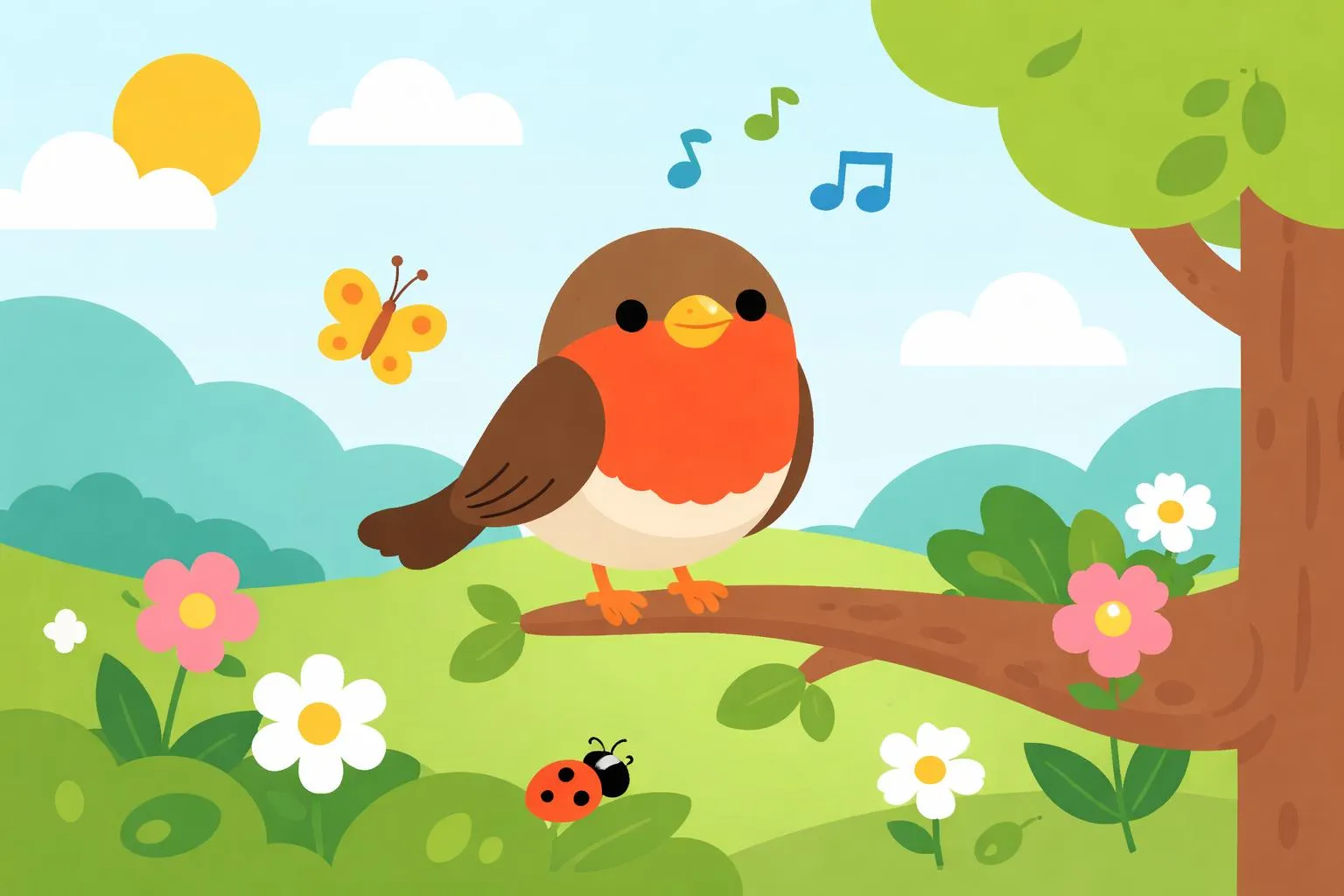
Little Robin Redbreast
Sat upon a tree;
Up went Pussy-cat,
Down went he.
Down came Pussy-cat,
And away Robin ran;
Says little Robin Redbreast
“Catch me if you can.”
Little Robin Redbreast
Hopped upon a wall;
Pussy-cat jumped after him,
And almost got a fall.
Little Robin chirped and sang,
And what did Pussy say?
Pussy-cat said “Mew,”
and Robin flew away.
Introduction and Explanation
This charming nursery rhyme, "Little Robin Redbreast," tells a playful story of a small bird, the robin, and a curious pussy-cat. The poem captures a lively chase between the two, full of energy and lightheartedness. The robin, perched safely on a tree, notices the pussy-cat approaching. As the cat attempts to catch the robin, the bird cleverly escapes, hopping onto a wall and teasing the cat with its quick movements. The poem ends with the robin flying away after the cat’s unsuccessful attempts, highlighting the robin’s agility and wit.
The poem’s simple language and rhythmic flow make it easy for children to follow and enjoy. It uses repetition and rhyme to create a musical quality that is engaging for young readers. The robin’s playful taunt, “Catch me if you can,” invites children to imagine the chase, encouraging interaction and imagination.
Meaning and Appreciation
At its core, this poem celebrates cleverness, agility, and the joy of play. The robin represents quick thinking and nimbleness, while the pussy-cat symbolizes curiosity and persistence. The chase between the two is not threatening but fun, showing a natural interaction between animals that children can relate to.
The poem also introduces young readers to the natural world, encouraging observation of birds and animals. The robin’s chirping and singing add a musical element, reinforcing the idea that nature is full of sounds and life. The cat’s "Mew" provides a gentle contrast, reminding children of the different voices animals have.
Background and Author
This nursery rhyme is a traditional English folk poem, often passed down orally through generations. Its exact author is unknown, as is common with many classic nursery rhymes. These rhymes were originally created to entertain children and teach them language skills, rhythm, and social interactions through storytelling.
The robin, a familiar bird in English folklore, is often depicted as a friendly and lively character. The pussy-cat, a common household pet, represents curiosity and playfulness. Together, they create a relatable scenario for children growing up in rural or urban settings.
Reflections and Personal Response
Reading "Little Robin Redbreast" evokes a sense of nostalgia and warmth. It reminds us of the simple joys of childhood — chasing, playing, and exploring nature. The poem’s lighthearted tone encourages children to appreciate the beauty of animals and the outdoors. It also subtly teaches the value of quick thinking and staying alert.
For adults, the poem can be a reminder to nurture curiosity and playfulness in children. It highlights how storytelling and rhyme can be powerful tools in early childhood education, fostering language development and creativity.
Learning Points for Children and Students
From this poem, children can learn several important lessons and skills:
- Vocabulary Building: Words like "redbreast," "pussy-cat," "chirped," and "mew" expand children’s knowledge of animal names and sounds.
- Rhythm and Rhyme: The poem’s structure helps children understand rhyme schemes and rhythmic patterns, which are foundational for reading fluency.
- Animal Behavior: Observing the robin’s flight and the cat’s movements introduces basic concepts of animal behavior and nature.
- Problem Solving and Agility: The robin’s clever escapes teach children about quick thinking and adaptability.
- Imaginative Play: The poem encourages children to imagine the chase, fostering creativity and storytelling skills.
Practical Applications and Insights
In everyday life and learning environments, this poem can be used in various ways:
- Reading Practice: Teachers can use the poem to practice pronunciation, rhythm, and expression with young learners.
- Nature Study: It can serve as an introduction to bird watching and learning about common animals in the environment.
- Creative Writing: Children can be encouraged to write their own animal chase stories, enhancing writing skills.
- Drama and Role Play: Acting out the poem helps develop speaking skills and confidence.
- Moral Lessons: The poem subtly promotes respect for animals and the importance of play and exercise.
Comprehension Questions and Answers
-
Who is sitting on the tree at the beginning of the poem?
Answer: Little Robin Redbreast. -
What does the pussy-cat do when it sees the robin?
Answer: The pussy-cat tries to catch the robin. -
How does the robin respond to the pussy-cat’s chase?
Answer: The robin runs away and says, “Catch me if you can.” -
What almost happens to the pussy-cat when it jumps after the robin?
Answer: The pussy-cat almost falls. -
What sound does the pussy-cat make in the poem?
Answer: The pussy-cat says “Mew.” -
What does the robin do at the end of the poem?
Answer: The robin flies away. -
What lesson can we learn from the robin’s behavior?
Answer: The robin teaches us to be clever and quick to stay safe. -
Why do you think the poem is fun for children to read?
Answer: Because it has a playful story, rhyme, and sounds that make it enjoyable.
This poem offers a delightful way to combine language learning with nature appreciation and creative thinking, making it a valuable resource for educators and parents alike.