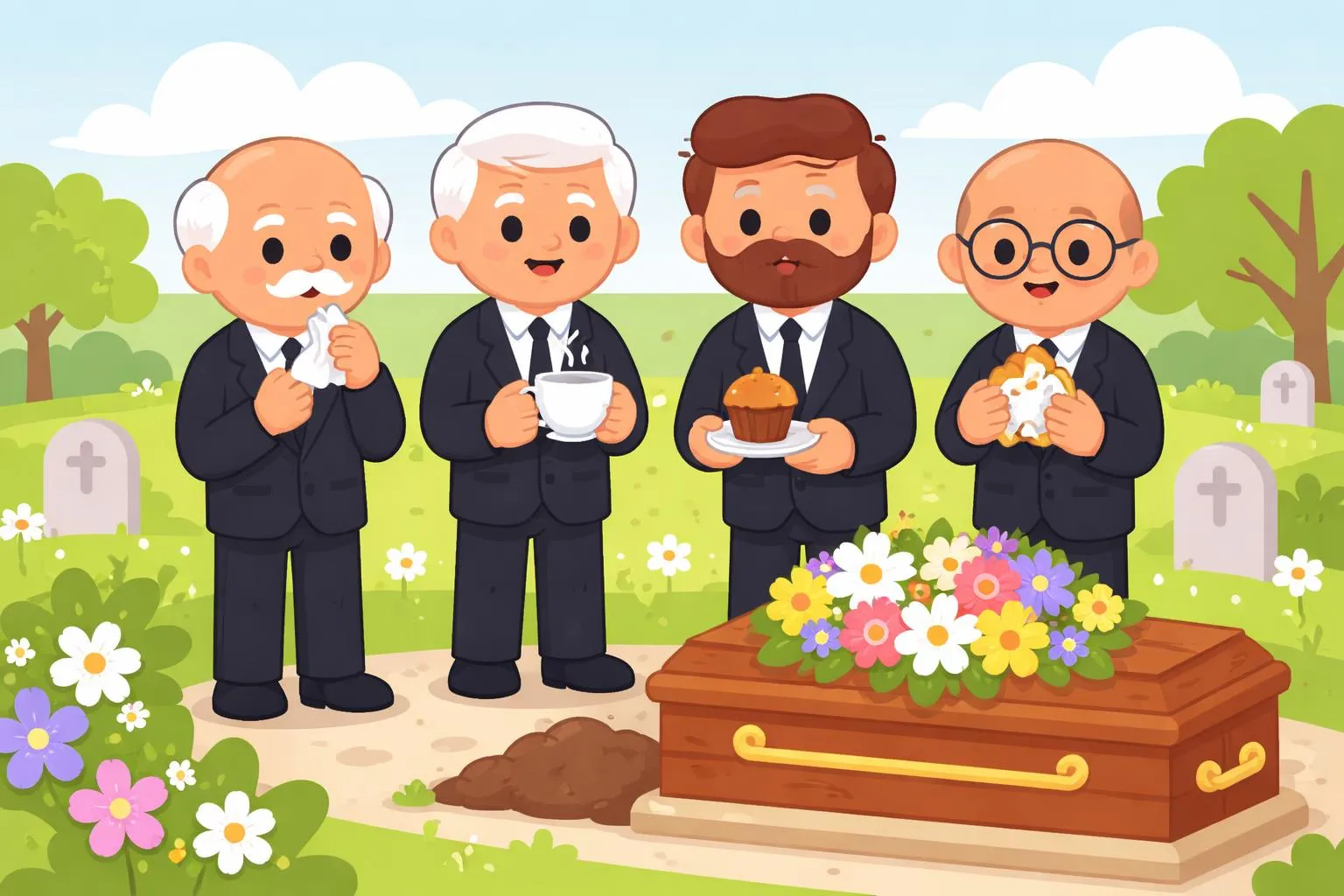

Original Poem:
The ones his age who shook my hand
on their way out sent fear along
my arm like heroin. These weren’t
men mute about their feelings,
or what’s a body language for?
And I, the glib one, who’d stood
with my back to my father’s body
and praised the heart that attacked him?
I’d made my stab at elegy,
the flesh made word: the very spit
in my mouth was sour with ruth
and eloquence. What could be worse?
Silence, the anthem of my father’s
new country. And thus this babble,
like a dial tone, from our bodies.
Analysis and Interpretation
This poem explores complex emotions surrounding death, grief, and communication. The speaker reflects on the experience of encountering men of his father’s age who shook his hand, sending a powerful, almost addictive fear through him—compared metaphorically to heroin. These men are not silent about their feelings; they use body language openly. In contrast, the speaker describes himself as "glib," someone who once stood with his back to his father’s body, attempting to express grief through words—an elegy—but feeling that his expression was inadequate and sour with ruthlessness and eloquence.
The poem contrasts spoken and unspoken grief. The speaker’s attempt to give voice to sorrow is met with silence, which becomes the "anthem" of his father’s new country—a metaphor for death or the afterlife, where silence reigns. The final image of "babble, like a dial tone, from our bodies" suggests a tension between the need to communicate and the inability to do so fully, highlighting the struggle between silence and expression in mourning.
Background and Author Introduction
This poem is written by a contemporary poet who often explores themes of loss, identity, and the human condition. The poem likely emerges from a personal experience of losing a father, reflecting on the emotional and cultural challenges of expressing grief. The "new country" metaphor may imply a cultural or existential shift after death, or a change in the speaker’s life and perspective.
The poet’s style is characterized by intense emotional imagery and a conversational tone, blending raw feeling with intellectual reflection. The use of body language and physical sensations as metaphors for emotional states is a hallmark of the poet’s work.
Reflection and Personal Response
Reading this poem invites us to consider how we deal with grief and the ways we communicate our feelings. The speaker’s vulnerability and honesty about his own inadequacies in expressing sorrow remind us that grief is deeply personal and often difficult to articulate. The poem also challenges the reader to think about the power of silence—how sometimes silence can be both a comfort and a barrier.
For me, this poem highlights the importance of empathy and the need to find our own ways to honor and remember those we have lost, even when words fail us.
Educational Insights and Learning Points
Students and children can learn several valuable lessons from this poem:
- Understanding Emotional Expression: The poem shows that grief and emotions are complex and can be expressed in many ways, including body language and silence.
- Metaphor and Imagery: The poem uses metaphors (fear like heroin, silence as an anthem) to deepen meaning, which helps students appreciate poetic devices.
- Reflection on Death and Loss: It encourages thoughtful discussion about death, a difficult but important topic.
- Cultural and Personal Identity: The "new country" metaphor can lead to conversations about how death changes relationships and identity.
In everyday life, students might use these insights to better understand their own feelings and those of others, improving empathy and communication skills. In learning contexts, the poem can be a starting point for creative writing, encouraging students to write their own elegies or reflections on loss.
Challenges and Key Learning Points
- Interpreting Metaphors: Students may find it challenging to understand abstract metaphors like "fear like heroin" or "silence as an anthem."
- Emotional Vocabulary: The poem uses nuanced emotional language that might be new to some learners.
- Cultural Context: Understanding the metaphor of the "new country" might require discussion about death and cultural attitudes toward mourning.
Teachers can focus on these areas by guiding students through close reading and group discussions.
Reading Comprehension Questions
- What emotion does the speaker feel when shaking hands with men his father’s age?
- How does the poem describe the speaker’s attempt to express grief?
- What does the "silence" represent in the poem?
- Why does the speaker call himself "the glib one"?
- What is the significance of the "new country" in the poem?
- How does body language contrast with spoken words in the poem?
- What does the metaphor "fear along my arm like heroin" suggest about the speaker’s feelings?
- How does the poem portray the relationship between silence and communication?
Answers
- The speaker feels fear, described as intense and addictive like heroin.
- The speaker’s attempt is described as a "stab at elegy," meaning a difficult and imperfect effort to give voice to grief.
- Silence represents death, absence, or the unspoken grief that dominates after the father’s passing.
- The speaker calls himself "glib" because he feels his words were smooth but perhaps insincere or inadequate in the face of true grief.
- The "new country" symbolizes death or the afterlife, a place where silence reigns and life as known has changed.
- Body language is open and expressive, while spoken words can be insufficient or fail to capture true emotion.
- The metaphor suggests the speaker’s fear is overwhelming and addictive, something that travels physically and emotionally through him.
- The poem shows that silence can be both a barrier and a form of communication, while spoken words may fail to fully express deep feelings.
This poem offers a profound exploration of grief, communication, and the human experience, making it a rich resource for students and readers interested in poetry and emotional expression.