
Original Poem:
It was the moonflowers that surprised us.
Early summer we noticed the soft gray foliage.
She asked for seedpods every year but I never saw them in her garden.
Never knew what she did with them.
Exotic and tropical, not like her other flowers.
I expected her to throw them in the pasture maybe,
a gift to the coyotes. Huge, platterlike white flowers
shining in the night to soften their plaintive howling.
A sound I love; a reminder, even on the darkest night,
that manicured lawns don't surround me.
Midsummer they shot up, filled the small place by the back door,
sprawled over sidewalks, refused to be ignored.
Gaudy and awkward by day,
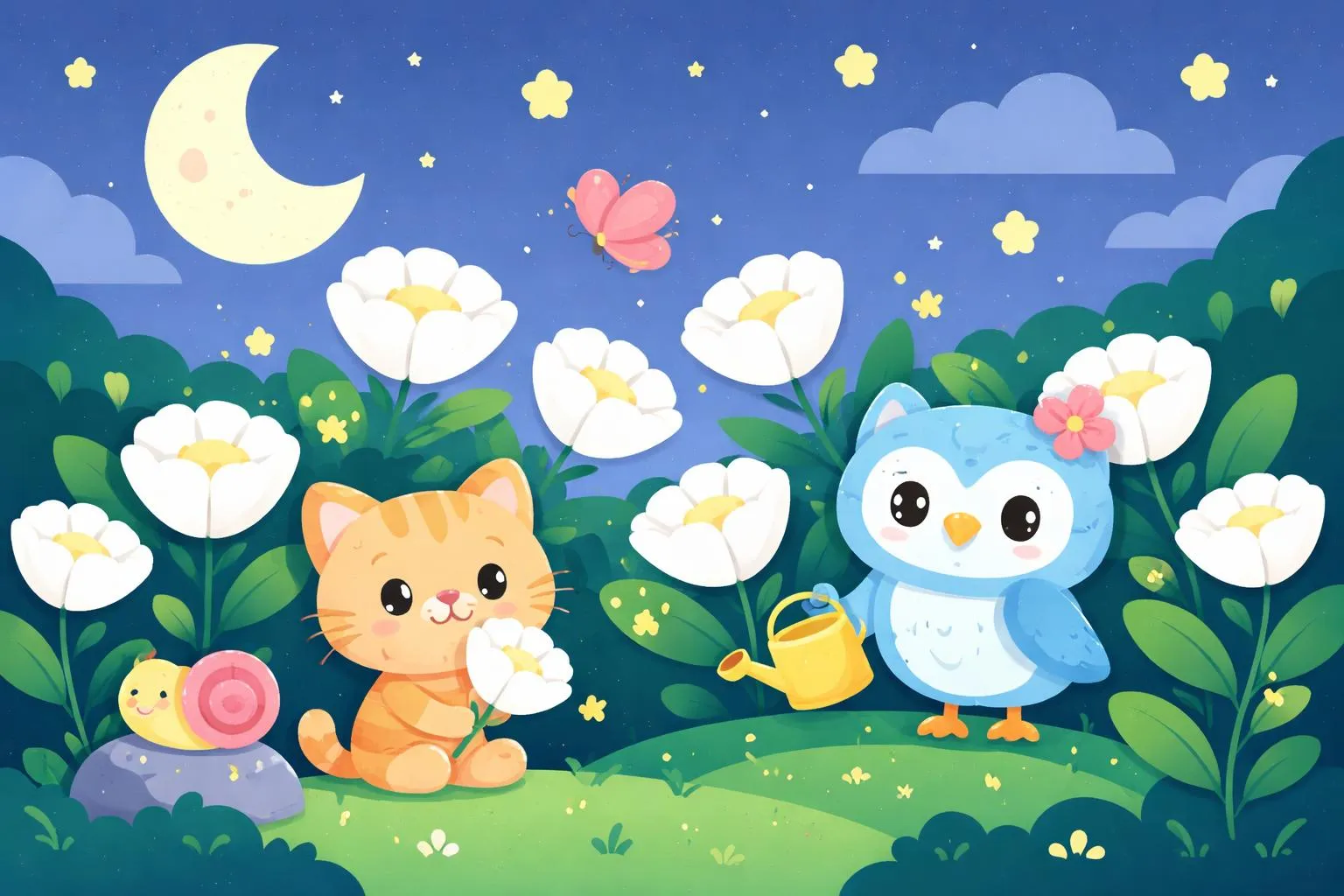
by night they were huge, soft, luminous.
Only this year, this year of her death
did they break free of their huge, prickly husks
and brighten the darkness she left.
Poem Explanation and Interpretation
This poem beautifully captures the mysterious and poignant presence of moonflowers, a unique and exotic plant that surprises the speaker and carries deep symbolic meaning. The poem begins with the quiet observation of the moonflowers’ soft gray foliage in early summer, highlighting their subtle yet distinct appearance. The speaker recalls how "she"—presumably a loved one—asked for the seedpods every year, but the speaker never understood what she did with them. This mystery adds an emotional layer, suggesting a personal connection to the flowers and the person who cherished them.
The moonflowers are described as exotic and tropical, contrasting with the other flowers in the garden, which implies they hold a special place in the garden and in the heart of the person who planted them. The speaker imagines the seedpods might be thrown into the pasture as a gift to the coyotes, whose plaintive howling is softened by the moonflowers’ glowing presence at night. This imagery evokes a sense of harmony between nature and the human world, where even wild animals are touched by the beauty of the flowers.
The poem’s tone shifts with the arrival of midsummer when the moonflowers grow rapidly, filling the space by the back door and sprawling over sidewalks. During the day, they appear gaudy and awkward, but at night they transform into huge, soft, luminous blossoms, emphasizing the magical quality of the moonflowers and their connection to the night.
The final lines reveal a deeper emotional truth: only in the year of "her" death did the moonflowers finally break free from their prickly husks and brighten the darkness left behind. This metaphor suggests that the flowers symbolize the enduring presence and memory of the loved one, bringing light and comfort even after loss.
Background and Author Introduction
This poem likely comes from a contemporary poet who reflects on themes of nature, memory, and loss. The use of moonflowers as a central symbol connects the natural world with human emotions, a common motif in modern poetry. The poem’s quiet yet vivid imagery suggests the author has a deep appreciation for both the beauty of plants and the emotional resonance they can carry.
The author’s personal connection to the garden and the person who planted the moonflowers adds authenticity and intimacy to the poem. The poem’s setting in early to midsummer reflects a time of growth and transformation, paralleling the emotional journey of remembrance and acceptance.
Reflections and Insights
Reading this poem encourages reflection on how nature can serve as a metaphor for human experiences, especially grief and memory. The moonflowers’ transformation from unnoticed foliage to glowing nighttime blossoms mirrors how memories of loved ones can become clearer and more meaningful over time. The poem also reminds us that beauty can be found even in unexpected or overlooked places, such as a small garden or the quiet presence of a flower blooming at night.
Educational Value and Learning Points
This poem offers multiple learning opportunities for children and students:
- Vocabulary Building: Words like moonflowers, foliage, seedpods, plaintive, manicured, gaudy, luminous, and prickly expand students’ descriptive language.
- Imagery and Symbolism: Students can explore how the poet uses natural imagery to symbolize emotions such as love, loss, and remembrance.
- Theme Analysis: The poem provides a platform to discuss themes of nature, death, memory, and transformation.
- Creative Writing: Students can be encouraged to write their own poems or stories inspired by plants or memories.
- Emotional Expression: The poem helps students understand how poetry can express complex feelings in subtle ways.
Practical Applications in Life and Learning
- In Nature Studies: The poem can be used to introduce students to botany topics, such as plant life cycles and nocturnal blooming flowers.
- In Emotional Learning: Teachers can use the poem to discuss coping with loss and the importance of memories.
- In Art and Literature: Students can create visual art inspired by the poem’s imagery or perform dramatic readings to enhance comprehension.
- In Writing Skills: The poem’s structure and use of metaphor can serve as a model for students learning to write descriptive and reflective poetry.
Reading Comprehension Questions
- What kind of plant is the poem about, and what makes it special?
- How does the speaker describe the moonflowers during the day versus at night?
- What is the significance of the moonflowers breaking free of their husks in the year of "her" death?
- Why does the speaker mention coyotes and their howling?
- What emotions does the poem evoke about the relationship between the speaker and "her"?
- How does the poem use imagery to create a mood?
- What can we learn about the speaker’s feelings toward nature from this poem?
- How might the poem help someone who is dealing with loss?
Answers
- The poem is about moonflowers, which are special because they are exotic, tropical, and bloom large, luminous white flowers at night.
- During the day, the moonflowers are described as gaudy and awkward, but at night they become huge, soft, and luminous.
- The breaking free of the moonflowers from their husks symbolizes the release of beauty and light after the death of the loved one, representing hope and remembrance.
- The coyotes and their howling symbolize the wild, natural world surrounding the garden, and the moonflowers’ glow softens this sound, showing a connection between nature and the speaker’s environment.
- The poem evokes feelings of love, mystery, and grief, showing a deep emotional bond between the speaker and "her."
- The poem uses imagery of light and darkness, softness and prickliness, day and night to create a mood that shifts from mystery to warmth and comfort.
- The speaker appreciates nature as a source of beauty, comfort, and memory, showing respect and emotional connection to the natural world.
- The poem can help someone dealing with loss by illustrating how memories and symbols in nature can bring light and hope even in dark times.