
Original Poem:
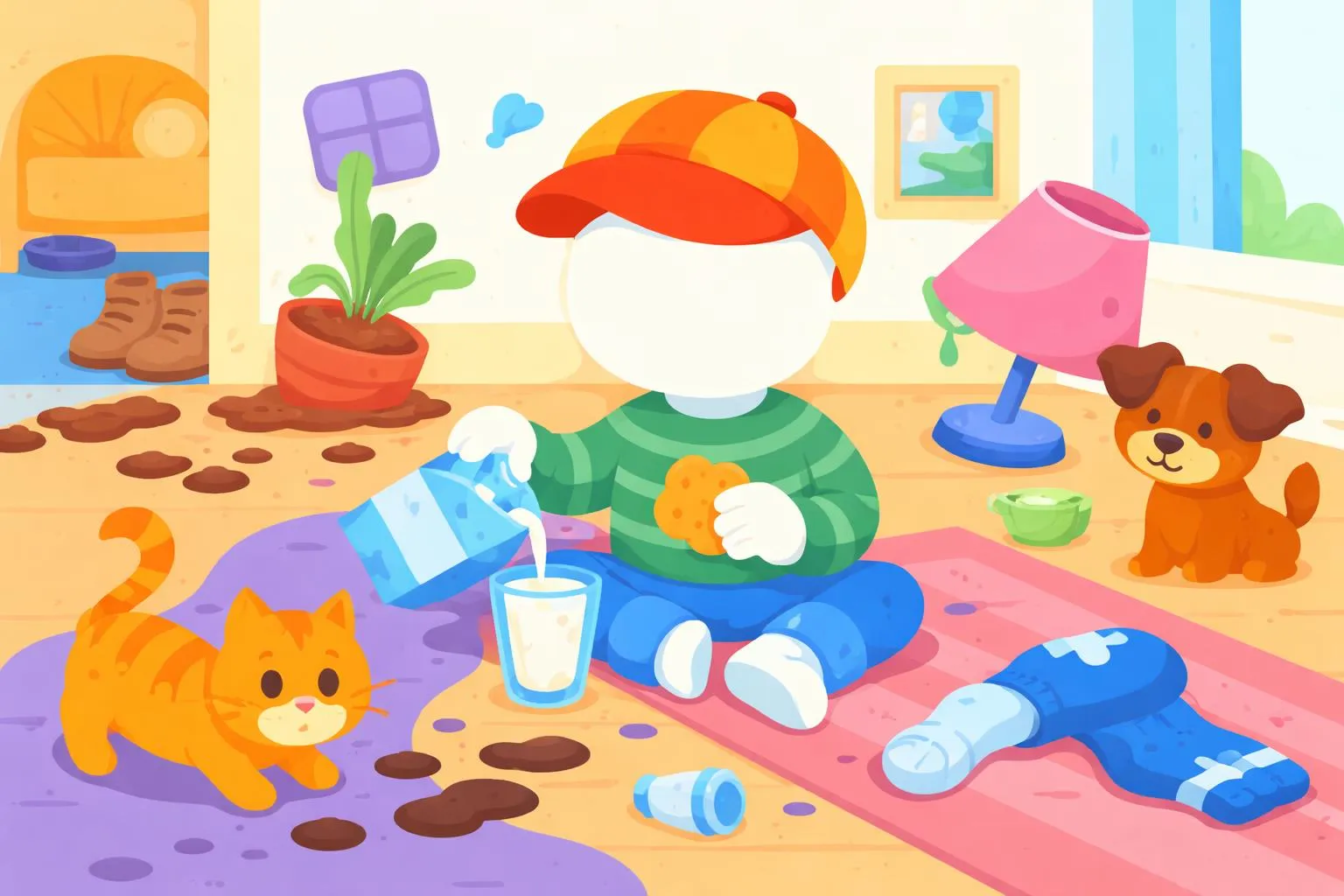
I know a funny little man,
As quiet as a mouse,
Who does the mischief that is done
In everybody’s house!
There’s no one ever sees his face,
And yet we all agree
That every plate we break was cracked
By Mr. Nobody.
’Tis he who always tears out books,
Who leaves the door ajar,
He pulls the buttons from our shirts,
And scatters pins afar;
That squeaking door will always squeak,
For prithee, don’t you see,
We leave the oiling to be done
By Mr. Nobody.
He puts damp wood upon the fire
That kettles cannot boil;
His are the feet that bring in mud,
And all the carpets soil.
The papers always are mislaid;
Who had them last, but he?
There’s no one tosses them about
But Mr. Nobody.
The finger marks upon the door
By none of us are made;
We never leave the blinds unclosed,
To let the curtains fade.
The ink we never spill;???the boots
That lying round you see
Are not our boots,—they all belong
To Mr. Nobody.</p>
Explanation and Analysis of the Poem
This charming poem introduces us to an imaginary character named Mr. Nobody, a mischievous little man who is blamed for all the small accidents and messes that happen around the house. The poem humorously describes how this invisible figure is responsible for broken plates, torn books, squeaky doors, muddy footprints, misplaced papers, and other everyday annoyances.
The poem uses personification to give a name and personality to the concept of careless or unexplained mishaps. By attributing these common household problems to Mr. Nobody, the poem creates a playful way to talk about responsibility and the small troubles that often go unacknowledged.
Meaning and Themes
At its core, the poem explores themes of accountability, imagination, and childlike innocence. It reflects how children (and even adults) sometimes avoid admitting fault by blaming an unseen force or person. The poem encourages readers to think about how they take responsibility for their actions and the consequences of neglect or carelessness.
The playful tone and simple rhyme scheme make the poem accessible and enjoyable for children, while also offering a subtle lesson about honesty and awareness.
Background and Author Introduction
The poem "Mr. Nobody" is a classic piece of children's poetry often attributed to Anonymous or sometimes linked to early 20th-century children’s literature. Its exact authorship is unclear, but it has been widely used in educational settings for its engaging narrative and moral undertones.
This poem fits within the tradition of nursery rhymes and children's verses that use imaginative characters to teach lessons and entertain young readers. It reflects the style of poems designed to be read aloud, with rhythmic repetition and vivid imagery that capture children's attention.
Reflections and Personal Response
Reading this poem brings a smile as it cleverly personifies the little accidents and messes that happen in every home. It reminds us of the universal experience of trying to find explanations for minor mishaps, often avoiding blame by imagining a playful culprit.
For children, the poem can be both entertaining and thought-provoking. It encourages them to recognize their own role in household order and disorder, and perhaps to take greater care in their actions. For adults, it serves as a nostalgic reminder of childhood creativity and the gentle lessons embedded in simple verses.
Learning Points and Practical Applications
From this poem, children and students can learn:
- Vocabulary: Words like mischief, ajar, scatters, prithee, and mislaid expand their English vocabulary.
- Personification: Understanding how abstract ideas or inanimate things can be given human traits.
- Responsibility: Recognizing the importance of owning up to one’s actions rather than blaming an imaginary figure.
- Rhythm and Rhyme: Appreciating the musicality of poetry and how rhyme schemes make poems memorable.
- Imagination and Creativity: Encouraging creative thinking by inventing characters and stories to explain everyday events.
In daily life and learning environments, this poem can be used to:
- Discuss household responsibilities with children, helping them understand the impact of their behavior.
- Enhance reading and comprehension skills through poetry reading and analysis.
- Inspire creative writing by asking children to invent their own characters like Mr. Nobody.
- Teach moral lessons about honesty and accountability in a lighthearted way.
Reading Comprehension Exercises
-
Who is Mr. Nobody?
a) A real person who lives in the house
b) An imaginary character blamed for accidents
c) The owner of the house -
What kinds of mischief does Mr. Nobody do?
a) He cleans the house
b) He breaks plates and tears books
c) He cooks meals -
Why do people blame Mr. Nobody?
a) Because they never see him but believe he causes trouble
b) Because he helps with chores
c) Because he is a visitor -
What lesson does the poem teach?
a) To blame others for mistakes
b) To take responsibility for one’s actions
c) To ignore household problems -
Which of the following words means 'left open'?
a) Ajar
b) Mislaid
c) Scattered
Answers
- b) An imaginary character blamed for accidents
- b) He breaks plates and tears books
- a) Because they never see him but believe he causes trouble
- b) To take responsibility for one’s actions
- a) Ajar