
Original Poem:
In October of the year,
he counts potatoes dug from the brown field,
counting the seed, counting
the cellar’s portion out,
and bags the rest on the cart’s floor.
He packs wool sheared in April, honey
in combs, linen, leather
tanned from deerhide,
and vinegar in a barrel
hooped by hand at the forge’s fire.
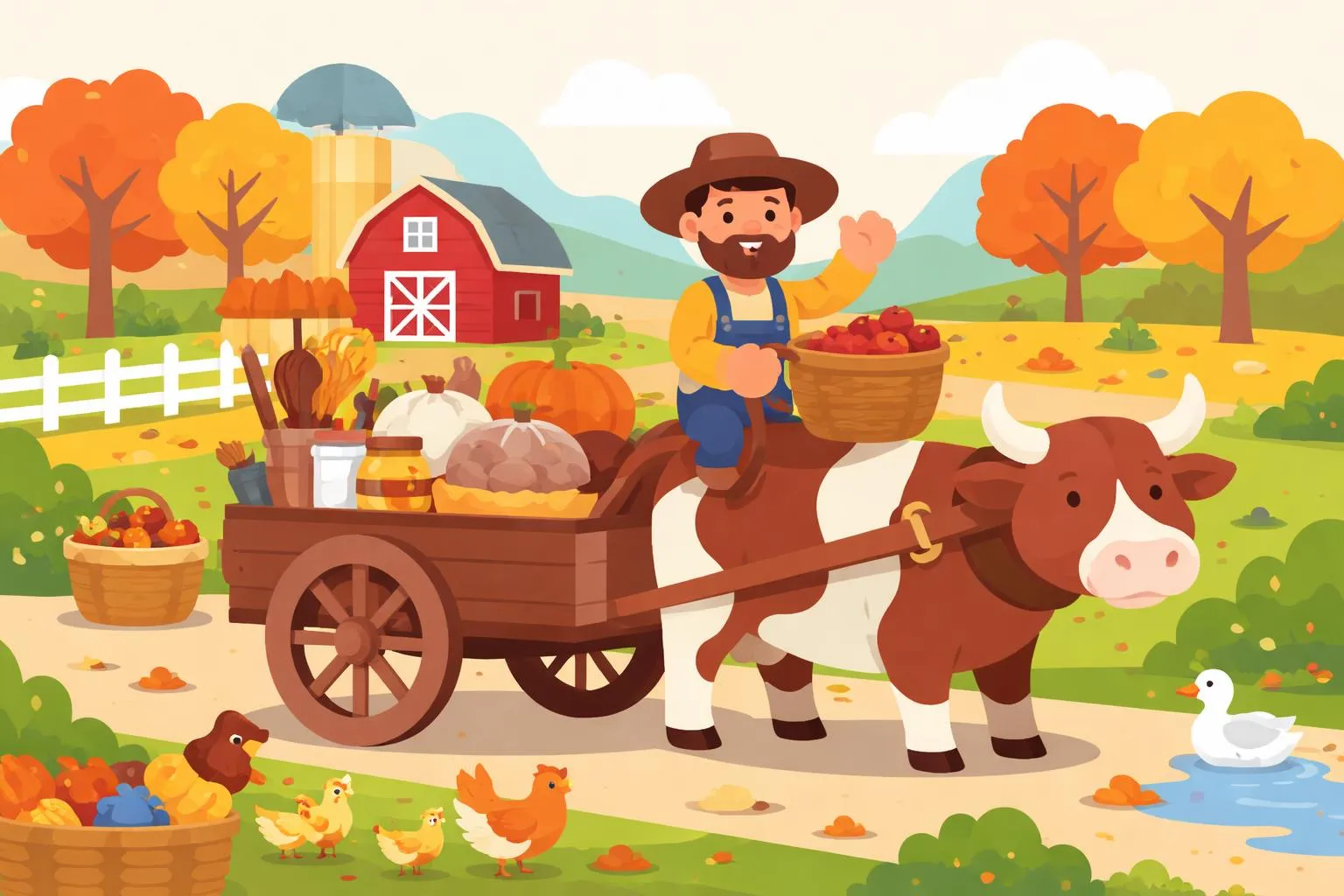
He walks by his ox’s head, ten days
to Portsmouth Market, and sells potatoes,
and the bag that carried potatoes,
flaxseed, birch brooms, maple sugar, goose
feathers, yarn.
When the cart is empty he sells the cart.
When the cart is sold he sells the ox,
harness and yoke, and walks
home, his pockets heavy
with the year’s coin for salt and taxes,
and at home by fire’s light in November cold
stitches new harness
for next year’s ox in the barn,
and carves the yoke, and saws planks
building the cart again.
Expanded Analysis and Interpretation
Summary and Meaning of the Poem
This poem vividly portrays the life of a hardworking farmer during the autumn season, specifically in October. It describes the farmer's meticulous process of harvesting and counting potatoes, carefully setting aside seed potatoes for the next planting season, and storing some in the cellar for future use. The poem then lists other goods the farmer has gathered over the year—such as wool, honey, linen, leather, and vinegar—highlighting the diverse products of rural life.
The farmer embarks on a long journey to the Portsmouth Market, selling not only the potatoes but also the bags, flaxseed, brooms, maple sugar, feathers, and yarn. After selling everything, including his cart and ox, he returns home with the money earned, which he uses to pay for essentials like salt and taxes. The poem closes with the farmer preparing for the next year by repairing the harness and building a new cart, emphasizing the cycle of hard work and renewal.
Poetic Devices and Style
The poem uses simple, direct language that reflects the straightforward, practical nature of rural life. The repetition of "counting" emphasizes the farmer’s careful attention to his resources. The imagery is rich and tactile, invoking the earthy colors of the fields, the texture of wool and leather, and the warmth of the forge’s fire. The poem’s structure mirrors the cyclical rhythm of farming life—harvest, market, repair, and preparation for the next cycle.
Background and Author Introduction
This poem is a celebration of traditional agrarian life, likely inspired by rural communities where self-sufficiency and hard physical labor were essential for survival. Although the author is not named here, such poems often come from writers who have a deep appreciation for the rhythms of nature and the dignity of manual work. The poem reflects a time before industrialization transformed agriculture, when farmers relied heavily on their own skills and resources.
Reflections and Insights
Reading this poem offers a glimpse into the resilience and resourcefulness required of farmers. It reminds us of the value of patience, careful planning, and the connection between people and the land. The farmer’s journey to market and the selling of his tools and animals illustrate the precariousness of rural life, where every asset matters.
Educational Value and Learning Points for Children and Students
What Can Be Learned?
- Understanding agricultural cycles: The poem introduces children to the concept of planting, harvesting, and preparing for the next season.
- Vocabulary enrichment: Words like "cellar," "forge," "yoke," and "harness" expand learners’ knowledge of farming and rural life.
- Counting and resource management: The farmer’s act of counting seed potatoes and other goods teaches the importance of careful planning and management.
- Historical and cultural awareness: The poem provides insight into traditional rural economies and lifestyles.
- Appreciation for hard work: It encourages respect for labor and the effort behind everyday goods.
Practical Applications and Life Lessons
- Planning and organization: Students can relate the farmer’s counting and preparation to their own study habits and time management.
- Sustainability and self-reliance: The poem highlights how people can live in harmony with nature and manage resources wisely.
- Perseverance: The farmer’s long journey and continued work despite challenges can inspire persistence in students.