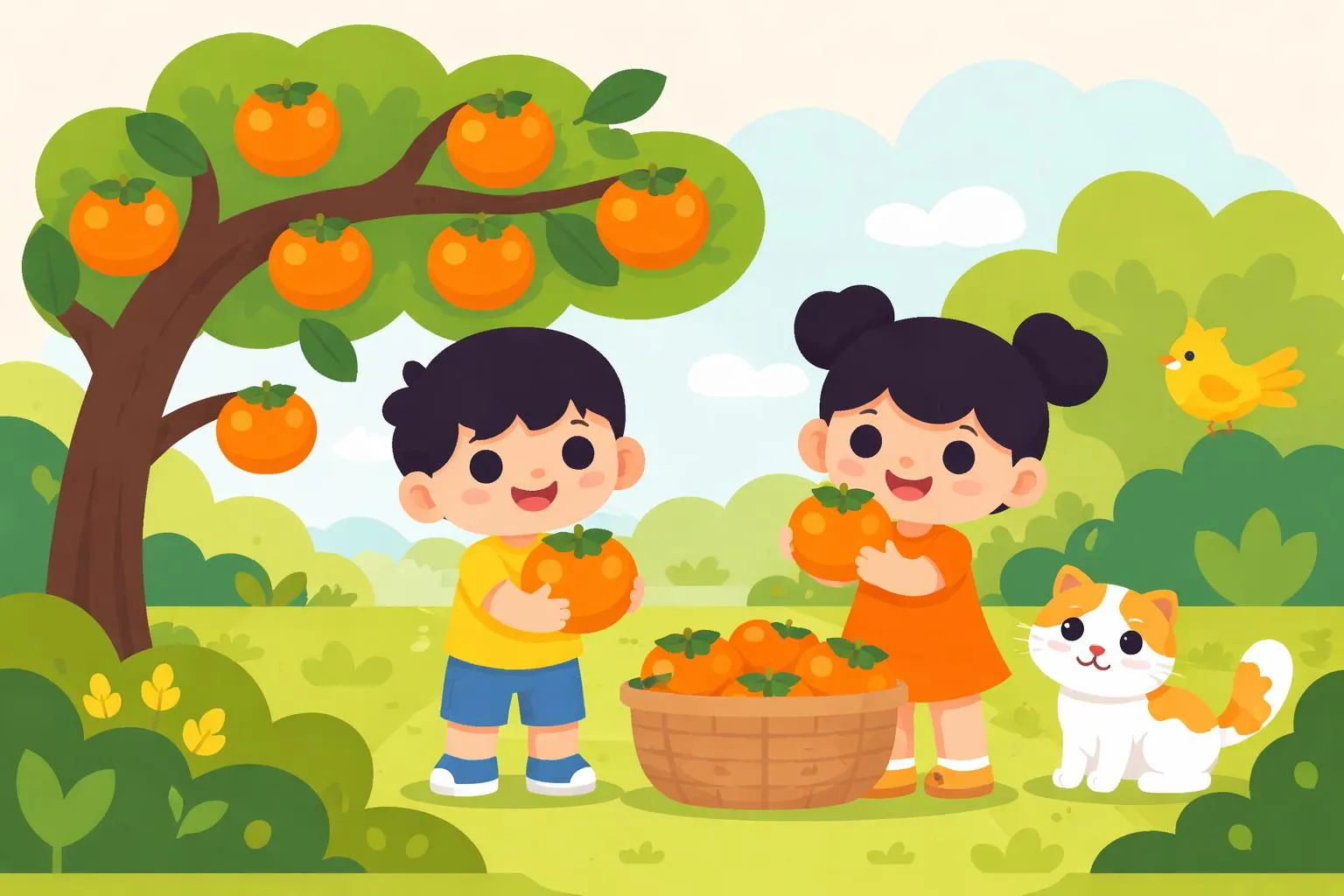

Original Poem:
In sixth grade Mrs. Walker
slapped the back of my head
and made me stand in the corner
for not knowing the difference
between
persimmon
and
precision
.
How to choose
persimmons. This is precision.
Ripe ones are soft and brown-spotted.
Sniff the bottoms. The sweet one
will be fragrant. How to eat:
put the knife away, lay down newspaper.
Peel the skin tenderly, not to tear the meat.
Chew the skin, suck it,
and swallow. Now, eat
the meat of the fruit,
so sweet,
all of it, to the heart.
Donna undresses, her stomach is white.
In the yard, dewy and shivering
with crickets, we lie naked,
face-up, face-down.
I teach her Chinese.
Crickets:
chiu chiu
. Dew: I’ve forgotten.
Naked:???I’ve forgotten.
Ni, wo
:???you and me.
I part her legs,
remember to tell her
she is beautiful as the moon.
Other words
that got me into trouble were
fight
and
fright
,
wren
and
yarn
.
Fight was what I did when I was frightened,
Fright was what I felt when I was fighting.
Wrens are small, plain birds,
yarn is what one knits with.
Wrens are soft as yarn.
My mother made birds out of yarn.
I loved to watch her tie the stuff;
a bird, a rabbit, a wee man.
Mrs. Walker brought a persimmon to class
and cut it up
so everyone could taste
a
Chinese apple
. Knowing
it wasn’t ripe or sweet, I didn’t eat
but watched the other faces.
My mother said every persimmon has a sun
inside, something golden, glowing,
warm as my face.
Once, in the cellar, I found two wrapped in newspaper,
forgotten and not yet ripe.
I took them and set both on my bedroom windowsill,
where each morning a cardinal
sang,
The sun, the sun
.
Finally understanding
he was going blind,
my father sat up all one night
waiting for a song, a ghost.
I gave him the persimmons,
swelled, heavy as sadness,
and sweet as love.
This year, in the muddy lighting
of my parents’ cellar, I rummage, looking
for something I lost.
My father sits on the tired, wooden stairs,
black cane between his knees,
hand over hand, gripping the handle.
He’s so happy that I’ve come home.
I ask how his eyes are, a stupid question.
All gone
, he answers.
Under some blankets, I find a box.
Inside the box I find three scrolls.
I sit beside him and untie
three paintings by my father:
Hibiscus leaf and a white flower.
Two cats preening.
Two persimmons, so full they want to drop from the cloth.
He raises both hands to touch the cloth,
asks,
Which is this
?
This is persimmons, Father
.
Oh, the feel of the wolftail on the silk,
the strength, the tense
precision in the wrist.
I painted them hundreds of times
eyes closed. These I painted blind.
Some things never leave a person:
scent of the hair of one you love,
the texture of persimmons,
in your palm, the ripe weight.
Analysis and Interpretation of the Poem
This poem vividly captures a deeply personal and emotional journey revolving around the themes of memory, language, family, and sensory experience. The poet recounts a childhood moment when the teacher, Mrs. Walker, corrected a misunderstanding between the words "persimmon" and "precision," setting the stage for a rich exploration of language and meaning. The poem moves fluidly between the literal and the metaphorical, using the persimmon fruit as a symbol of warmth, love, and the passage of time.
The poem’s narrative begins with a school memory that contrasts the harshness of discipline with the gentle, careful process of selecting and eating persimmons. The detailed description of how to choose and eat the fruit reflects precision in everyday life, emphasizing careful attention and tenderness. The poet’s intimate moments with Donna, learning Chinese words and sharing vulnerability, highlight themes of connection and innocence.
Later, the poem touches on the poet’s family life, particularly the relationship with the father who is going blind. The persimmons become a poignant symbol of love and loss, as well as the persistence of memory and art. The father’s paintings of persimmons, created even after losing his sight, suggest resilience and the enduring power of creativity. The sensory images—the scent of hair, the texture and weight of the fruit—evoke how deeply some experiences embed themselves in our consciousness.
Background and Author Introduction
This poem is by Li-Young Lee, a contemporary American poet of Chinese descent. His work often explores themes of family history, identity, memory, and the immigrant experience. Lee’s poetry is known for its lyrical beauty and emotional depth, frequently drawing on personal and cultural memories to create universal reflections on love and loss.
The poem reflects Lee’s own background, including his family’s history and his father’s artistic talents. The persimmon, a fruit common in East Asia, serves as a cultural symbol bridging his heritage and his American upbringing. The poem’s intimate tone and vivid imagery invite readers to connect with universal feelings of childhood, family bonds, and the bittersweet nature of aging.
Lessons and Educational Value for Children and Students
This poem offers several valuable lessons for young readers and students:
- Language and Vocabulary: The poem highlights the importance of understanding subtle differences in words (e.g., persimmon vs. precision, fight vs. fright). This can encourage students to pay close attention to language nuances and expand their vocabulary.
- Cultural Awareness: Through references to Chinese language and customs, the poem introduces children to multicultural perspectives, fostering respect and curiosity about different cultures.
- Sensory Learning: The detailed descriptions of how to select and eat persimmons engage the senses, encouraging students to observe and appreciate the world around them more closely.
- Emotional Intelligence: The poem explores complex emotions such as fear, love, loss, and resilience. Discussing these themes can help students develop empathy and emotional understanding.
- Art and Creativity: The father’s paintings and the metaphor of painting “blind” inspire discussions about creativity, perseverance, and how art can express feelings beyond words.
Practical Applications in Life and Learning
- Language Arts: Teachers can use the poem to teach homophones, vocabulary, and poetic devices such as imagery and metaphor.
- Cultural Studies: The poem can be part of lessons on Chinese culture and immigrant experiences.
- Science and Nature: The description of persimmons can lead to lessons on fruit ripening, sensory observation, and nutrition.
- Emotional Development: The poem can be a starting point for conversations about family relationships and coping with change.
- Art Education: Students can create their own artwork inspired by the poem’s imagery, exploring how to convey emotions visually.
Reading Comprehension Questions
- What mistake did the narrator make in Mrs. Walker’s class, and why was it important?
- How does the poem describe the process of choosing and eating a persimmon?
- What does the persimmon symbolize in the relationship between the narrator and their father?
- How does the poem use sensory details to create vivid images? Give two examples.
- What emotions does the narrator experience when recalling their father’s blindness and paintings?
- Why does the narrator mention teaching Donna Chinese words? What does this moment represent?
- How does the poem explore the theme of memory?
- What role does art play in the poem?
- How does the poem connect cultural identity with personal experience?
- What lessons can readers learn about language and communication from this poem?
Answers to Reading Comprehension Questions
- The narrator confused the words "persimmon" and "precision," which was important because it showed a misunderstanding of language that led to punishment but also introduced the theme of language precision.
- The poem describes choosing ripe persimmons as soft and brown-spotted, smelling the bottom for fragrance, peeling the skin carefully, and eating the fruit tenderly.
- The persimmon symbolizes warmth, love, memory, and the connection between the narrator and their father, especially as the father loses his sight.
- Sensory details include the scent of the persimmon’s bottom and the texture of the fruit’s skin and meat. These details make the experience vivid and tangible.
- The narrator feels sadness, love, and a deep sense of loss but also admiration for the father’s resilience in painting despite blindness.
- Teaching Donna Chinese words represents intimacy, cultural connection, and the innocence of childhood friendship.
- The poem explores memory through sensory experiences and family stories, showing how memories persist even as time changes people.
- Art is portrayed as a powerful form of expression and memory, especially through the father’s paintings created even when blind.
- The poem connects cultural identity with personal experience by weaving Chinese language, customs, and symbols into the narrator’s life story.
- Readers learn the importance of understanding language carefully and how words can carry deep personal and cultural meanings.
This poem is a rich resource for language learning, cultural appreciation, emotional growth, and artistic inspiration, making it a valuable piece for educational settings.