
Original Poem:
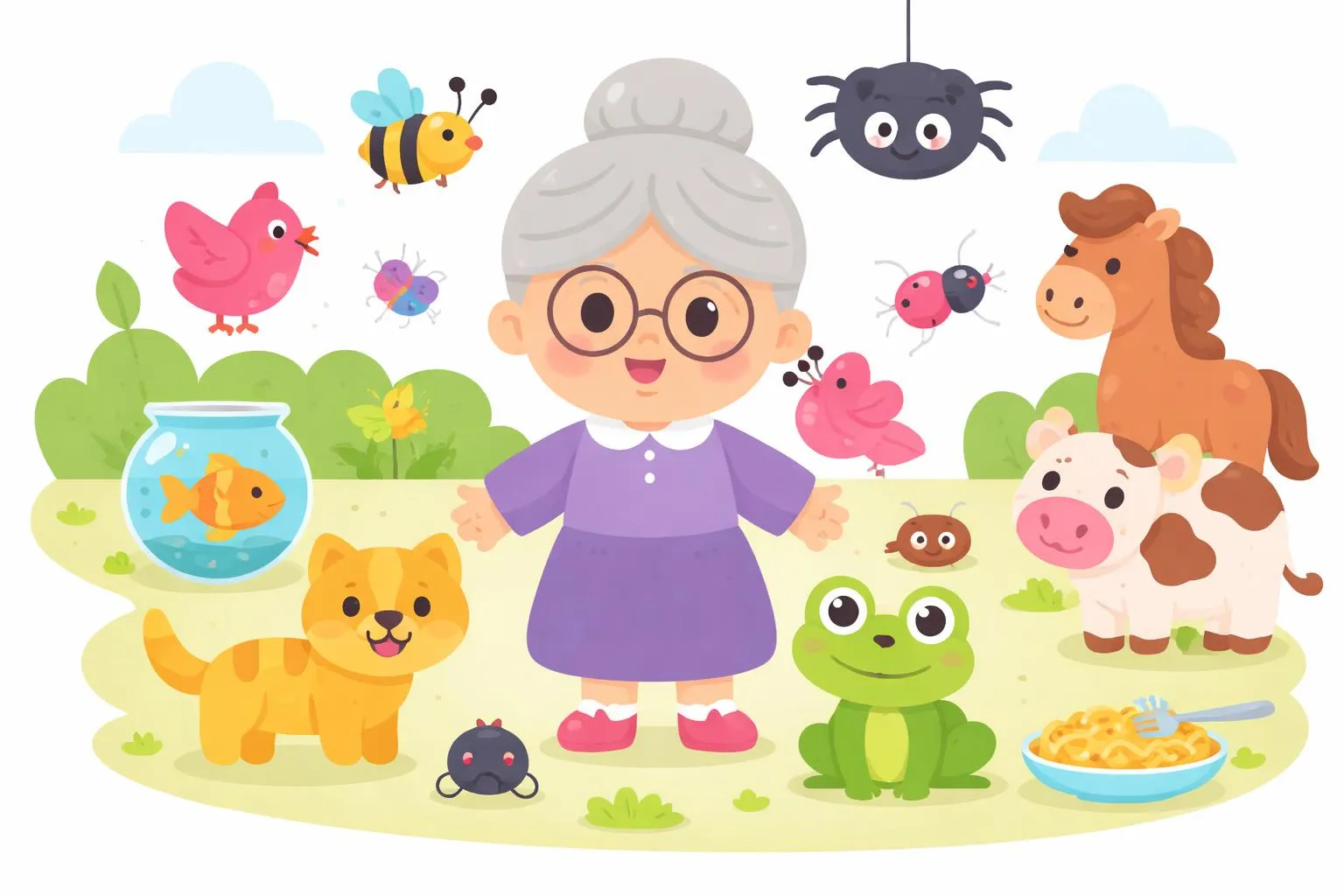
Poor old lady, she swallowed a fly.
I don't know why she swallowed a fly.
Poor old lady, I think she'll die.
Poor old lady, she swallowed a spider.
It squirmed and wriggled and turned inside her.
She swallowed the spider to catch the fly.
I don't know why she swallowed a fly.
Poor old lady, I think she'll die.
Poor old lady, she swallowed a bird.
How absurd!???She swallowed a bird.
She swallowed the bird to catch the spider,
She swallowed the spider to catch the fly,
I don't know why she swallowed a fly.
Poor old lady, I think she'll die.
Poor old lady, she swallowed a cat.
Thank of that!???She swallowed a cat.
She swallowed the cat to catch the bird.
She swallowed the bird to catch the spider.
She swallowed the spider to catch the fly,
I don't know why she swallowed a fly.
Poor old lady, I think she'll die.
Poor old lady, she swallowed a dog.
She went the whole hog when she swallowed the dog.
She swallowed the dog to catch the cat,
She swallowed the cat to catch the bird,
She swallowed the bird to catch the spider.
She swallowed the spider to catch the fly,
I don't know why she swallowed a fly.
Poor old lady, I think she'll die.
Poor old lady, she swallowed a cow.
I don't know how she swallowed a cow.
She swallowed the cow to catch the dog,
She swallowed the dog to catch the cat,
She swallowed the cat to catch the bird,
She swallowed the bird to catch the spider,
She swallowed the spider to catch the fly,
I don't know why she swallowed a fly.
Poor old lady, I think she'll die.
Poor old lady, she swallowed a horse.
She died, of course.
Analysis and Explanation of the Poem
This classic nursery rhyme tells the story of a poor old lady who swallows a series of increasingly large animals, starting with a fly and ending with a horse. The poem is repetitive and cumulative, with each verse building on the previous one by adding a new animal that the lady swallows to catch the one before it. The rhyme combines humor, absurdity, and a sense of escalating chaos.
The poem’s main theme revolves around the absurdity of the old lady’s actions—swallowing animals in an attempt to solve a problem, which only leads to more complications. The repeated line, "I don't know why she swallowed a fly," emphasizes the mystery and silliness of her initial action, while the final line, "She died, of course," brings a darkly comic conclusion.
Meaning and Interpretation
At its core, the poem is a cumulative tale that teaches children about sequence, cause and effect, and memory through repetition. The old lady’s swallowing of animals symbolizes a chain reaction where one action leads to another, often with unintended consequences. The poem’s humor and rhythm make it memorable and engaging for young audiences.
Background and Author
The poem is traditionally attributed to American folk origins, with the earliest known printed versions dating back to the mid-20th century. It was popularized by Rosemary Wells, who wrote a well-known illustrated version, but the rhyme itself is part of oral tradition and has been adapted in many forms.
This type of cumulative rhyme is common in children’s literature and serves as a playful way to develop language skills, memory, and sequencing abilities. The poem’s enduring popularity is due to its catchy rhythm, repetition, and the amusingly absurd storyline.
Educational Value and Learning Points
Children and students can learn several important lessons and skills from this poem:
- Sequencing and Memory: The repetitive structure helps children remember the order of events and practice recalling information.
- Cause and Effect: The poem illustrates how one action can lead to another, encouraging logical thinking.
- Vocabulary Building: Introducing names of animals and descriptive verbs like "squirmed," "wriggled," and "absurd" enriches children’s vocabulary.
- Rhythm and Rhyme: The poem’s rhythmic pattern supports phonemic awareness, an essential skill for early reading.
- Humor and Creativity: The absurdity encourages children to use imagination and understand playful language.
Practical Applications in Life and Learning
- Classroom Activities: Teachers can use the poem for sequencing games, asking students to retell the story in order or act it out.
- Language Development: Parents and educators can highlight rhyming words and encourage children to create their own cumulative stories.
- Problem-Solving Discussions: The poem can spark conversations about how actions have consequences, promoting critical thinking.
- Memory Exercises: Repetition helps improve memory skills, useful in all areas of learning.
Comprehension Questions and Answers
-
Why did the old lady swallow the spider?
Answer: She swallowed the spider to catch the fly. -
What animal did the old lady swallow after the cat?
Answer: She swallowed a dog. -
What is the last animal the old lady swallowed?
Answer: She swallowed a horse. -
Why is the poem funny?
Answer: Because the old lady swallows increasingly large animals in a silly and absurd way. -
What happens to the old lady at the end of the poem?
Answer: She dies, of course. -
What skill does the poem help children practice through its repetitive structure?
Answer: It helps children practice memory and sequencing.
Conclusion
This nursery rhyme is much more than a simple children’s poem; it is a valuable educational tool that combines humor, rhythm, and storytelling to engage young learners. Through its repetitive and cumulative structure, it teaches important cognitive skills such as sequencing, memory, and cause and effect. It also enriches vocabulary and encourages creativity. Understanding the poem’s background and playful nature helps both educators and parents use it effectively in teaching language and critical thinking skills.