
Original Poem:
Amidst the too much that we buy and throw
away and the far too much we wrap it in,
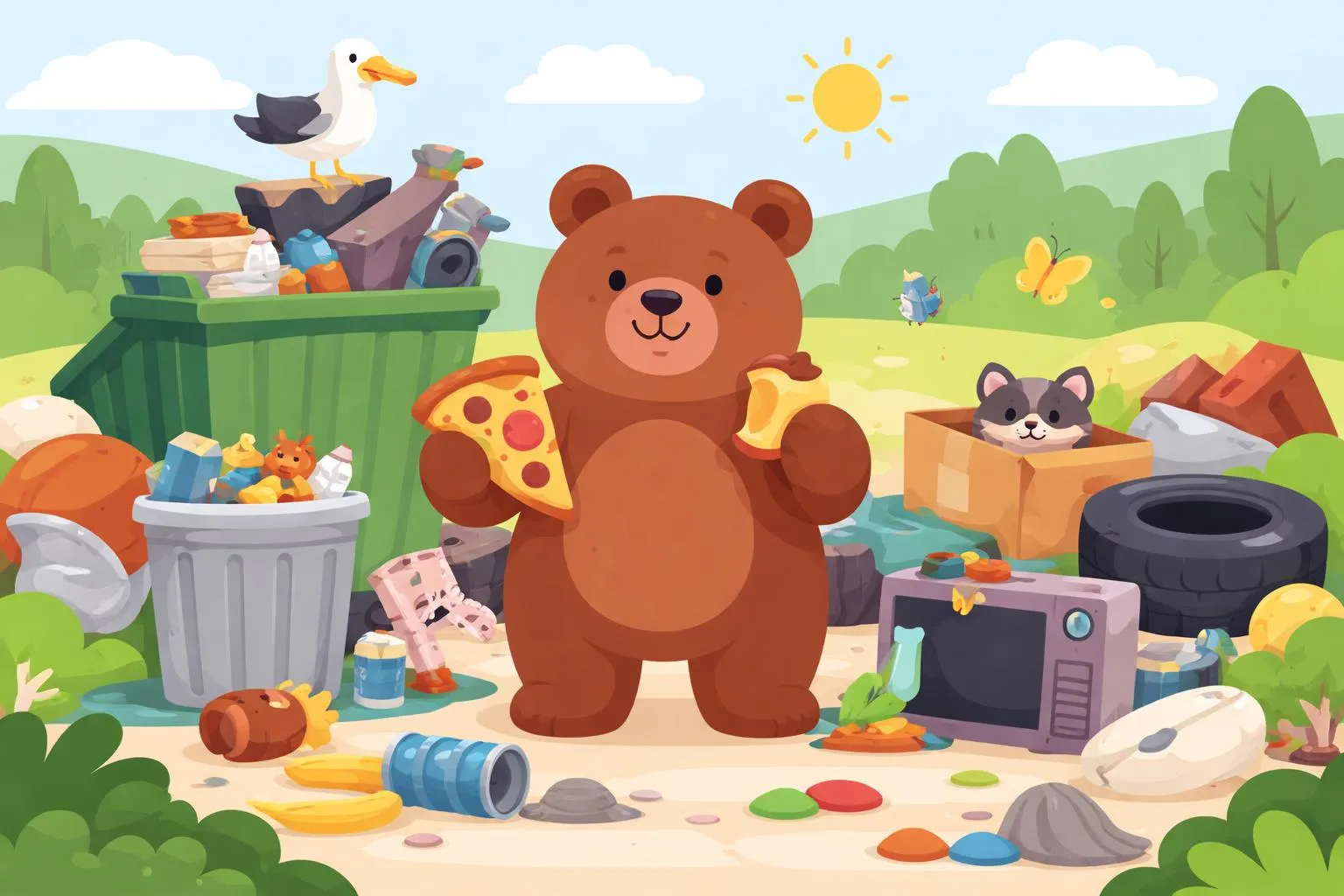
the bear found a few items of special
interest—a honeydew rind, a used tampon,
the bone from a leg of lamb. He’d rock back
lightly onto his rear paws and slash
open a plastic bag, and then his nose—
jammed almost with a surfeit of rank
and likely information, for he would pause—
and then his whole dowsing snout would
insinuate itself a little way
inside. By now he’d have hunched his weight
forward slightly, and then he’d snatch it back,
trailed by some tidbit in his teeth. He’d look
around. What a good boy am he.
The guardian of the dump was used
to this and not amused. “He’ll drag that shit
every which damn way,” he grumbled
who’d dozed and scraped a pit to keep that shit
where the town paid to contain it.
The others of us looked and looked. “City
folks like you don’t get to see this often,”
one year-round resident accused me.
Some winter I’ll bring him down to learn
to love a rat working a length of subway
track. “Nope,” I replied. Just then the bear
decamped for the woods with a marl of grease
and slather in his mouth and on his snout,
picking up speed, not cute (nor had he been
cute before, slavering with greed, his weight
all sunk to his seated rump and his nose stuck
up to sift the rich and fetid air, shaped
like a huge, furry pear), but richly
fed on the slow-simmering dump, and gone
into the bug-thick woods and anecdote.
Expanded Analysis and Interpretation
Summary and Meaning
This poem vividly portrays a bear rummaging through a human garbage dump, scavenging for scraps amidst the excessive waste produced by society. The bear’s actions—sniffing through discarded items like a honeydew rind, a used tampon, and a lamb bone—highlight the intersection between nature and human consumption. The poem captures the bear’s instinctive behavior as it searches for food, emphasizing the contrast between the natural world and the artificial byproducts of human life.
The poem also reflects on the environmental consequences of overconsumption and waste. The bear’s presence at the dump symbolizes how wildlife is forced to adapt to human-created habitats, often with mixed results. The “guardian of the dump” represents human attempts to control or contain waste, but the bear’s intrusion disrupts this order. The poem’s tone is both observational and slightly ironic, noting the bear’s “greed” and “slavering” while also portraying it as a “good boy,” a complex mix of admiration and critique.
Poetic Devices and Style
The poem uses vivid imagery and sensory details, especially through the bear’s nose, described as a “dowsing snout” that gathers “a surfeit of rank and likely information.” This metaphor conveys the bear’s acute sense of smell and its role as a natural detector of hidden treasures in the refuse. The language is raw and unfiltered, matching the gritty subject matter of garbage and decay.
The poem’s structure is free verse, allowing the narrative to flow naturally, mimicking the bear’s movements and the chaotic environment of the dump. The use of colloquial expressions like “What a good boy am he” adds a touch of humor and personality to the bear, humanizing it without diminishing its wildness.
Background and Author Information
While the poem does not specify its author, it fits within contemporary environmental poetry that explores the relationship between humans and nature. Such works often aim to raise awareness about ecological issues, such as waste management, wildlife displacement, and the impact of consumer culture on the environment.
The poem likely draws from real observations of urban wildlife adapting to human environments, reflecting the growing presence of animals like bears in suburban and city outskirts. This theme resonates with current environmental concerns and the need for sustainable living practices.
Reflections and Personal Response
Reading this poem invites reflection on the consequences of human excess and the resilience of wildlife. The bear’s scavenging is both a survival strategy and a poignant reminder of how deeply human activities affect natural ecosystems. The poem challenges readers to consider their own consumption habits and the unseen effects on animals and the environment.
The mix of sympathy and critique in the poem encourages a balanced view: while the bear is “richly fed,” its dependence on human waste is not ideal. This duality can inspire discussions about coexistence, responsibility, and respect for nature.
Educational Value and Learning Points
What Students Can Learn
- Environmental Awareness: The poem highlights issues of waste, pollution, and their effects on wildlife, fostering ecological consciousness.
- Literary Analysis: Students can explore poetic devices such as imagery, metaphor, tone, and free verse structure.
- Critical Thinking: The poem encourages reflection on human impact and ethical considerations regarding nature.
- Vocabulary Development: Words like “surfeit,” “dowsing,” “fetid,” and “decamped” enrich students’ language skills.
- Observation Skills: The detailed depiction of the bear’s behavior teaches close reading and attention to sensory descriptions.
Practical Applications and Life Lessons
- Waste Reduction: The poem can be a starting point for discussions on reducing waste and recycling.
- Wildlife Respect: Understanding animal behavior in human environments promotes coexistence and conservation efforts.
- Creative Writing: Students can write their own poems or stories inspired by nature and environmental themes.
- Science Integration: The poem connects to biology lessons about animal adaptation and ecosystems.
- Ethical Reflection: Encourages students to think about their role in protecting the environment.
Reading Comprehension Exercises
Questions
- What items does the bear find interesting in the dump?
- How does the poem describe the bear’s nose and its function?
- Why is the “guardian of the dump” not amused by the bear’s behavior?
- What does the poem suggest about the relationship between humans and wildlife?
- How does the poem’s tone contribute to its overall message?
- What environmental issues does the poem highlight?
- How does the poem humanize the bear?
- What can readers learn about consumption and waste from this poem?
Answers
- The bear finds a honeydew rind, a used tampon, and a bone from a leg of lamb.
- The bear’s nose is described as a “dowsing snout” that gathers a “surfeit of rank and likely information,” showing its keen sense of smell used to detect food.
- The guardian is not amused because the bear drags trash around, disrupting the controlled area meant to contain waste.
- The poem suggests that human waste affects wildlife, forcing animals like the bear to adapt to unnatural food sources.
- The tone is both humorous and critical, which highlights the complexity of the bear’s situation and human environmental impact.
- It highlights overconsumption, waste accumulation, and the impact of human garbage on animals.
- The bear is humanized by phrases like “What a good boy am he,” giving it personality and making its behavior relatable.
- Readers learn that excessive consumption leads to waste that harms the environment and wildlife, urging more responsible habits.
This poem serves as a powerful educational tool to connect literature, environmental science, and ethical reflection, making it highly relevant for students and readers interested in the natural world and human responsibility.