
Original Poem:
He frightens all the witches and the dragons in their lair
He cues the clear blue daylight and He gives the night its dare
He flaps His wings for warning and He struts atop a mare
for when He crows they quiver and when He comes they flee
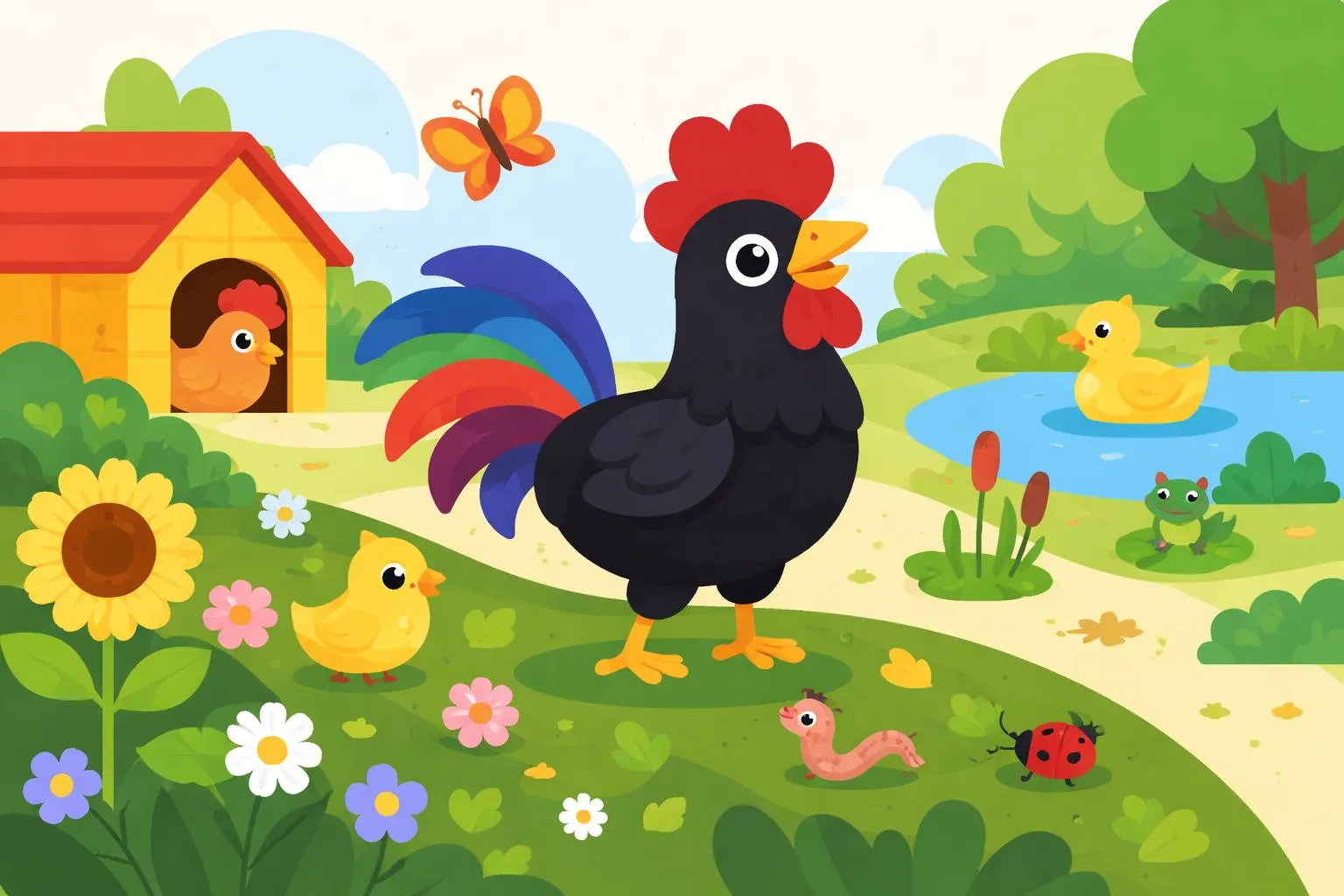
In His coal black plumage and His bright red crown
and His golden beaked fury and His calculated frown
in His webbed footed glory He sends Jehovah down
for when He crows they quiver and when He comes they flee
O they dance around the fire and they boil the gall of wolves
and they sing their strange crude melodies and play their
weirder tunes and the villagers close their windows and the grave-
yard starts to heave and the cross wont help their victims and
the screaming fills the night and the young girls die with
open eyes and the skies are lavender light
but when He crows they quiver and when He comes they flee
Well the sheriff is getting desperate as they go their nature’s way
killing cattle smothering infants slaughtering those who block their way
and the countryside swarms with numbness as their magic circle grows
but when He crows they tremble and when He comes they flee
Posting hex-signs on their wagons simple worried farmers pray
passing laws and faking justice only feed the witches brew
violet stones are rendered helpless drunken priests are helpless too
but when He crows they quiver and when He comes they flee
We have seen them in their ritual we have catalogued their crimes
we are weary of their torture but we cannot bring them down
their ancient hoodoo enemy who does the work, the trick,
strikes peril in their dead fiend’s hearts and pecks their flesh to quick
love Him feed Him He will never let you down
for when He crows they quiver and when He comes they frown
Analysis and Interpretation of the Poem
This poem presents a vivid and mystical figure symbolized by a coal black bird with a bright red crown and a golden beak, who exerts a powerful influence over witches, dragons, and other dark forces. The repeated refrain, "for when He crows they quiver and when He comes they flee," emphasizes the bird’s role as a harbinger of fear and authority, capable of driving away evil entities. The poem blends imagery of folklore, supernatural elements, and rural life to create a haunting atmosphere.
The bird appears as a protector figure, possibly representing divine justice or a spiritual guardian, confronting malevolent forces that terrorize villagers. The witches and dragons symbolize chaos and evil, while the villagers’ fear and helplessness highlight the struggle between good and evil. The poem’s tone is dark and dramatic, with references to rituals, curses, and supernatural battles.
Meaning and Themes
- Good vs. Evil: The bird stands as a symbol of resistance against dark magic and evil creatures.
- Fear and Power: The poem explores how fear controls the witches and dragons, who flee at the bird’s presence.
- Mysticism and Folklore: It draws heavily on traditional images of witches, dragons, and rural superstitions.
- Protection and Justice: The bird’s role can be interpreted as a divine or natural force that maintains order.
Background and Author Introduction
The poem’s style suggests it may be inspired by folk tales and rural legends, often passed down orally through generations. Such poems typically emerge from communities with rich traditions of storytelling, where animals and supernatural beings symbolize moral lessons or natural forces.
While the author is not explicitly named here, the poem’s tone and imagery align with poets who explore mythology, folklore, and the supernatural, such as William Blake or modern poets inspired by Gothic and rural themes. The poem’s narrative voice seems to adopt a storyteller’s perspective, recounting the ongoing battle between dark forces and the mysterious bird.
Reflections and Impressions
Reading this poem evokes a sense of mystery and awe. The vivid descriptions create a cinematic quality, making the bird’s presence almost tangible. The repeated refrain builds tension and emphasizes the bird’s dominance over evil. The poem invites readers to reflect on the unseen battles between good and evil forces in the world, and how courage and faith can drive away darkness.
Educational Value and Learning Points for Children and Students
This poem offers multiple learning opportunities:
- Vocabulary Building: Words like plumage, mare, gall, hex-signs, and hoodoo introduce students to rich, descriptive language and folklore terminology.
- Literary Devices: Students can explore metaphors, symbolism, repetition (refrain), and imagery.
- Cultural Awareness: The poem introduces elements of folklore and rural superstitions, broadening cultural understanding.
- Critical Thinking: Analyzing the poem’s themes encourages students to think about abstract concepts like good vs. evil and the power of fear.
- Creative Writing: The poem can inspire students to write their own stories or poems about mythical creatures or protective figures.
Practical Applications in Life and Learning
- Storytelling Skills: Understanding narrative voice and imagery enhances students’ ability to tell compelling stories.
- Moral Lessons: The poem’s themes can be used to discuss courage, resilience, and standing up against wrongdoing.
- Art and Drama: The vivid imagery can inspire artistic projects or dramatic reenactments.
- Language Arts: The poem serves as a model for studying rhyme, rhythm, and poetic structure.
Reading Comprehension Questions and Answers
-
Who or what frightens the witches and dragons in the poem?
Answer: The coal black bird with a bright red crown and golden beak. -
What happens when the bird crows?
Answer: The witches and dragons quiver and flee. -
How do the villagers react to the witches’ activities?
Answer: They close their windows, pray, and post hex-signs, but they feel helpless. -
What role does the bird play in the poem?
Answer: The bird acts as a protector or enemy of the witches and dragons, driving them away. -
What emotions does the poem evoke?
Answer: Fear, awe, mystery, and a sense of struggle between good and evil. -
What literary devices can you identify in the poem?
Answer: Repetition, imagery, symbolism, rhyme, and metaphor. -
What lesson might children learn from this poem?
Answer: The importance of courage and the idea that good can overcome evil.
This poem is a rich resource for exploring language, culture, and moral themes, making it an excellent addition to educational materials for children and students.