
Original Poem:
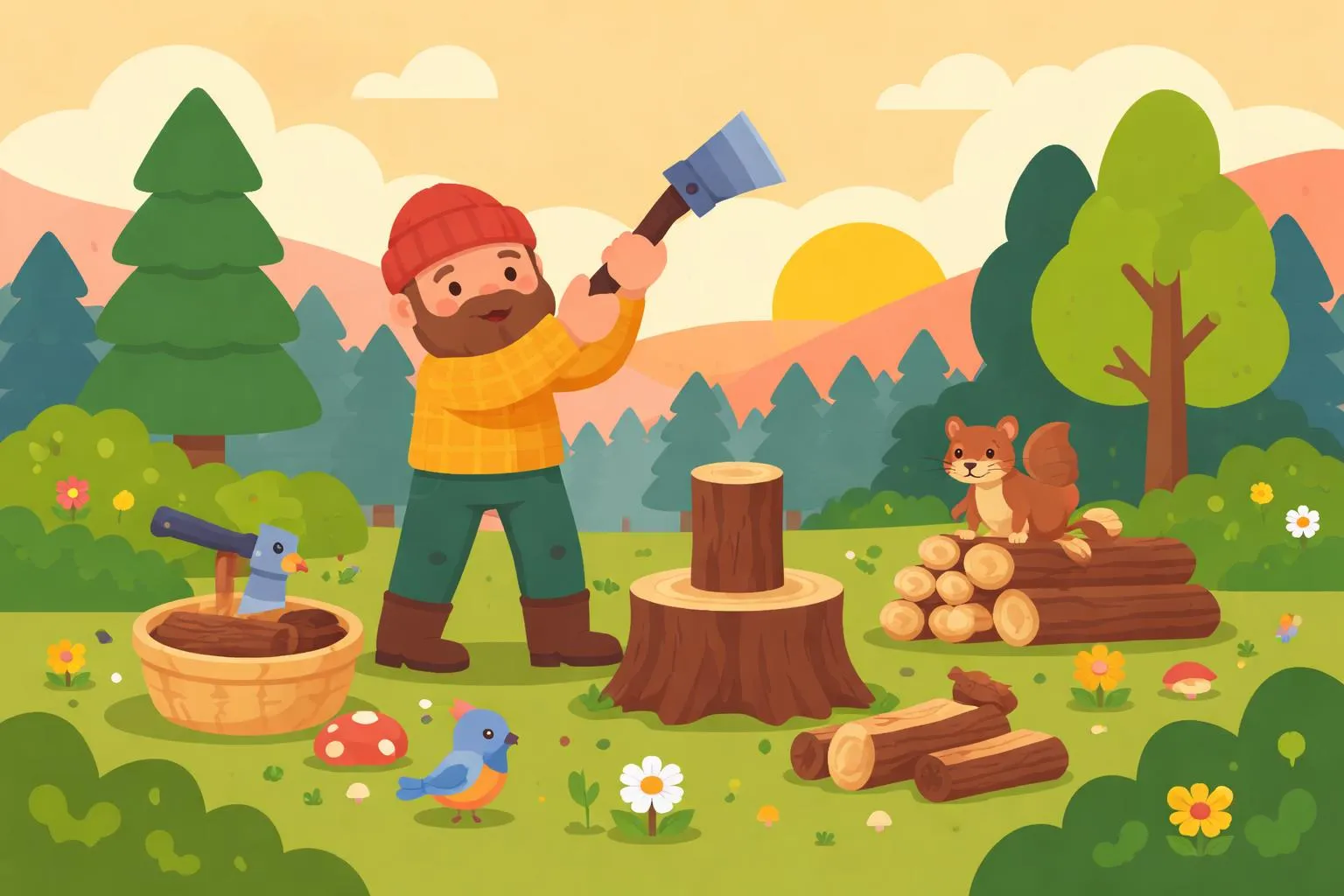
The man splitting wood in the daybreak
looks strong, as though, if one weakened,
one could turn to him and he would help.
Gus Newland was strong. When he split wood
he struck hard, flashing the bright steel
through the air so hard the hard maple
leapt apart, as it’s feared marriages will do
in countries reluctant to permit divorce,
and even willow, which, though stacked
to dry a full year, on being split
actually weeps—totem wood, therefore,
to the married-until-death—sunders
with many little lip-wetting gasp-noises.
But Gus is dead. We could turn to our fathers,
but they help us only by the unperplexed
looking-back of the numerals cut into headstones.
Or to our mothers, whose love, so devastated,
can’t, even in spring, break through the hard earth.
Our spouses weaken at the same rate we do.
We have to hold our children up to lean on them.
Everyone who could help goes or hasn’t arrived.
What about the man splitting wood in the daybreak,
who looked strong? That was years ago. That was me.</p>
Poem Explanation and Interpretation
This poignant poem explores themes of strength, support, and the inevitable passage of time. The image of a man splitting wood at daybreak symbolizes vitality and reliability—someone who appears capable of offering help when others falter. The poem begins by describing Gus Newland, a figure of physical strength and dependable presence. His act of splitting wood is vivid and powerful, with the imagery of the "bright steel" flashing through the air and the hard maple "leaping apart" evoking a sense of force and precision.
The poet uses the metaphor of wood splitting to reflect on marriage and relationships. The hard maple represents marriages that are strong but may still break under pressure, especially in societies where divorce is frowned upon. Willow, which "weeps" when split, symbolizes enduring love and sorrow, reinforcing the emotional weight of lifelong commitment.
However, the poem takes a somber turn as it reveals that Gus is dead. The speaker reflects on the loss of those who once provided strength and support—fathers, mothers, spouses—and how their absence leaves us vulnerable. The poem ends with a powerful self-realization: the man who once seemed so strong is now the speaker himself, confronting his own weakening and the need to rely on the next generation.
Background and Author Introduction
This poem is written by a contemporary poet who often explores themes of family, aging, and human resilience. The author uses simple yet evocative language to connect deeply personal experiences with universal emotions. The wood-splitting metaphor is drawn from rural or traditional life, where physical labor is a tangible measure of strength and endurance.
The poem reflects a contemporary perspective on aging and support systems, highlighting the emotional challenges faced as one grows older and the roles of caregivers and dependents shift within families. It resonates with readers who have experienced loss or the gradual erosion of physical and emotional strength.
Insights and Lessons for Children and Students
From this poem, children and students can learn several important lessons:
- The value of strength and support: The poem shows how people often rely on others during difficult times and how strength can be both physical and emotional.
- Understanding change and loss: It teaches about the inevitability of aging and loss, helping young readers develop empathy for older generations.
- The importance of family bonds: The roles of fathers, mothers, spouses, and children are explored, emphasizing mutual care and support.
- Metaphorical thinking: Students can practice interpreting metaphors, such as wood splitting representing relationships and emotional states.
Practical Applications and Life Lessons
- In daily life, children can learn to appreciate the support they receive from family and understand that everyone has moments of weakness.
- In school, the poem can be used to discuss themes of responsibility, growth, and emotional intelligence.
- It encourages students to think about how they can support others, especially as family dynamics change over time.
- The poem also inspires reflection on resilience and adapting to life's challenges, valuable skills for personal development.
Reading Comprehension Exercises
- Who is Gus Newland in the poem, and what does he symbolize?
- What is the significance of the wood-splitting imagery?
- How does the poem describe the changes in family support over time?
- What does the willow wood symbolize in the poem?
- What is the poem’s main message about strength and aging?
Answers
- Gus Newland is a strong man who splits wood; he symbolizes strength and reliability.
- The wood-splitting imagery represents the breaking apart of relationships and the effort required to maintain them.
- The poem shows that as time passes, those who once helped us (parents, spouses) grow weaker or pass away, leaving us to face challenges alone or rely on our children.
- Willow wood symbolizes enduring love and sorrow, as it "weeps" when split, representing the pain in lifelong commitments.
- The main message is that strength is temporary, and as we age, we must accept vulnerability and the shifting roles within family support systems.
This poem offers a rich exploration of human strength, vulnerability, and the cycles of life, making it a valuable resource for students to deepen their understanding of emotional resilience and family relationships.