
Original Poem:
You, my friends, and you strangers, all of you,
Stand with me a little by the walls
Or where the walls once were.
The bridge was here, the city further:
Now there is neither bridge nor town—
A doorway where the roof is down
Opens on a foot-worn stair
That climbs by three steps into empty air.
(What foot went there?)
Nothing in this town that had a thousand steeples
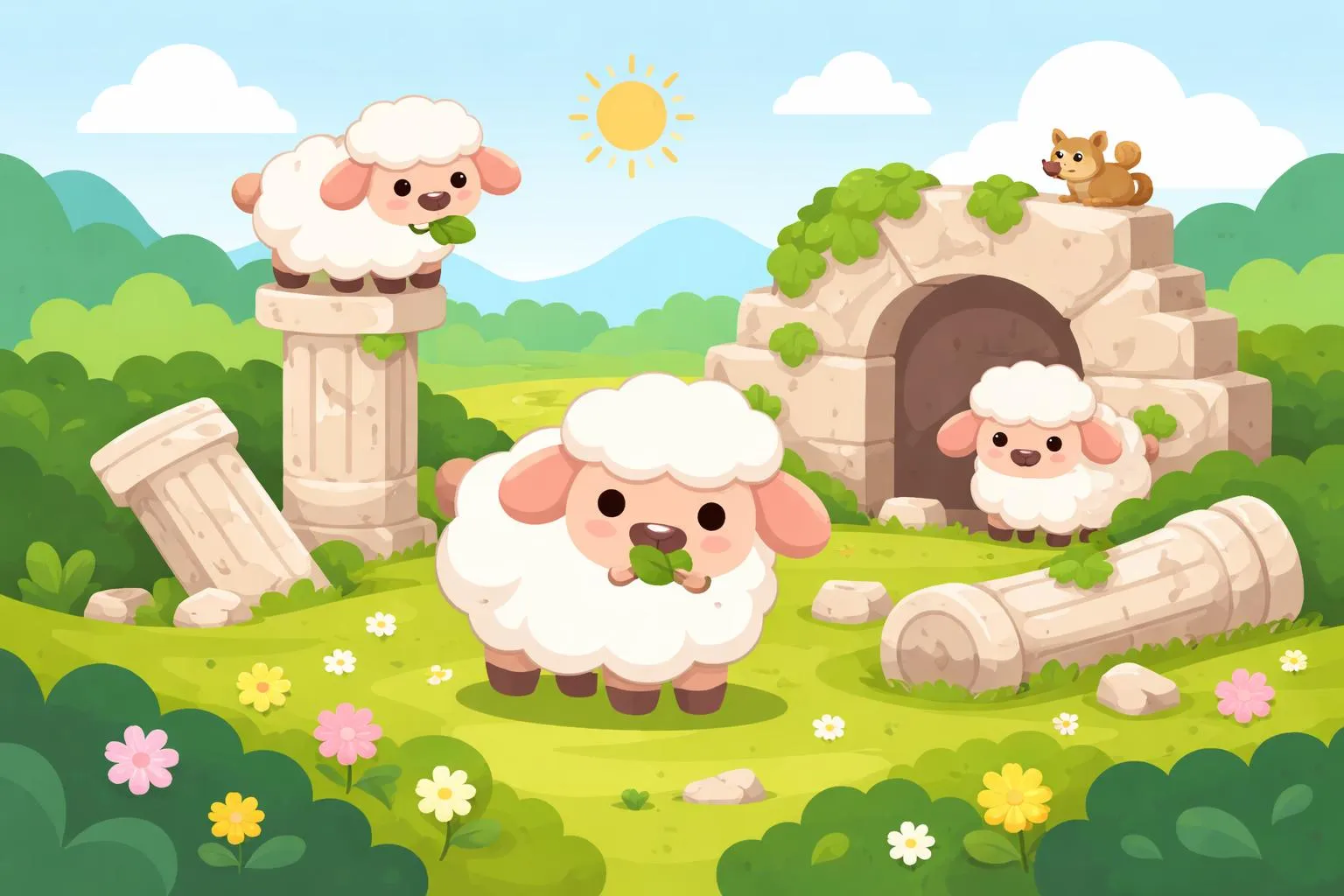
Lives now but these flocks of sheep
Grazing the yellow grasses where the bricks lie dead beneath:
Dogs drive them with their brutal teeth.
Can none but sheep live where the walls go under?
Is man’s day over and the sheep’s begun?
And shall we sit here like the mourners on a dunghill
Shrilling with melodious tongue—
Disfiguring our faces with the nails of our despair?
(What dust is this we sift upon our hair?)
Because a world is taken from us as the camels from the man of Uz
Shall we sit weeping for the world that was
And curse God and so perish?
Shall monuments be grass and sheep inherit them?
Shall dogs rule in the rubble of the arches?
Consider, Oh consider what we are!
Consider what it is to be a man—
He who makes his journey by the glimmer of a candle;
Who discovers in his mouth, between his teeth, a word;
Whose heart can bear the silence of the stars— that burden;
Who comes upon his meaning in the blindness of a stone—
A girl’s shoulder, perfectly harmonious!
Even the talk of it would take us days together.
Marvels men have made, Oh marvels!—and our breath
Brief as it is: our death waiting—
Marvels upon marvels! Works of state—
The imagination of the shape of order!
Works of beauty—the cedar door
Perfectly fitted to the sill of basalt!
Works of grace—
The ceremony at the entering of houses,
At the entering of lives: the bride among the torches in the shrill carouse!
Works of soul—
Pilgrimages through the desert to the sacred boulder:
Through the mid night to the stroke of one!
Works of grace! Works of wonder!
All this have we done and more—
And seen—what have we not seen?—
A man beneath the sunlight in his meaning:
A man, one man, a man alone.
In the sinks of the earth that wanderer has gone down.
The shadow of his mind is on the mountains.
The word he has said is kept in the place beyond
As the seed is kept and the earth ponders it.
Stones—even the stones remember him:
Even the leaves—his image is in them.
And now because the city is a ruin in the waste of air
We sit here and despair!
Because the sheep graze in the dying grove
Our day is over!
We must end
Because the talk around the table in the dusk has ended,
Because the fingers of the goddesses are found
Like marble pebbles in the gravelly ground
And nothing answers but the jackal in the desert,—
Because the cloud proposes, the wind says!
Because the sheep are pastured where the staring statues lie
We sit upon the sand in silence
Watching the sun go and the shadows change!
Listen, my friends, and you, all of you, strangers,
Listen, the work of man, the work of splendor
Never has been ended or will end.
Even where the sheep defile the ruined stair
And dogs are masters—even there
One man’s finger in the dust shall trace the circle.
Even among the ruins shall begin the work,
Large in the level morning of the light
And beautiful with cisterns where the water whitens,
Rippling upon the lip of stone, and spills
By cedar sluices into pools, and the young builders
String their plumb lines, and the well-laid course
Blanches its mortar in the sun, and all the morning
Smells of wood-smoke, rope-tar, horse-sweat, pitch-pine,
Men and the trampled mint leaves in the ditch.
One man in the sun alone
Walks between the silence and the stone:
The city rises from his flesh, his bone.
Analysis and Interpretation of the Poem
This profound poem reflects on the rise, fall, and enduring spirit of humanity through the metaphor of a ruined city. The speaker invites both friends and strangers to stand together by the remnants of once-great walls and a vanished city. The imagery of a destroyed bridge and empty stairway evokes a sense of loss and desolation, symbolizing the collapse of civilization or human achievement.
The poem contrasts the present desolation, where only sheep graze and dogs dominate, with the glorious past of human creativity and culture. The poet mourns the loss but also questions whether despair is the only response. The poem challenges readers to reflect on the meaning of being human—our capacity to create, to find meaning in silence and hardship, and to leave a lasting legacy.
The poet celebrates human achievements—works of state, beauty, grace, and soul—such as perfectly crafted doors, ceremonies, pilgrimages, and the discovery of language and meaning. Despite the ruins, the poem ends with a hopeful vision: even amid destruction, the work of man continues. A single individual can begin anew, rebuilding the city with care and purpose, symbolizing resilience and renewal.
Background and Author Introduction
This poem is a reflection typical of modernist or post-war poetry, where themes of destruction and rebirth are common. While the author is not explicitly named here, the style suggests a deep engagement with the human condition, history, and cultural legacy. Such poets often wrote after times of great upheaval—wars, societal collapse—using ruins as metaphors for both loss and hope.
The poem’s references to ancient imagery, such as the man of Uz (a biblical figure known for suffering), and the sacred boulder, suggest a blending of historical, religious, and existential themes. The poet’s voice is both mournful and inspiring, urging readers to consider their role in the ongoing human story.
Reflections and Insights
Reading this poem invites us to think about how civilizations rise and fall, and how human creativity and spirit persist beyond physical destruction. It reminds us that despair is not the only option in the face of loss; instead, we can find strength in remembering our achievements and continuing to build.
The poem also emphasizes the power of individual effort—one person’s work can spark renewal even in the bleakest circumstances. It encourages resilience, hope, and the belief that human culture and meaning are never truly lost.
Educational Value for Children and Students
From this poem, children and students can learn:
- Historical and cultural awareness: Understanding how societies develop, thrive, and sometimes decline.
- Literary devices: Use of metaphor, imagery, and symbolism to convey complex ideas.
- Philosophical reflection: Questions about human existence, meaning, and legacy.
- Resilience and hope: The importance of perseverance even in difficult times.
- Vocabulary building: Words like ruin, desolation, pilgrimage, cisterns, mortar, and plumb lines enrich language skills.
Practical Applications and Life Lessons
- In learning: Encourages critical thinking about history and culture, and inspires creative writing or art projects about rebuilding and hope.
- In life: Teaches that setbacks and failures are part of life, but individual effort and hope can lead to renewal.
- Social awareness: Promotes empathy for those who experience loss and change, and the importance of community rebuilding.
Reading Comprehension Exercises
-
What is the main setting of the poem?
A) A thriving city
B) A ruined city
C) A forest
D) A mountain -
What animals are mentioned as living in the ruins?
A) Cats and birds
B) Sheep and dogs
C) Horses and camels
D) Lions and jackals -
What does the poem suggest about the future of human work?
A) It has ended forever
B) It will continue despite destruction
C) It is meaningless
D) It belongs only to the past -
What does the finger tracing a circle in the dust symbolize?
A) Despair
B) The end of civilization
C) The beginning of renewal
D) Forgetfulness -
Which of the following best describes the tone of the poem?
A) Joyful and carefree
B) Angry and bitter
C) Reflective and hopeful
D) Confused and uncertain
Answer Key
- B) A ruined city
- B) Sheep and dogs
- B) It will continue despite destruction
- C) The beginning of renewal
- C) Reflective and hopeful