
Original Poem:
No day is right for the apocalypse,
if you ask a housewife in Talking
Rock, Georgia, or maybe Hop River,
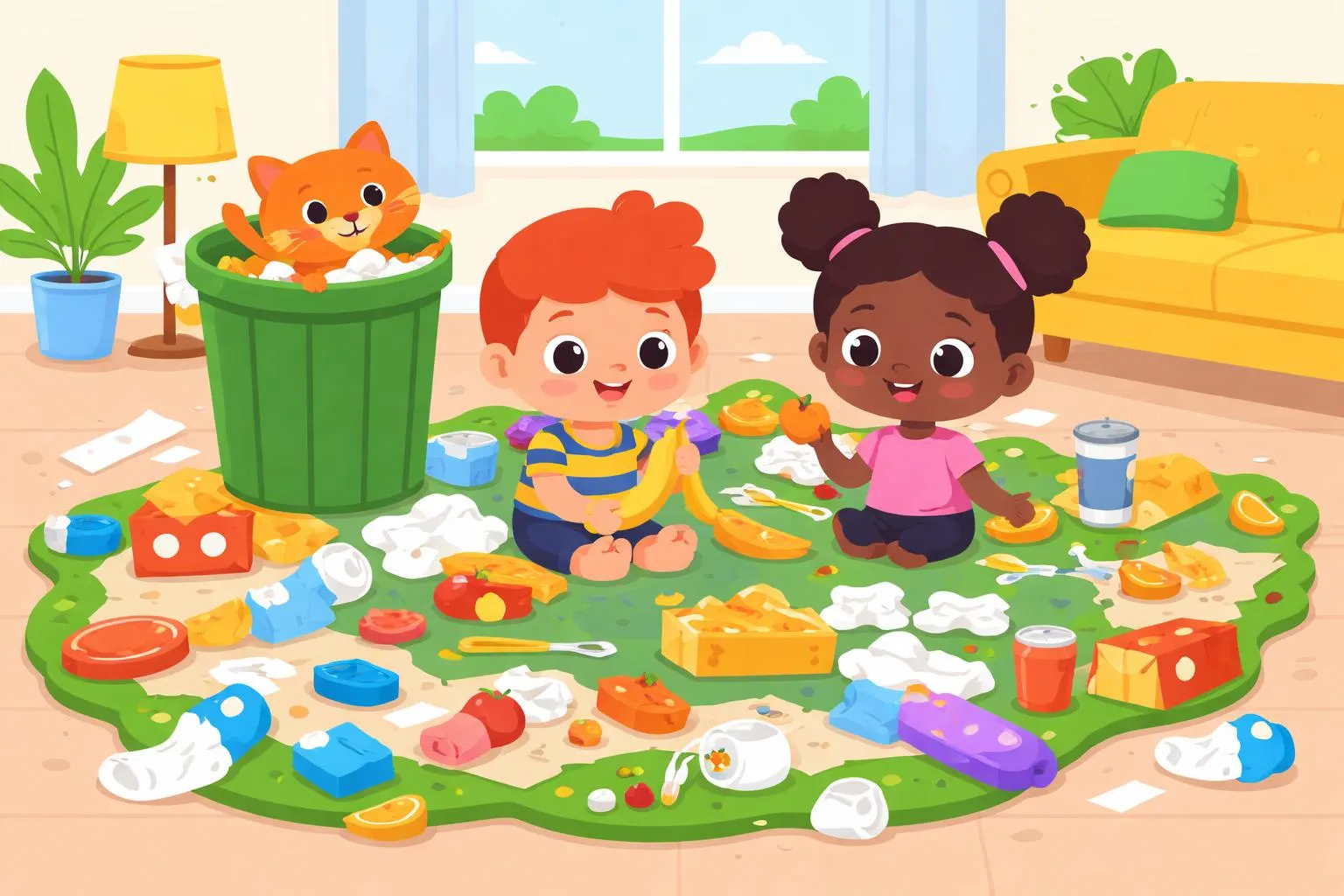
Connecticut. She is opening a plastic bag.
A grotesque parody of the primeval muck
starts oozing out. And behold,
the plastic bag is magic;
there is no closing it. Soap
in unsoftened water, sewage, asbestos
coiled like vermicelli, Masonite shavings,
a liquefied lifetime subscription
to
The New York Times
delivered all at once.
Empty body stockings, limp, forlorn,
like collapsed lungs. A blithering slur
of face creams, an army of photocopies
travelling on its stomach of acronyms,
tooth paste tubes wrung rigid and dry.
Also, two hundred and one tons
of crumpled bumpers wrapped in insurance
claims, slag, coal dust, plastic trimmings,
industrial excrementa. Lake Erie is returning
our gifts.
At first she thought she had won
something. Now it slithers through the house,
out windows, down the street, spreading
everywhere but heading, mostly, west.
Maybe
heading
is the wrong word,
implying shape and choice. It took
the shape of the landscape
it rippled across like the last blanket.
And it went west because the way lay open
once again: not the same fecund rug
the earth grew when white people scraped
their first paths to the Pacific
across the waves of the inland grasses.
Outside Ravenswood, West Virginia,
abandoned cars shine in the sun
like beetlebacks. The ore it took
to make the iron it took to make the steel
it took to make the cars, that ore
would remember the glaciers if it could.
Now comes another grinding, but not—
thanks to our new techniques—so slow.
The amiable cars wait stilly in their pasture.
Three Edsels forage in the southeast corner
like bishops of a ruined church.
There are Fords and Dodges, a Mercury
on blocks, four Darts and a Pierce Arrow,
a choir of silenced Chevrolets.
And, showing their lapsed trademarks
and proud grilles to a new westward
expansion, two Hudsons, a LaSalle
and a DeSoto.
I was hoping to describe
the colors of this industrial autumn—
rust, a faded purple like the dusty
skin of a Concord grape, flaking moss-
green paint with primer peeking
blandly through, the garish macho reds
insurance companies punish, the greys
(opaque) and silvers (bright), the snob colors
(e.g. British Racing Green), the two-tone
combinations time will spurn like roadkill
(1957: pink and grey), cornflower
blue, naval blue, royal blue, stark blue, true
blue, the blacker blue the diver sees
beneath him when he plumbs thirty feet—
but now they are all covered,
rolling and churning in the last
accident, like bubbles in lava.
And now my Cincinnati—the hills
above the river, the lawn that drained
toward Ricwood Ave. like a small valley of uncles,
the sultry river musk that slid
like a compromising note through my bedroom window—
and indeed all Cincinnati seethes. The vats
at Proctor & Gamble cease their slick
congealing, and my beloved birthplace
is but another whorl of dirt.
Up north near Lebanon and Troy and Rosewood,
the corn I skulked in as a boy
lays back its ears like a shamed dog.
Hair along the sow’s spine rises.
The Holstein pivots his massive head
toward where the barn stood; the spreading stain
he sees is his new owner.
What we imagined was the fire-storm,
or, failing that, the glacier.
Or we hoped we’d get off easy,
losing only California.
With the seismologists and mystics
we say the last California ridge
crumble into the ocean.
And we were read with elegies:
O California, sportswear
and defense contracts, gasses that induce
deference, high school girls
with their own cars, we wanted
to love you without pain.
O California, when you were moored to us
like a vast splinter of melon,
like a huge and garish gondola,
then we were happier, although
we showed it by easy contempt.
But now you are lost at sea,
your cargo of mudslides and Chardonnays
lost, the prints of the old movies
lost, the thick unlighted candles of the redwoods
snuffed in advance. On the ocean floor
they lie like hands of a broken clock.
O California, here we come,
quoting Ecclesiastes,
ruinous with self-knowledge.
Meanwhile, because the muck won’t stop
for lamentation, Kansas succumbs.
Drawn down by anklets of DDT,
the jayhawk circles lower and lower
while the sludge moils and crests.
Now we are about to lose our voices
we remember that tomorrow is our echo.
O the old songs, the good days:
bad faith and civil disobedience,
sloppy scholarship and tooth decay.
Now the age of footnotes is ours.
Ibid, ibid, ibid, ibid, ibid.
While the rivers thickened and fish
rose like vomit, the students of water
stamped each fish with its death date.
Don’t let a chance like this go by,
they thought, though it went by
as everything went by—towers
of water flecked by a confetti
of topsoil, clucked tongues, smug
prayers. What we paid too much for
and too little attention to,
our very lives, all jumbled
now and far too big in aggregate
to understand or mourn, goes by,
and all our eloquence places its
weight on the spare word
goodbye
.
Analysis and Interpretation of the Poem
This poem presents a vivid and haunting depiction of environmental decay and societal neglect. It opens with the image of a housewife opening a plastic bag, which becomes a metaphor for the unstoppable spread of pollution and waste. The poem’s tone is somber and reflective, emphasizing the overwhelming presence of industrial and human-made debris that invades everyday life, symbolizing a slow apocalypse.
The imagery is striking: the "grotesque parody of the primeval muck" suggests that what once was natural and pure has been replaced by toxic, artificial waste. The poem moves through various American landscapes—from Talking Rock, Georgia, to Ravenswood, West Virginia, and Cincinnati—showing how pollution and industrial decline affect different regions. The abandoned cars, rust, and fading colors symbolize the decay of industrial America and the loss of a once-thriving society.
The poem also touches on historical and cultural themes, referencing westward expansion and the environmental consequences of human progress. The mention of California’s imagined destruction and the elegies for it reflect a broader anxiety about the future of the environment and society. The poem ends on a note of resignation and loss, with the word "goodbye" encapsulating the finality of what has been lost due to neglect and environmental destruction.
Background and Author Introduction
This poem likely belongs to the genre of environmental poetry, which emerged strongly in the late 20th century as concerns about pollution, industrial waste, and ecological collapse grew. The author uses a modern, almost conversational style, blending detailed, sometimes technical descriptions of waste and decay with emotional and cultural reflections.
The poet is possibly an American writer deeply concerned with environmental issues and the social consequences of industrialization. Their work reflects a critical view of consumer culture, industrial waste, and the slow destruction of natural landscapes and communities. This poem serves as a powerful reminder of the interconnectedness of human life and the environment.
Reflections and Insights
Reading this poem invites us to reflect on the impact of human activity on the planet and the urgency of addressing environmental problems. It encourages awareness of how everyday actions, like the use of plastic bags, contribute to a larger crisis. The poem’s detailed imagery helps readers visualize the scale of pollution and the loss of natural beauty and industrial vitality.
It also highlights the importance of memory and history, showing how places and objects carry stories of the past, and how their decay signals broader societal changes. The poem’s melancholy tone reminds us that environmental degradation is not just a physical loss but also a cultural and emotional one.
Educational Value and Learning Points for Students
From this poem, students can learn several important lessons:
- Environmental Awareness: Understanding the consequences of pollution and waste on ecosystems and communities.
- Imagery and Symbolism: How poets use vivid descriptions and symbols (like plastic bags, rusted cars) to convey complex ideas.
- Historical Context: The poem references American history, such as westward expansion, industrialization, and cultural shifts, providing a cross-disciplinary learning opportunity.
- Critical Thinking: Encouraging students to think about human responsibility and the long-term effects of industrial progress.
- Vocabulary Development: Words like "grotesque," "parody," "congealing," and "excrementa" enrich students’ language skills.
Practical Applications and Life Lessons
- Environmental Responsibility: Students can apply the poem’s message by reducing plastic use, recycling, and supporting sustainable practices.
- Cultural Reflection: Understanding how literature reflects societal issues can enhance empathy and awareness.
- Creative Expression: Encouraging students to write their own poems or essays about environmental topics.
- Interdisciplinary Learning: Linking literature with science (ecology, chemistry) and history.
Reading Comprehension Questions
- What does the plastic bag symbolize in the poem?
- How does the poet describe the impact of industrial waste on the environment?
- Which American locations are mentioned, and why are they significant?
- What emotions does the poem evoke about the future of the environment?
- How does the poem connect historical events with environmental issues?
- What is the significance of the repeated use of car brands and colors in the poem?
- Why does the poem end with the word "goodbye"?
- How can this poem inspire readers to think differently about their daily habits?
Answers to the Comprehension Questions
- The plastic bag symbolizes the unstoppable spread of pollution and environmental degradation.
- The poet describes industrial waste as a grotesque, overwhelming force that invades homes and landscapes, symbolizing decay and neglect.
- Locations like Talking Rock, Georgia; Hop River, Connecticut; Ravenswood, West Virginia; Cincinnati; and California are mentioned to show the widespread nature of pollution and its cultural impact.
- The poem evokes feelings of sadness, loss, and resignation about the environment’s future.
- It connects historical westward expansion and industrial growth with the resulting environmental destruction, showing the cost of progress.
- The car brands and colors represent the industrial past and its decline, symbolizing lost pride and fading vitality.
- "Goodbye" signifies the final farewell to a world damaged by human neglect and pollution.
- It encourages readers to reconsider their environmental impact and adopt more sustainable habits.
This poem serves as a powerful educational tool to foster environmental consciousness and critical thinking about the relationship between humans and nature.