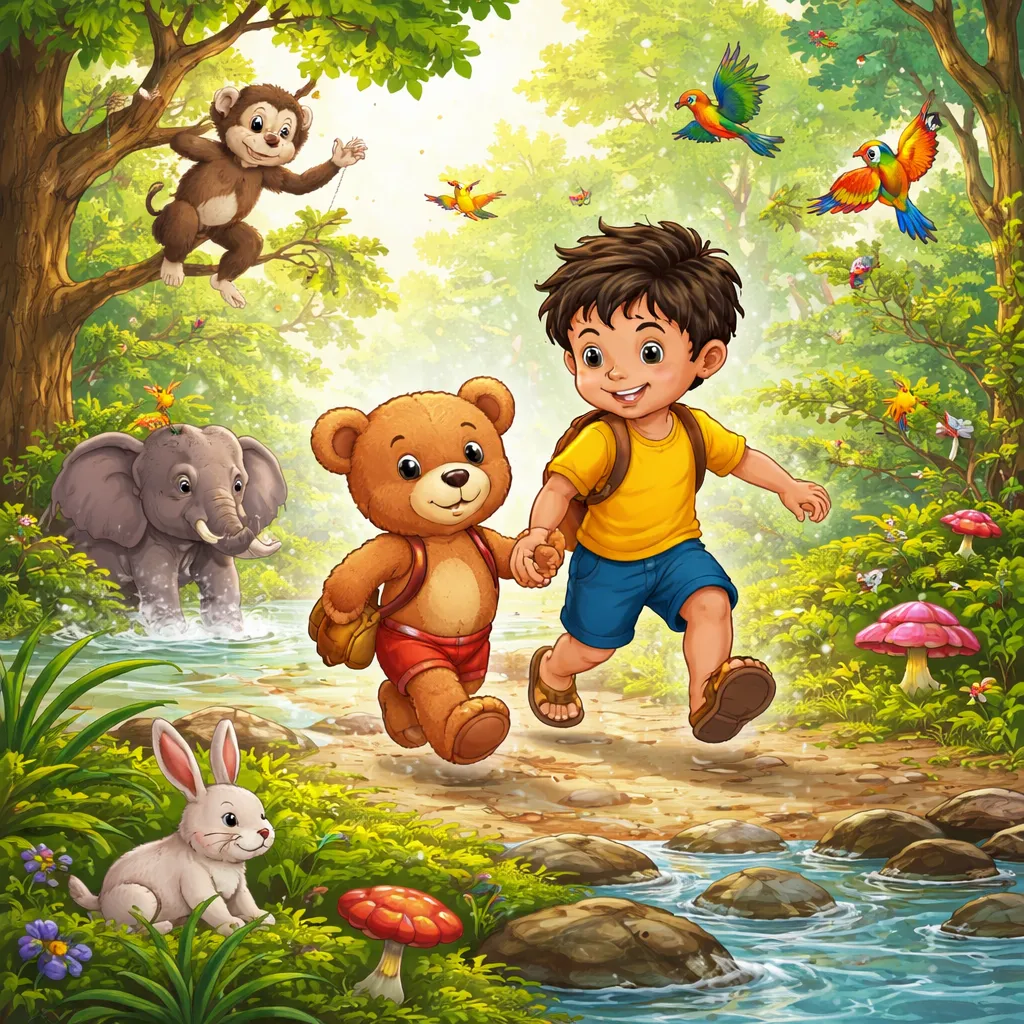

Do you have a favorite stuffed animal? One that you hug at night, or take on pretend adventures during the day? A soft, cuddly teddy bear can be a brave explorer, a quiet listener, and a best friend all in one. In Bangladesh and West Bengal, a land of warm hearts and vibrant stories, there is a cozy song about such a furry friend. Let’s give a hug to the Bengali Song: The Little Teddy Bear (খোকা ভালুক).
About the Song
Here is a sweet verse from this popular children’s song in Bengali and English:
খোকা ভালুক, আমার সাথী
(Khoka bhaluk, amar sathi)
Little teddy bear, my companion
তোমার সাথে খেলি দিনরাত
(Tomar sathe kheli din-rat)
I play with you day and night
জঙ্গলে যাই, ডালে চড়ি
(Jungle-e jai, dale chori)
We go to the jungle, we climb a branch
তুমি আমার বীর বন্ধু
(Tumi amar bir bondhu)
You are my brave friend
This song’s original name uses the Bengali words “খোকা ভালুক” (Khoka Bhaluk), a term of endearment meaning “little bear” or “teddy bear.” It is a beloved modern Bengali children’s song. The song is a joyful celebration of the bond between a child and their teddy. The music is often cheerful, warm, and full of playful energy. The Bengali Song: The Little Teddy Bear (খোকা ভালুক) is a musical adventure, showing how a simple toy can inspire big stories and brave friendship.
What the Song is About
The song is a day in the life of two best friends. First, the child introduces their teddy bear as their constant “companion.” They do everything together: “I play with you day and night.” Then, the adventure begins! The child’s imagination turns the room into a wild jungle: “We go to the jungle, we climb a branch.” We can picture them holding the bear, pretending to swing from furniture and explore. The song ends with the most important line: “You are my brave friend.” The teddy bear isn’t just cute; it’s brave, giving the child courage to imagine and explore. The whole song is about the power of imaginative play and the security of a constant, soft friend.
Who Made It & Its Story
This song is a popular part of modern Bengali children’s culture, often featured in media and schools. While specific creators aren’t widely known, the song reflects a global love for teddy bears, adapted into the local context. The teddy bear, a Western invention, has become a universal symbol of childhood comfort. The Bengali Song: The Little Teddy Bear (খোকা ভালুক) makes this global icon feel local and special. It is loved for three cuddly reasons. First, it validates and encourages imaginative play, which is crucial for creative development. Second, it focuses on the emotional qualities of the bear (bravery, friendship) rather than just its appearance. Third, its tune is catchy, upbeat, and perfect for singing while playing, making the bond between the child and the bear feel active and joyful.
When to Sing It
You can sing this song while playing with your own teddy bear, acting out the jungle adventure in your living room. It’s perfect to hum while building a blanket fort “jungle” with pillows and chairs. You could also sing it as a bedtime song, thanking your teddy for being a brave friend throughout the day.
The Bengali Song: The Little Teddy Bear (খোকা ভালুক) shows us a friendship full of imagination. But every good adventure teaches us something. This song is our map for learning. It introduces us to words for friendship and adventure, shows us how to talk about doing things together, and shares a universal symbol of comfort. Let’s grab our explorer’s hat and see what we can discover.
What Children Can Learn
Vocabulary
This song helps us learn words for friendship, adventure, and qualities.
Companion: A friend or partner you spend a lot of time with. A teddy bear is a loyal companion.
Imaginative: Having or showing creativity and the ability to form new ideas. Pretending a room is a jungle is imaginative play.
Courage: The ability to do something that frightens you; bravery. The song calls the teddy bear a brave friend, showing courage.
Exploration: The action of traveling in or through an unfamiliar area to learn about it. Going to the “jungle” is an act of exploration.
Security: A feeling of safety and comfort. Hugging a teddy bear can give a child a sense of security.
Empathy: The ability to understand and share the feelings of another. Caring for a toy can help develop empathy.
Language Skills
This song is a wonderful example of using the Present Simple Tense for Repeated or Habitual Actions. We use this tense to talk about routines and things we do regularly.
What Is It?: Think of the Present Simple as the “Always Does” or “Usually Does” tense. It’s for habits, routines, and repeated actions. Playing with the teddy “day and night” is a habit.
Finding the Secret: Look for verbs (action words) that describe regular activities without “-ing.” They tell you what someone usually does. Ask: “Does this action happen regularly?”
Using It:
◦   Formula: [I/You/We/They] + [base verb]. or [He/She/It] + [verb with ‘s’].

◦   Examples: “I play with my bear. We explore together. She climbs the tree.”

◦   In the song: “I play with you day and night. We go to the jungle. We climb a branch.” These are the child’s regular, imaginative activities with the bear.
Sounds & Rhythm Fun
Listen to the playful, marching rhythm. The Bengali Song: The Little Teddy Bear (খোকা ভালুক) often has a bouncy, cheerful beat that sounds like marching on an adventure. The melody is simple, repetitive, and easy to sing, making it feel like a fun chant for play. This upbeat, steady rhythm encourages movement and makes the lyrics about daily play and adventure easy to remember and act out. You can use this same marching, playful rhythm to make up a song about any daily routine you do with a friend or toy.
Culture & Big Ideas
While the teddy bear is a global toy, this song connects it to the Bengali value of স্নেহ (sneho), meaning affectionate love and care, often shown within families and to cherished objects. A festival that celebrates light, joy, and togetherness is Diwali (also celebrated by many in Bengal), where homes are filled with warmth, similar to the comfort a teddy bear provides. The Bengali Song: The Little Teddy Bear (খোকা ভালুক) teaches three important ideas. First, Imagination as a Playground: You don’t need to travel far for an adventure; your own imagination can turn your room into a jungle, a spaceship, or a castle. Second, Friendship Gives Courage: Having a loyal friend, even a teddy bear, can make you feel braver to try new things and explore. Third, Routine and Ritual: The daily, repeated play (“day and night”) creates a comforting ritual that children love and thrive on.
Values & Imagination
Imagine you and your teddy bear are explorers. What does your jungle look like? Are there sock snakes and pillow mountains? What secret treasure are you searching for? This song teaches you the value of creative thinking and the comfort of having a steady friend. It shows that bravery often comes from not being alone. A simple idea: Tonight, tell your teddy bear one thing that made you happy today and one thing that felt a little scary. Then, thank it for being your brave friend. You are practicing sharing feelings and gratitude.
Your Core Takeaways
The Bengali Song: The Little Teddy Bear (খোকা ভালুক) is a warm, joyful celebration of imaginative play, courage, and friendship. You learned words like “companion,” “courage,” and “exploration.” You discovered how to use the Present Simple tense to talk about your daily routines and habits. You moved to the song’s bouncy, adventurous rhythm. You also connected the teddy bear to universal themes of comfort and the cultural value of affectionate love (sneho). Most importantly, the song teaches that your imagination is a powerful tool for adventure, that true friends make us feel brave, and that the simplest toys can be the source of the greatest stories.
Your Practice Missions
- Be a “Habit Reporter” with Your Bear. With your teddy bear (or another toy), tell it about two things you “usually do” every day, using the Present Simple tense. Example: “I brush my teeth every morning. I read a book every night.” This practices the tense while sharing your routine with a friend.
- Go on a “Brave Explorer” Mission. With your teddy bear, go on a short walk around your home or yard. Find three “jungle” items: a tall plant (tree), a small rock (mountain), a puddle (lake). Describe each one to your bear as you “explore.” Say, “We see a tall tree! We climb this mountain!” You are acting out the song’s adventure and practicing observation.