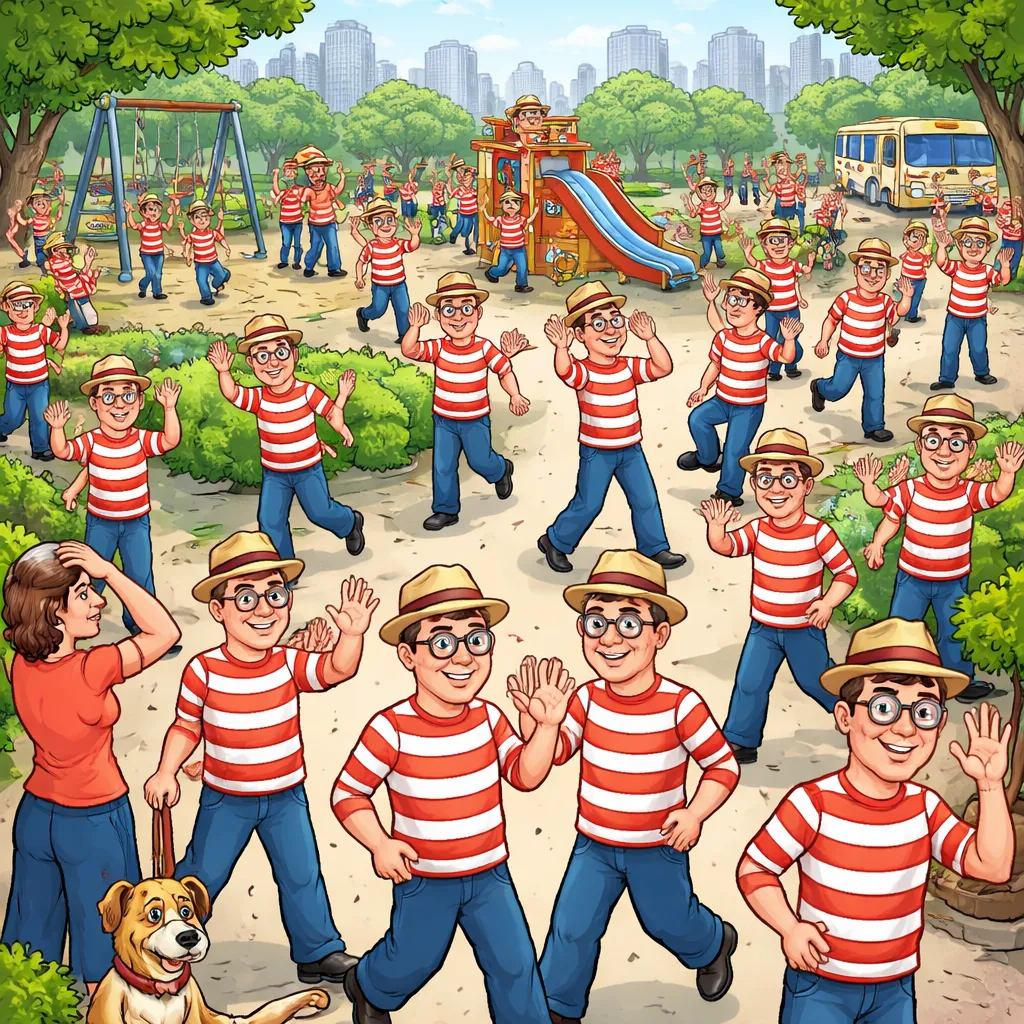

Have you ever been in a crowd where everyone is shouting and laughing together, maybe at a game or a party? There is a silly, wonderful song that feels exactly like that. It’s a song about a man with a very, very long name, and the hilarious fact that everyone else seems to have the same name, too! Let’s learn about the cumulative shout-along song “John Jacob Jingleheimer Schmidt.”
About the Song
Let’s read the repetitive, building words of this classic group song.
John Jacob Jingleheimer Schmidt, His name is my name too. Whenever I go out, The people always shout, “There goes John Jacob Jingleheimer Schmidt!” Da da da da da da da!
This song is a traditional American and Canadian children’s song, a cumulative song and a name game. It is a short, incredibly repetitive tune that builds in volume and energy. The song introduces a character with a long, humorous, and rhythmic name. The singer then claims that this is also their own name. The song describes how whenever the singer goes out, a crowd of people shouts the long name in recognition. The “da da da” section is sung in a loud, cheerful nonsense chorus. The magic of the song is that it is typically sung in a group, getting louder each time and then suddenly very soft, creating a fun game of vocal dynamics. It is a song about shared identity, playful noise, and the joy of being part of a crowd.
What the Song is About
The song paints a funny, exaggerated picture of fame and confusion. First, we meet a man with a memorable, compound name: John Jacob Jingleheimer Schmidt. The singer immediately says, “His name is my name too.” This is the first joke—two different people share this incredibly specific and long name.
The singer then describes what happens because of this shared name. Every time they leave their house (“whenever I go out”), a crowd notices them. But the crowd is confused! They see the singer and shout, “There goes John Jacob Jingleheimer Schmidt!” They are shouting at the singer, but using the other man’s name, which is also the singer’s name. It’s a silly circle of mistaken (or correct!) identity. The song ends with a burst of loud, wordless singing (“Da da da”) that represents the crowd’s cheerful shout. The song is less about a story and more about the feeling of being part of a loud, happy, and slightly ridiculous group.
Who Made It & Its Story
“John Jacob Jingleheimer Schmidt” is a traditional folk song, so its original author is unknown. It likely originated as a children’s playground song or camp song in the United States or Canada in the early to mid-20th century. The song is a prime example of a cumulative song, where lines or phrases are added with each verse. However, in this song, the accumulation is in volume and participation rather than lyrics. The song became a standard group activity for children, used to burn energy, practice dynamics (loud and soft), and build a sense of silly community. Its simple structure made it easy to remember and perfect for large groups, ensuring its spread across playgrounds and summer camps.
This song has remained a favorite for three hilarious reasons. First, its central joke is simple and universal. The idea of two people having the same long, silly name is immediately funny to children. Second, it is a perfect vehicle for group participation and controlled chaos. The song encourages everyone to sing louder and louder and then to drop to a whisper, which is a fun challenge. Third, the name itself is fantastically catchy and fun to say. The rhythm of “Jingleheimer Schmidt” is inherently musical and satisfying to pronounce, making it stick in your head.
When to Sing It
This song is perfect for large, energetic group moments. You can sing it with your family in the car, starting soft and getting so loud you almost shout, then whispering the last round. You can sing it as a greeting with friends, substituting your own names for “John Jacob Jingleheimer Schmidt.” You can also chant it while playing outside, running around and shouting the “da da da” part at the top of your lungs.
What Children Can Learn
This seemingly simple nonsense song is a powerful tool for learning. Let’s break down the fun.
Vocabulary
The song teaches us about names and descriptive phrases. A “name” is the word by which a person is known. “John Jacob Jingleheimer Schmidt” is a compound name, using two first names (“John Jacob”), a made-up middle name (“Jingleheimer”), and a last name (“Schmidt”). “Whenever” means every time that. To “go out” means to leave your house. The word “shout” means to say something very loudly.
Let’s use these words! You can say, “Whenever it rains, we play inside.” Or, “The fans shout for their favorite team.” New word: Cumulative. This describes a song where each verse adds a new line or element, building on the previous one.
Language Skills
This song is a great lesson in using the simple present tense for habitual actions and direct speech. The entire song is in the simple present tense, describing a routine: “His name is my name… Whenever I go out… the people always shout…” This tense is used for things that are always or generally true.
The song also uses direct speech to show what the people say: “There goes John Jacob Jingleheimer Schmidt!” The quotation marks show we are repeating their exact words. The structure “His name is my name too” is a simple, declarative sentence that states a fact, which is a fundamental grammar pattern.
Sounds & Rhythm Fun
Listen to the bouncy, marching, and repetitive rhythm of the melody. The song’s magic is in its dynamics (volume changes). Groups often sing it multiple times, getting louder with each repetition until the last time, which is sung in a whisper. The name itself has a wonderful rhythm: JOHN Ja-cob JIN-gle-hei-mer SCHMIDT.
The rhythm is a steady 4/4 time, perfect for clapping or stomping. Try clapping on the beat: JOHN Ja-cob JIN-gle-hei-mer SCHMIDT. The melody is based on just a few notes and is incredibly easy to learn. The “da da da” section uses vocables (sung nonsense syllables), which are all about the joyful sound rather than meaning. This strong, repetitive, and flexible musical pattern is what makes the song so easy for a group to master and have fun with. You can write your own cumulative name song! Use the same rhythm. Try: “Sally Sue Sillywhiskers Bright, her name is my name too. Whenever I go out to play, the people always say, ‘Hey there, Sally Sue Sillywhiskers Bright!’ La la la la la la la!”
Culture & Big Ideas
“John Jacob Jingleheimer Schmidt” is a classic example of children’s folk culture—songs created and spread by children themselves in playgrounds and camps. It reflects the love of wordplay, silly sounds, and the social bonding that comes from shared inside jokes. The song has no deep historical roots, which is part of its charm; it exists purely for fun and group cohesion. It is a testament to how children create and sustain their own traditions through oral sharing.
The song conveys three lighthearted but important ideas. First, it’s about shared identity and belonging. By all singing that they share the same name, the group members playfully become one big, confused family, reinforcing social bonds. Second, it teaches control and awareness of volume. The game of getting loud and then soft is a fun way to practice self-regulation and listening to the group. Third, it celebrates the pure joy of silliness and absurdity. The song doesn’t need to make sense; its value is in the laughter and connection it creates, showing that fun doesn’t always need a reason.
Values & Imagination
Imagine you are John Jacob Jingleheimer Schmidt. What do you look like? Do you have a funny hat? A big mustache? Now, imagine you are the singer who shares the name. How does it feel when the whole town shouts your (shared) name? Is it exciting? A little embarrassing? Very funny? Imagine the crowd. Who are they? Shopkeepers? Neighbors? Dogs? Draw a picture of the scene. Show the singer walking down the street, and from the windows of the buildings, show lots of different people leaning out and shouting the long name in big, bubbly letters.
The song encourages inclusivity, playfulness, and vocal creativity. A wonderful idea is to host a “Name Inventor” contest. With your family, everyone invires their own long, silly, rhythmic name like “John Jacob Jingleheimer Schmidt.” Take turns sharing your new name and then sing the song using each person’s invented name. This celebrates individuality within the group fun.
So, as the final whispered “da da da” fades into giggles, think about the power of this simple group game. It is a vocabulary lesson in names and repetition. It is a grammar lesson in present tense routines and direct quotes. It is a music lesson in dynamics and rhythmic fun. From the first introduction of the long name to the final collective whisper, it wraps lessons in belonging, self-control, and unabashed silliness in a tune that makes you want to shout and laugh with friends. “John Jacob Jingleheimer Schmidt” teaches us that we can all share a name, that our voices can play together like instruments, and that sometimes, the best feeling in the world is being part of a loud, happy, slightly ridiculous crowd.
Your Core Takeaways
You are now an expert on the song “John Jacob Jingleheimer Schmidt.” You know it is a traditional cumulative children’s song about shared identity and crowd noise. You’ve practiced the simple present tense and direct speech, and you’ve learned about vocal dynamics. You’ve felt its bouncy, clapping rhythm and created your own name verse. You’ve also discovered the song’s role in children’s folk culture and its messages about belonging, volume control, and the value of pure, joyful silliness.
Your Practice Missions
First, lead a “Dynamic Sing-Off.” Gather your family or friends. Sing the song four times in a row. The first time, sing it normally. The second time, sing it forte (loud). The third time, sing it fortissimo (very loud!). The fourth time, sing it pianissimo (very soft). Discuss how the different volumes change the feeling of the song. This makes you a conductor of dynamics.
Second, design a “Name Badge” for the character. Create an official identification card or badge for John Jacob Jingleheimer Schmidt. What is his job? Silly Scientist? Professional Name-Haver? Draw his picture, write his long name, and include his “title.” Present your badge and explain your choices. This activity uses the song as a springboard for creative character invention.