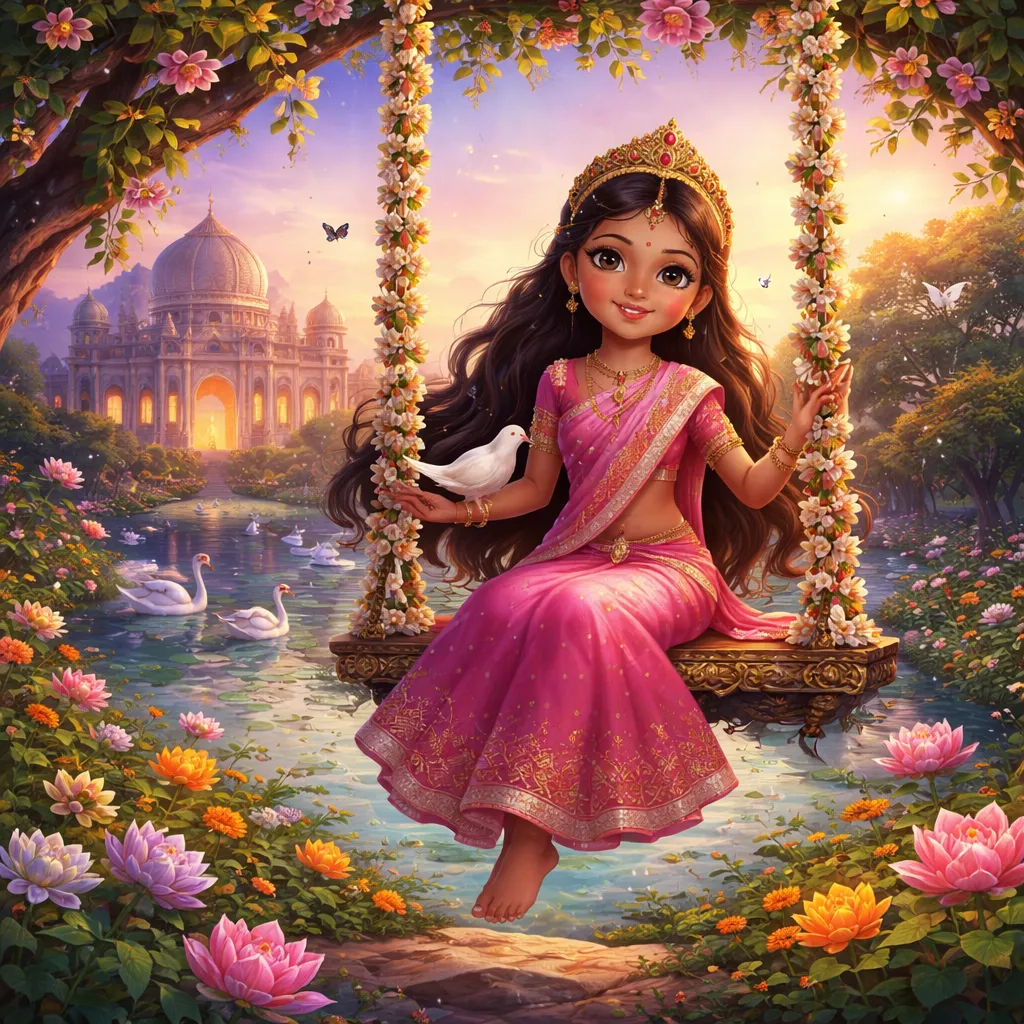

Have you ever dressed up in a sparkly costume and pretended to be royalty? Have you imagined a grand palace, a kind ruler, or a magical adventure? Stories of princes and princesses are fun because they are about characters who are brave, kind, and face exciting challenges. In Bangladesh and West Bengal, a land of rich stories and poetry, there is a song that celebrates such a character. Let’s enter the story of the Bengali Song: The Little Princess (রাজকুমারী).
About the Song
Here is a verse from this charming song in Bengali and English:
রাজকুমারী, সুন্দরী রাজকুমারী
(Rajkumari, sundori rajkumari)
Princess, beautiful princess
তোমার গল্প শুনি আমরা
(Tomar golpo shuni amra)
We listen to your story
তুমি ভালো, তুমি দয়ালু
(Tumi bhalo, tumi dayalu)
You are good, you are kind
সবাই তোমায় ভালোবাসে
(Shobai tomay bhalobashe)
Everyone loves you
This song’s original name uses the Bengali word “রাজকুমারী” (Rajkumari), which means “princess.” It is a popular and gentle Bengali children’s song. The song doesn’t tell one specific story; instead, it describes the beloved character of a princess. The music is often sweet, melodic, and full of wonder, like the opening of a storybook. The Bengali Song: The Little Princess (রাজকুমারী) is a musical portrait, painting a picture of an ideal character who is defined not by a crown, but by her inner goodness.
What the Song is About
The song is a celebration of a storybook character’s qualities. First, we address her: “Princess, beautiful princess.” But the song quickly shows that her beauty is more than just her appearance. The reason we love her is because of her story: “We listen to your story.” The song then tells us what makes her story worth hearing. Her most important traits are: “You are good, you are kind.” In many stories, the princess’s kindness is her superpower. Because of these qualities, the song ends with a happy truth: “Everyone loves you.” The princess is loved not for her title, but for her heart. The whole song teaches that true admiration comes from being a good and kind person.
Who Made It & Its Story
This song is a part of modern Bengali children’s culture, often found in music collections and school programs. While the specific creators aren’t widely listed, the song taps into the universal and timeless appeal of fairy tales and royal characters. It also connects to Bengal’s own rich tradition of folk tales and literature, where moral lessons are often taught through stories. The Bengali Song: The Little Princess (রাজকুমারী) is cherished for three important reasons. First, it redefines the idea of a princess, focusing on inner virtues (goodness, kindness) rather than external trappings. Second, it encourages a love for stories and the lessons they hold. Third, its melody is typically soft, lullaby-like, and easy to sing, making it perfect for quiet time or imaginative play.
When to Sing It
You can sing this song during dress-up play, while pretending to be a kind ruler of your imaginary kingdom. It’s perfect to hum while reading a fairy tale book, thinking about the characters’ choices. You could also sing it as a bedtime song, imagining your own peaceful, kind story before sleep.
The Bengali Song: The Little Princess (রাজকুমারী) introduces us to a beloved character. But every good story helps us learn about ourselves and the world. This song is a storybook lesson. It teaches us words for character traits, how to describe people, and the cultural love for storytelling. Let’s turn the page and begin the lesson.
What Children Can Learn
Vocabulary
This song helps us learn words for character, emotions, and narrative.
Character: A person in a story. The princess is the main character in the song.
Virtue: A good quality or habit, like kindness or honesty. The song praises the princess’s virtues.
Narrative: A story or account of events. We enjoy listening to a good narrative.
Empathy: The ability to understand and share the feelings of another. A kind character shows empathy.
Admiration: Respect and warm approval. We feel admiration for good people.
Role Model: A person looked to by others as an example to be imitated. Storybook characters can be role models.
Language Skills
This song is a clear example of using Adjectives to Describe Character. Adjectives are words that describe nouns (like a person). Here, they describe the princess’s qualities.
What Are They?: Think of adjectives as your “describing words.” They tell us what someone or something is like.
Finding the Secret: Look for words that come before a noun (like “princess”) or after a linking verb (like “is” or “are”) that tell you more about it. Ask: “What word is describing what the noun is like?”
Using Them:
◦   Formula: [Subject] + [linking verb] + [adjective]. or [Adjective] + [Noun].

◦   Examples: “She is kind. He is brave. The good princess.”

◦   In the song: “You are good. You are kind. Beautiful princess.” These adjectives paint a picture of the princess’s character.
Sounds & Rhythm Fun
Listen to the gentle, storytelling rhythm. The Bengali Song: The Little Princess (রাজকুমারী) often has a soft, flowing, and calm beat. It sounds like a gentle voice reading a bedtime story. The melody is usually simple and sweet, easy to remember and hum. This soothing rhythm helps create a feeling of safety and goodness, making the positive message about character easy to absorb. You can use this same gentle, flowing rhythm to make up a song describing any person you admire, like a friend or family member.
Culture & Big Ideas
This song connects to the world of Bengali ছড়া (Chhara rhymes) and গল্প (Golpo stories) that are told to children. A famous writer of Bengali children’s literature is Upendrakishore Ray Chowdhury, who wrote and illustrated many classic tales. The song reflects the cultural practice of using stories to teach values. The Bengali Song: The Little Princess (রাজকুমারী) teaches three important ideas. First, Inner Beauty Matters: True admiration comes from a person’s character (being good and kind), not just their appearance or title. Second, The Power of Story: Stories are a powerful way to learn about how to be in the world. Third, Universal Love for Goodness: Everyone, in every culture, loves and respects kindness—it is a universal language.
Values & Imagination
Imagine you are the little princess in the song. What kind acts would you do in your kingdom? Help a lost animal? Share your toys? This song teaches you that everyone can be the hero of their own story by choosing to be good and kind. It shows that you don’t need a crown to be a leader in kindness. A simple idea: Today, try to do one small, kind thing without being asked, like sharing a toy or saying a kind word. You are writing your own story of being a good character.
Your Core Takeaways
The Bengali Song: The Little Princess (রাজকুমারী) is a gentle lesson in character, storytelling, and inner beauty. You learned words like “character,” “virtue,” and “narrative.” You discovered how to use adjectives like “good” and “kind” to describe a person’s qualities. You felt the song’s soft, storytelling rhythm. You also connected the song to Bengal’s rich tradition of children’s stories and rhymes. Most importantly, the song teaches that our character is our most important quality, that stories help us understand goodness, and that kindness is a treasure that makes everyone love and admire you.
Your Practice Missions
- Be an “Adjective Detective.” Think of a friend or family member. Say three adjectives that describe their character. Example: “My sister is helpful. My friend is funny. My grandpa is wise.” This practice helps you notice and describe the good in people.
- Create a “Kindness Crown.” Draw and cut out a crown from paper. Instead of jewels, write or draw different kind actions on each point of the crown (e.g., “Share,” “Help,” “Listen,” “Smile”). Wear your crown and try to do one of the actions today. This turns the idea of a princess into a role model for everyday kindness.














