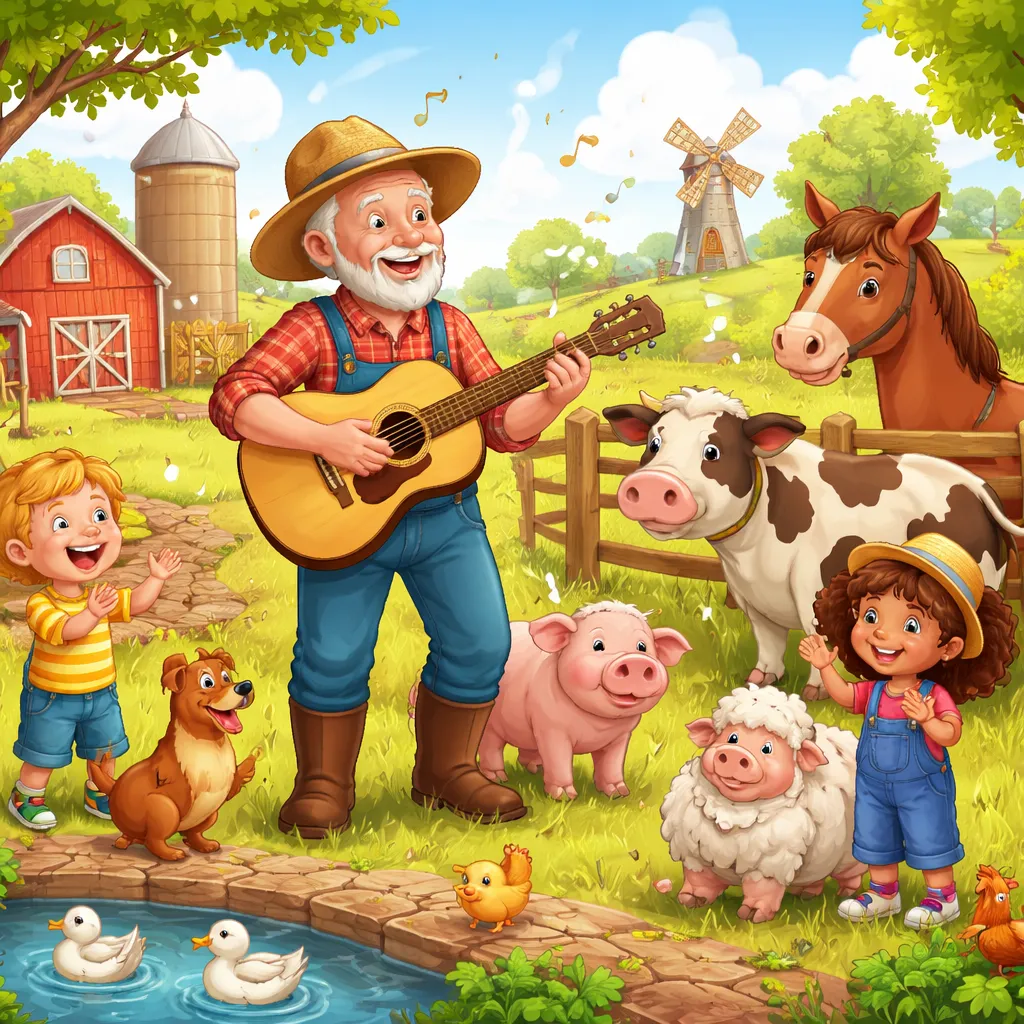

What is the Rhyme "Old MacDonald Had a Farm"? "Old MacDonald Had a Farm" is a beloved English nursery rhyme that has delighted children for generations. It tells the simple story of a farmer named Old MacDonald and the many animals living on his farm. Each verse introduces a new animal and the special sound it makes. The song follows a clear, repetitive pattern that invites everyone to join in. Children love to moo like cows, quack like ducks, and oink like pigs. This playful repetition makes the English song: Old MacDonald Had a Farm one of the most effective tools for introducing young learners to animals, sounds, and language patterns in a joyful, memorable way.
The Complete Lyrics of the Nursery Rhyme Let us look at the words together. You can add as many animals as your child likes. Here are the classic verses to begin your farm adventure.
Old MacDonald had a farm, E-I-E-I-O! And on his farm he had a cow, E-I-E-I-O! With a moo-moo here and a moo-moo there, Here a moo, there a moo, everywhere a moo-moo! Old MacDonald had a farm, E-I-E-I-O!
Old MacDonald had a farm, E-I-E-I-O! And on his farm he had a duck, E-I-E-I-O! With a quack-quack here and a quack-quack there, Here a quack, there a quack, everywhere a quack-quack! Old MacDonald had a farm, E-I-E-I-O!
Old MacDonald had a farm, E-I-E-I-O! And on his farm he had a pig, E-I-E-I-O! With an oink-oink here and an oink-oink there, Here an oink, there an oink, everywhere an oink-oink! Old MacDonald had a farm, E-I-E-I-O!
Old MacDonald had a farm, E-I-E-I-O! And on his farm he had a sheep, E-I-E-I-O! With a baa-baa here and a baa-baa there, Here a baa, there a baa, everywhere a baa-baa! Old MacDonald had a farm, E-I-E-I-O!
Vocabulary Learning from the Song This English song: Old MacDonald Had a Farm is a wonderful way to build a child's vocabulary. It introduces animal names, farm-related words, and the special sounds animals make. Learning these words through music feels like play, not study.
First, children learn the names of common farm animals. Words like "cow," "duck," "pig," and "sheep" become familiar and friendly. You can point to pictures in books or toys at home to reinforce these words. Next, the song introduces animal sounds. "Moo," "quack," "oink," and "baa" are fun to say and easy to remember. These sounds are often a child's first steps into using language creatively.
The song also repeats the word "farm." Talk with your child about what a farm is. It is a place where animals live and where farmers grow food. This builds a simple understanding of the world around them.
Phonics Points to Practice Let us listen for special sounds in the song. Phonics helps children connect letters to the sounds they hear. This English song: Old MacDonald Had a Farm gives us many chances to practice.
Listen to the "ck" sound at the end of "duck" and "quack." It is a sharp, quick sound. Say these words slowly with your child. Feel how the back of your tongue lifts to make the sound. Practice other words ending with "ck" like "truck," "stick," and "block."
Another wonderful sound is the long "e" in "sheep" and "E-I-E-I-O." The "ee" sound says its own name. You can find this sound in other words like "bee," "tree," and "feet." Pointing out these sound patterns during a happy song helps children recognize them in other words they meet.
Grammar Patterns We Can Learn Even a simple farm song teaches important grammar. This English song: Old MacDonald Had a Farm shows children how we talk about possession and location.
Look at the first line, "Old MacDonald had a farm." The word "had" tells us that something belongs to someone. It is the past tense of "have." You can use this pattern in daily life. Say to your child, "We had a fun day at the park," or "Grandma had a tasty cake." This helps them understand how we talk about things people own or experience.
The song also uses the word "on" to show location. "On his farm" tells us where the animals live. You can practice using location words at home. Ask your child, "Is the spoon on the table?" or "Is the toy on the bed?" This builds an understanding of how prepositions work in sentences.
Learning Activities to Do at Home Bringing this English song: Old MacDonald Had a Farm into your everyday life is simple and joyful. Here are some activities you can try with materials you already have.
A wonderful activity is the "Farm Visit" adventure. The next time you see animals outside or visit a petting zoo, sing the song. If you see a dog, add a "woof-woof" verse. If you see a bird, try a "tweet-tweet" verse. This connects the song directly to real animals and real experiences.
You can also create a "Farm Sounds" game at home. Ask your child, "What does a cow say?" Wait for them to answer "moo." Then ask, "What animal says baa?" See if they remember the sheep. Taking turns asking and answering builds memory and confidence. It turns learning into a loving conversation between you and your child.
Printable Materials for Learning Creating simple learning materials can make this English song: Old MacDonald Had a Farm more interactive and engaging. You can make these printables together with your child.
A set of animal picture cards is very useful. Draw or print pictures of a cow, duck, pig, sheep, and other farm animals. On the back of each card, you can write the animal's name and the sound it makes. As you sing each verse, hold up the matching card. This helps your child connect the word, the picture, and the sound together.
Another idea is a "Farm Scene" coloring page. Draw a simple barn, a fence, and a field. Let your child add the animals from the song. They can draw a cow here, a duck there, and a pig in the mud. As they draw, sing the verses together. Displaying their artwork celebrates their learning and creativity.
Educational Games for Deeper Learning Games make learning active and exciting. They encourage children to use the language from the English song: Old MacDonald Had a Farm in new and creative ways.
The "Who Lives on the Farm?" game is always popular. You make an animal sound, and your child guesses which animal makes it. Say "oink, oink, oink" in a playful voice. Does your child guess the pig? Then switch roles. Let your child make a sound for you to guess. This game builds listening skills and reinforces the connection between animals and their sounds.
Another fun game is "Old MacDonald's New Animal." Ask your child, "What new animal should live on the farm?" Maybe a cat says "meow." Maybe a frog says "ribbit." Maybe a horse says "neigh." Creating new verses together is a powerful way for children to use their imagination with language. It shows them they can be creators, not just listeners. This builds a deep and lasting love for songs and words.