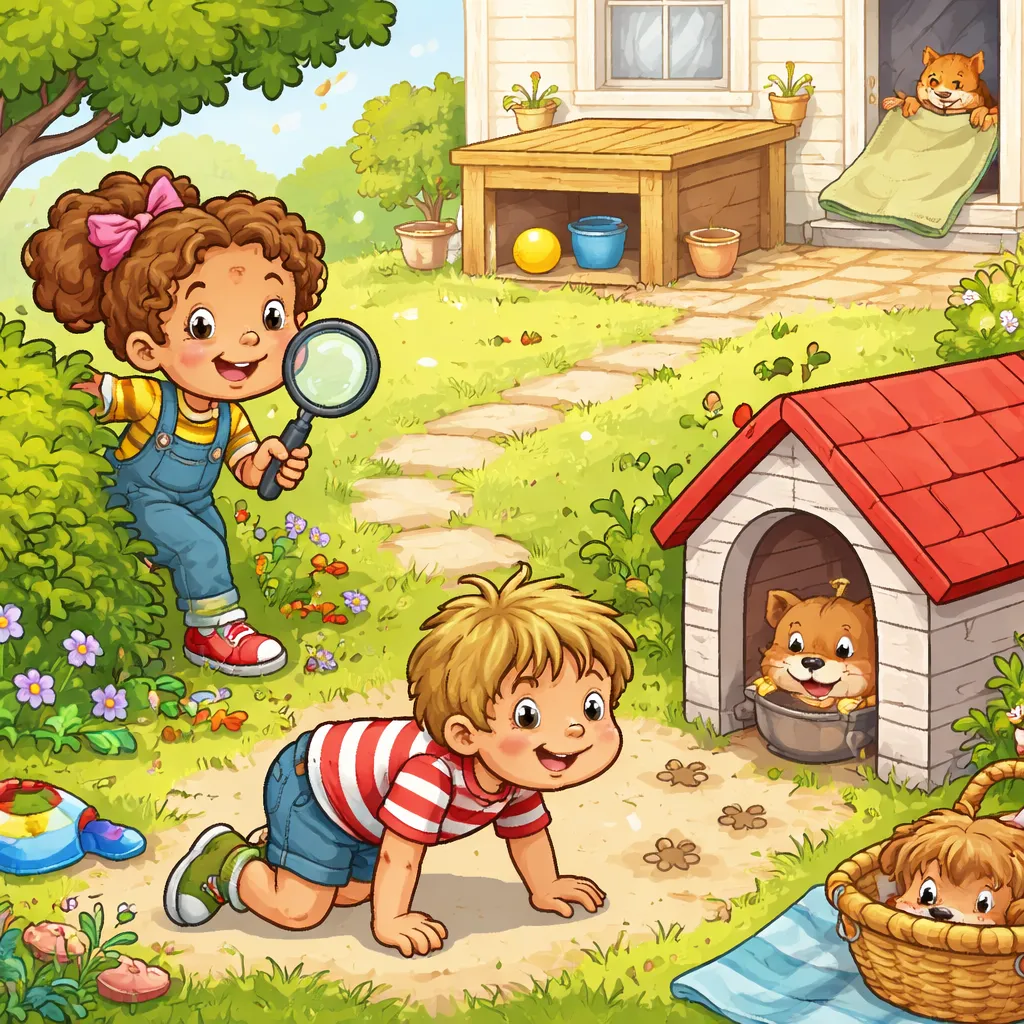

Has your pet ever run off to play, making you look everywhere? That feeling of looking for a lost friend is something this song knows all about. It’s a playful tune about searching for a missing puppy. The song asks a question we’ve all wondered: “Where Has My Little Dog Gone?”
About the Song
Let’s sing the song together! Here are the classic words.
Oh where, oh where has my little dog gone? Oh where, oh where can he be? With his ears cut short and his tail cut long, Oh where, oh where can he be?
This cheerful song is a call-and-response rhyme. It is like a musical game of hide-and-seek with a pet. The song is a classic American folk tune. The melody is very old and is based on a German folk song called “Zu Lauterbach hab’ ich mein Strumpf verlorn” (which means “In Lauterbach I lost my stocking”). An American songwriter named Septimus Winner wrote the English words we sing today in 1864. He took the happy German tune and gave it new words about a lost dog. So, when you sing it, you are mixing an old German melody with American fun.
What the Song is About
The song shows us a clear and worried scene. A person, maybe a child, is looking for their dog. They are looking around the yard, under the table, and behind the door. They cannot see their puppy anywhere. They put a hand over their eyes, looking into the distance.
They call out a question, again and again. “Oh where has my little dog gone?” They describe their dog so anyone listening can help. They say their dog has ears that are cut short. They say their dog has a tail that is cut long. They keep asking, hoping for an answer, “Oh where can he be?”
Who Made It & Its Story
The words for our song were written by a man named Septimus Winner. He loved writing fun and silly songs for people to enjoy. In 1864, he used a tune that was already very popular, a German folk dance tune, and wrote new lyrics about a lost dog. This is a common way folk music grows and changes.
The song became a huge hit for three great reasons. First, the tune is incredibly catchy and happy. It makes you want to tap your feet and sing along. Second, the story is simple and relatable. Every child who has ever played with a pet understands the feeling of looking for them. Third, it is a perfect call-and-response song. One person can sing the question, and everyone else can sing the answer or the next line, making it great for groups.
When to Sing It
This song is perfect for playful moments. You can sing it on a family walk, pretending to look for an imaginary dog behind trees and fire hydrants. You can sing it during playtime with your own pet, hiding a toy and then “searching” for it while you sing. You can also sing it as a gentle, quiet song before bed, wondering where all the dream dogs have gone.
What Children Can Learn
This happy search song is full of wonderful things to discover. Let’s look at all the learning hidden inside.
Vocabulary
The song teaches us some very useful words. “Where” is a question word we use to ask about a place or location. “Gone” is the past form of “go”; it means someone or something has left or disappeared. “Can he be?” is a way to ask about where someone or something might possibly be located right now. “Ears cut short” and “tail cut long” are funny, old-fashioned ways to describe how a dog’s ears and tail might be trimmed or shaped.
Let’s use these words in new sentences! You can ask, “Where has my red crayon gone?” or “Where can my sister be?” You can describe a toy: “My teddy bear has his bow tied short and his fur fluffed long.” You can even make a “Where has it gone?” game with your socks or toys.
Language Skills
This song is a master class in asking questions in the Present Perfect Tense. We use this tense to talk about actions that happened in the past but are connected to now. The key question is “Where has my little dog gone?” We form it with “has” or “have” + the past participle of the verb (like “gone” from “go,” or “eaten” from “eat”).
Look at the structure: Question Word (Where) + Has/Have + Subject + Past Participle? In our song, it’s “Where + has + my little dog + gone?” This tells us the dog left in the past, and the important thing NOW is that he is missing. We can use this for many things! “Where have you put my book?” (You put it in the past, I can’t find it now). “Where has Mom gone?” (She left earlier, and now she is not here). It’s a very useful tense for finding lost things and people!
Sounds & Rhythm Fun
Listen to the musical pattern. The song repeats the line “Oh where, oh where” which is like a calling sound. The words “gone” and “long” do not rhyme perfectly, but the melody makes them feel like they match. The real fun is in the tune’s bounce.
The rhythm is lively and bouncy, like a happy trot. Try clapping along: Oh WHERE, oh WHERE has my LITtle dog GONE? (clap, clap, clap-clap, clap). The melody is very simple, repetitive, and joyful. This makes it super easy to remember and sing without even trying. Now, you can write your own search song! Use the same tune. Try: “Oh where, oh where has my blue bike gone? Oh where, oh where can it be? With its shiny wheels and its bell ding-dong, oh where, oh where can it be?” See? You’re a songwriter!
Culture & Big Ideas
This song connects to the universal experience of having and loving a pet. In America and many places, dogs are beloved family members. The song also comes from a time of community; if you lost a dog, you might ask your neighbors for help, just like the singer is asking in the song.
The song shares three gentle ideas. First, it’s about responsibility. The singer is looking for their dog, showing care and worry for their pet. Second, it’s about expressing emotion. It’s okay to feel sad or worried when something you love is lost, and singing about it can help. Third, it teaches persistence and optimism. The singer keeps asking the question, not giving up hope that they will find their furry friend.
Values & Imagination
This song is a launchpad for imagination. Where did the little dog go? Imagine his adventure! Did he follow a butterfly into a magical garden? Did he find a friendly squirrel who needed help? Did he discover a secret tunnel under the fence? Close your eyes and picture the dog’s journey. Draw a map of where you think he went.
The song helps us value the pets and toys we love and teaches us to be careful with them. A great idea is to make a “Lost & Found” tag for your favorite toy. Take a piece of paper. Draw a picture of the toy. Write its name and your name. You can even write, “If found, please sing ‘Where Has My Little Dog Gone?’ to find me!” This mixes the song with taking good care of your things.
Your Core Takeaways
Now you know the fun, searching song “Where Has My Little Dog Gone?” You learned about its American words and German tune. You mastered the “Where has… gone?” question and learned words to describe a pet. You felt its bouncy rhythm and even created your own version. You also thought about the song’s message of caring for pets and never giving up hope.
Your Practice Missions
First, be a search party leader. Choose a stuffed animal. Hide it in your room. Then, walk around with a pretend magnifying glass, singing the song but change the words: “Oh where, oh where has my teddy bear gone?” Search high and low until you find it!
Second, make a “dog tag” for a toy. Find a small card or paper. Write the toy’s name and draw its picture. On the back, write a short description like in the song (“With his button eyes and his fur so brown”). Tape it to your toy. Now, if it ever gets “lost,” you can show the tag and ask for help, just like the singer in the song.