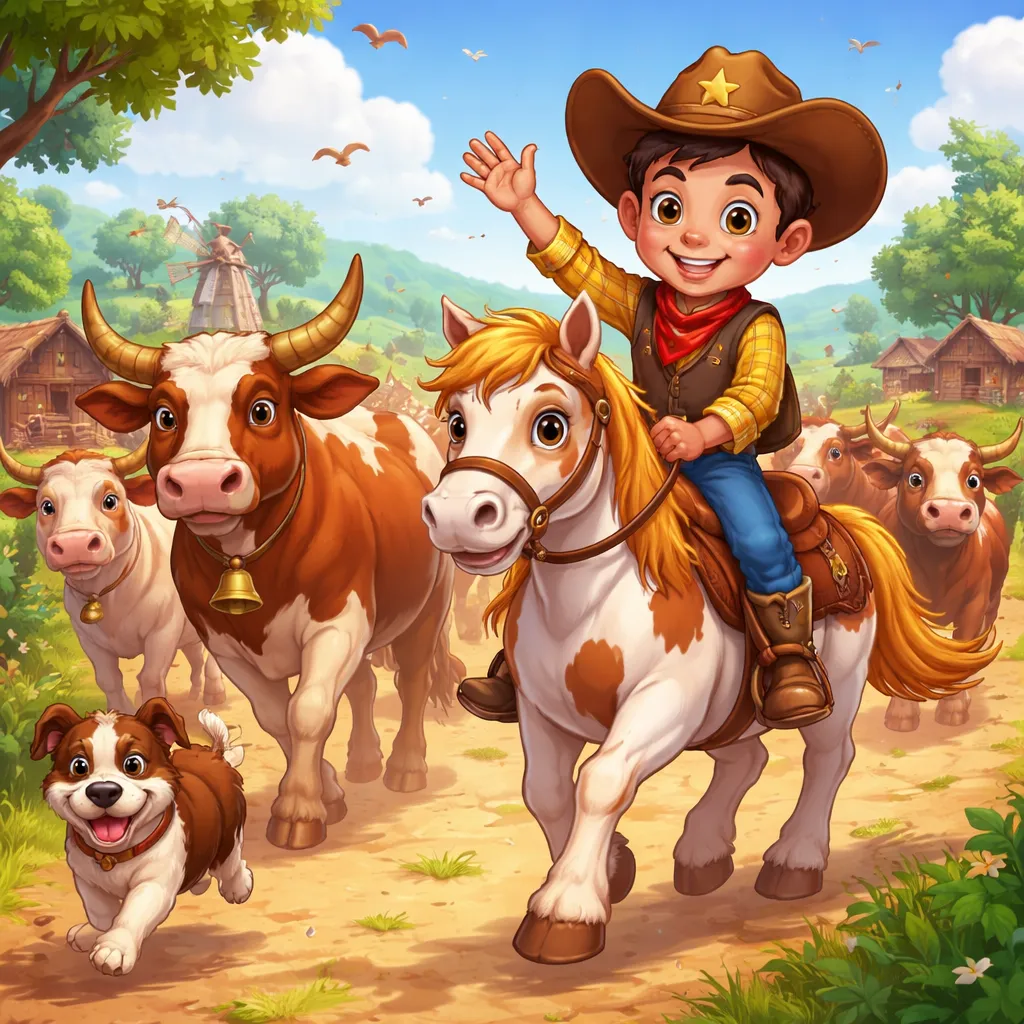

Have you ever seen a big, open field and imagined animals roaming free? Have you ever taken care of a pet, making sure it has food, water, and a safe place to sleep? Being responsible for another living thing is a big, important job. In India, a country with vast farmlands and rural life, there’s a song that celebrates a young caretaker of animals. Saddle up and listen to the Hindi Song: The Little Cowboy (काउबॉय).
About the Song
Here is a cheerful verse from this popular song in Hindi and English:
मैं हूँ एक छोटा काउबॉय, मेरी टोपी लाल
(Main hoon ek chhota cowboy, meri topi laal)
I am a little cowboy, my hat is red
गायों की देखभाल, यही है मेरा काम
(Gaayon ki dekhabhaal, yahi hai mera kaam)
Taking care of cows, that is my work
सुबह-शाम चराऊँगा, हरी-हरी घास
(Subah-shaam charaunga, hari-hari ghaas)
Morning and evening I will graze them on green, green grass
यह है मेरी ज़िम्मेदारी, सब जानते हैं यह बात
(Yeh hai meri zimmedaari, sab jaante hain yeh baat)
This is my responsibility, everyone knows this fact
This song’s original name uses the word “काउबॉय” (Cowboy), borrowed from English into Hindi. It is a popular modern Indian children’s song. The song reinvents the classic cowboy figure. This little cowboy is not a lone wanderer of the Wild West. He is a responsible young farmhand whose most important job is caring for his animals. His red hat is a badge of his role. The song focuses on duty, routine, and the satisfaction of doing an important job well. The Hindi Song: The Little Cowboy (काउबॉय) is about stewardship and the quiet pride of being responsible.
What the Song is About
The song paints a picture of a daily routine full of purpose. First, the little cowboy introduces himself, pointing to his bright red hat. This hat is his symbol, like a uniform. He immediately tells us his mission: “Taking care of cows, that is my work.” He sees himself as a guardian. His day has a gentle rhythm. In the cool, quiet morning, he leads the cows out to a wide field of fresh, green grass. In the warm, orange evening, he carefully leads them back home to the safety of the barn. This daily act is not just a chore; it is a promise he keeps. He says proudly, “This is my responsibility, everyone knows this fact.” The song shows that being trusted with an important job, and doing it reliably, brings respect and a deep sense of accomplishment.
Who Made It & Its Story
This song comes from the world of contemporary Indian children’s music that adapts global job themes to local values. While specific creators aren’t widely known, the song cleverly connects the romantic “cowboy” idea to the reality of rural Indian life, where caring for cattle is a common and respected family responsibility. India has a long agricultural tradition, and animals are an important part of many communities. This Hindi Song: The Little Cowboy (काउबॉय) is popular for three key reasons. First, it makes everyday responsibility feel adventurous and heroic. Second, it teaches children about care, routine, and dependability in a fun, relatable way. Third, its tune is often upbeat and has a gentle, trotting rhythm, making it easy to sing while pretending to ride or herd animals.
When to Sing It
Sing this song while helping to feed or take care of a family pet, turning the chore into a “cowboy mission.” It’s perfect to hum during a walk in a park or field, imagining you are leading a herd of animals to the best grazing spot. You could also sing it as you tidy your room, framing it as your “responsibility” to care for your own space, just like the cowboy cares for his herd.
The Hindi Song: The Little Cowboy (काउबॉय) shows us the value of daily duty. But to be a good cowboy, you need the right tools—and that includes the right words and knowledge. This song is a trusty steed that can carry us toward learning about job words, how to talk about routines, and the cultural importance of caring for the land and animals. Let’s head out on the trail of learning!
What Children Can Learn
Vocabulary
This song saddles us up with words for responsibility, animals, and the land.
Stewardship: The job of taking care of or protecting something valuable, like animals, land, or resources. A farmer shows stewardship of the land.
Herd: A large group of animals, especially hoofed mammals, that live, feed, or are kept together. A herd of cows. A herd of elephants.
Pasture: Land covered with grass where animals can graze. The cowboy leads the cows to the pasture.
Dependable: Reliable and able to be trusted. A dependable person always does their job. The cowboy is dependable.
Routine: A regular way of doing things in a particular order. Your bedtime routine might be: brush teeth, read a book, go to sleep.
Custodian: A person who has responsibility for looking after or protecting something. A zookeeper is a custodian of animals.
Language Skills
This song is a clear example of talking about Habits and Routines using the Simple Present Tense. We use this tense for actions we do regularly, every day, or as a habit.
What Is It?: Think of the Simple Present Tense as the “Usually Does” tense. It’s for routines, habits, facts, and things that are always true. The cowboy’s day is a perfect routine.
Finding the Secret: Look for verbs (action words) that describe regular activities. They often don’t have “-ing” or “will” in front. Ask: “Does this action happen regularly or as a habit?”
Using It:
◦   For habits/routines: [I/You/We/They] + [base verb]. or [He/She/It] + [verb with ‘s’].

◦   Examples: “I feed the cows every morning.” “She takes care of the farm.” “The sun rises in the east.”

◦   In the song: “Taking care of cows... is my work.” (A fact) “I graze them morning and evening.” (A daily routine). The song describes his habitual actions.
Sounds & Rhythm Fun
Giddy up! The Hindi Song: The Little Cowboy (काउबॉय) often has a relaxed, trotting, or clip-clopping rhythm. It might make you think of a horse walking steadily across the plains. The melody is usually friendly and easygoing, not too fast or slow. This steady, gentle rhythm reflects the predictable, reliable routine of the cowboy’s day. It’s music that feels dependable, just like the little cowboy. This consistent beat makes the song comforting and easy to remember, just like a familiar daily schedule. You can use this same trotting rhythm to make up a song about your own daily routine, like getting ready for school.
Culture & Big Ideas
This song connects the global “cowboy” image to the heart of rural Indian life. In many Indian villages, tending to cattle and other farm animals is a crucial part of the family’s livelihood and a traditional duty passed through generations. A festival that celebrates harvest, animals, and rural life is Pongal in South India or Makar Sankranti in other regions. During Pongal, a special dish is made, and thanks is given to the sun, the rain, and farm animals like cows for a good harvest. The Hindi Song: The Little Cowboy (काउबॉय) teaches three big ideas. First, Duty is Dignity: Doing your job well, no matter how small it seems, is a source of pride and earns respect. Second, The Rhythm of Care: Living things thrive on reliable, gentle care—food, water, safety—given at regular times. Third, Connection to Land and Animals: Being responsible for animals creates a deep bond and teaches us about the cycles of nature.
Values & Imagination
Imagine you are the little cowboy. The sun is warm on your back. The cows munch quietly. What sounds do you hear? What does it feel like to know the animals are safe because of you? This song teaches you the value of being dependable. It shows that taking care of something is an act of love and strength. A simple idea: Choose one small “caretaking” job at home this week. It could be watering a plant, filling the pet’s water bowl, or setting the napkins on the table. Do it at the same time each day. You are building your own responsible routine, just like the cowboy.
Your Core Takeaways
The Hindi Song: The Little Cowboy (काउबॉय) is a warm tribute to responsibility, routine, and care. You learned words like “stewardship” and “pasture” related to caring for animals and land. You discovered how the Simple Present Tense is used to describe daily habits and routines. You moved to the song’s steady, trotting rhythm. You also connected the cowboy’s life to the importance of agriculture and animal care in Indian rural life, celebrated in festivals like Pongal. Most importantly, the song teaches that real strength lies in being dependable, that caring for others (even animals) is a noble job, and that a peaceful, purposeful routine can be its own great adventure.
Your Practice Missions
- Be a “Routine Reporter.” For one day, pick a regular thing you do, like your morning routine or your after-school routine. Write down or tell a family member three steps in that routine using the Simple Present Tense. For example: “First, I wake up. Then, I brush my teeth. Finally, I eat breakfast.” You are describing your own “cowboy schedule.”
- Design Your “Responsibility Badge.” Draw or cut out a badge shape. This is your “Stewardship Badge.” On it, draw a picture of one thing you are responsible for (a pet, a plant, your toys, keeping your promises). Wear it as a sticker or pin it up. Let it remind you, like the cowboy’s red hat, of your important job.