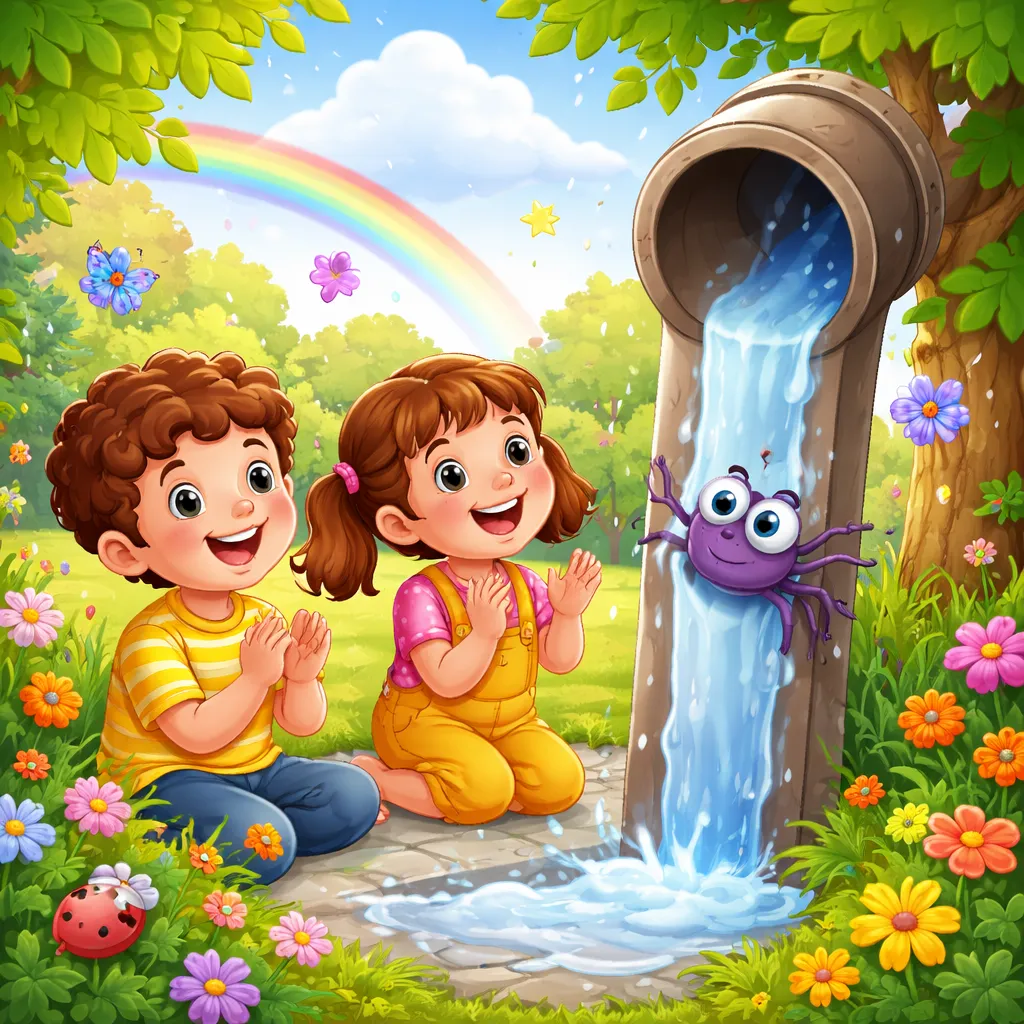

What is the Rhyme "Itsy Bitsy Spider / Incy Wincy Spider"? "Itsy Bitsy Spider" is one of the most beloved English nursery rhymes in the world. In some places, children know it as "Incy Wincy Spider." The name changes, but the sweet story remains the same. It tells the tale of a tiny spider who tries to climb up a water spout. Rain comes and washes the spider out. Then the sun comes out and dries up all the rain, so the itsy bitsy spider tries again. This simple story of perseverance captures young hearts. The English song: Itsy Bitsy Spider / Incy Wincy Spider teaches children that falling down is not the end. You can always get up and try again. The finger movements that go with the song make it even more special and memorable for little ones.
The Complete Lyrics of the Nursery Rhyme Let us look at the words together. The verses are short and sweet. They tell a complete little story with a happy ending.
The itsy bitsy spider climbed up the water spout. Down came the rain and washed the spider out. Out came the sun and dried up all the rain, And the itsy bitsy spider climbed up the spout again.
For those who use the Incy Wincy version, the words are almost the same.
Incy Wincy spider climbed up the water spout. Down came the rain and washed the spider out. Out came the sun and dried up all the rain, And Incy Wincy spider climbed up the spout again.
Vocabulary Learning from the Song This English song: Itsy Bitsy Spider / Incy Wincy Spider introduces children to wonderful descriptive words and nature vocabulary. Each word paints a picture in the young mind.
First, we meet the spider. The song calls it "itsy bitsy" or "Incy Wincy." These are gentle words that mean very, very small. They make the spider seem cute and friendly, not scary. You can talk about other tiny things. An itsy bitsy ant. An itsy bitsy seed. This helps children understand size words.
The song teaches words about weather. "Rain" comes down from the clouds. "Sun" shines bright and warm. These are everyday words children need to talk about the world outside. You can point to the window and say, "Look, today the sun is out," or "Oh no, here comes the rain."
The water "spout" is a special word. It means a pipe or opening where water comes out. You might have a spout on your house where rain water runs down. Showing a real spout makes the song come alive.
The verbs in this song are very active. "Climbed up" shows going higher. "Came down" shows falling. "Washed out" shows water pushing something away. "Dried up" shows the sun removing water. Each action is clear and easy to demonstrate.
Phonics Points to Practice Let us listen for special sounds in the song. Phonics helps children connect letters to the sounds they hear. This English song: Itsy Bitsy Spider / Incy Wincy Spider gives us many sounds to explore.
Listen to the "s" sound that appears so often. "Spider," "spout," "sun," "rain" ends with an "n" sound but the song is full of soft sounds. Say "itsy bitsy spider" slowly. Feel how your tongue touches the roof of your mouth for the "s" in spider. Practice other "s" words like "snake," "sand," and "sing."
The "sp" blend at the beginning of "spider" and "spout" is important. Say "spider" slowly. First you hear the "s," then quickly the "p." Practice other words that start with "sp" like "spoon," "spin," and "spot." Recognizing these blends helps children decode new words when they start reading.
Listen also to the short "i" sound in "itsy," "bitsy," and "Incy." This is a very common sound in English. You can hear it in words like "sit," "pig," and "fish." Pointing out these sound patterns builds strong phonemic awareness.
Grammar Patterns We Can Learn This tiny spider song teaches important grammar in a very natural way. The English song: Itsy Bitsy Spider / Incy Wincy Spider introduces past tense verbs and sequence words.
All the actions in the song happened already. The spider "climbed." The rain "came." The sun "came out." These are past tense verbs. You can talk about your own day using past tense. "We played at the park." "Grandma made cookies." "The dog barked." This helps children understand how we talk about things that already happened.
The song also teaches sequence with the words "then" and "and." First the spider climbed. Then the rain came. Then the sun came out. Then the spider climbed again. Understanding sequence helps children follow stories and tell their own stories in order.
The pattern "Out came the sun" is a special word order that poets and songwriters use. It sounds a little different from everyday speech, where we usually say "The sun came out." This exposes children to the playful ways we can arrange words in English.
Learning Activities to Do at Home Bringing this English song: Itsy Bitsy Spider / Incy Wincy Spider into your daily life is simple and joyful. Here are some activities you can try with materials you already have.
A wonderful activity is the "Finger Play" practice. The hand movements make this song special. Show your child how to make a spider by touching thumb to finger and walking it up. Make rain by wiggling fingers down. Make the sun by making a big circle with your arms. Practice together slowly. This builds fine motor skills and coordination.
Another activity is the "Water Spout" experiment. On a sunny day, take a cup of water outside. Let your child pour water down a slide or a tilted board. This is like rain on the water spout. Then watch the sun dry the water. This connects the song to real science concepts about weather and evaporation.
You can also go on a "Spider Hunt" outside. Look for spider webs in the garden or on the porch. Talk about how spiders work so hard to build their webs. This builds appreciation for nature and connects the song to the living world.
Printable Materials for Learning Creating simple printables can make this English song: Itsy Bitsy Spider / Incy Wincy Spider more visual and engaging. You can make these materials together with your child.
Finger puppets are perfect for this song. Draw and cut out a simple spider shape. Attach a small paper strip to fit around your child's finger. Make a sun puppet and a rain cloud puppet too. As you sing, your child can hold up the right puppet for each part. This builds comprehension and makes the song interactive.
A story sequencing strip is another great idea. Draw four simple pictures on a long strip of paper. First, the spider climbing up. Second, rain washing the spider down. Third, the sun shining. Fourth, the spider climbing again. Fold the strip like an accordion. Your child can look at the pictures and tell the story in order.
You can also create a "Itsy Bitsy Spider" coloring page. Draw a simple scene with a water spout, a spider, raindrops, and a sun. Let your child color each part while you sing the song. Displaying their artwork celebrates their learning and creativity.
Educational Games for Deeper Learning Games make learning active and exciting. They encourage children to use the language from the English song: Itsy Bitsy Spider / Incy Wincy Spider in new and creative ways.
The "What Happens Next?" game builds comprehension. Sing the first line, "The itsy bitsy spider climbed up the water spout." Then pause and ask, "What happens next?" Your child can answer, "Down comes the rain!" Continue through the whole song. This helps children remember the sequence and feel proud of knowing the story.
Another fun game is "New Animal Adventures." Ask your child, "What if a tiny ant tried to climb the water spout?" Sing together, "The itsy bitsy ant climbed up the water spout." Then the rain comes and washes the ant out. Then the sun comes out and the ant tries again. You can try this with a ladybug, a caterpillar, or any small creature your child loves. This extends the song into creative play and shows children how they can use patterns to make their own songs.
The "Weather Report" game connects the song to daily life. Each day, look outside and sing about the weather. "If it's rainy and you know it, watch the rain." "If it's sunny and you know it, feel the sun." This builds weather vocabulary and helps children observe the world around them with curiosity and joy.