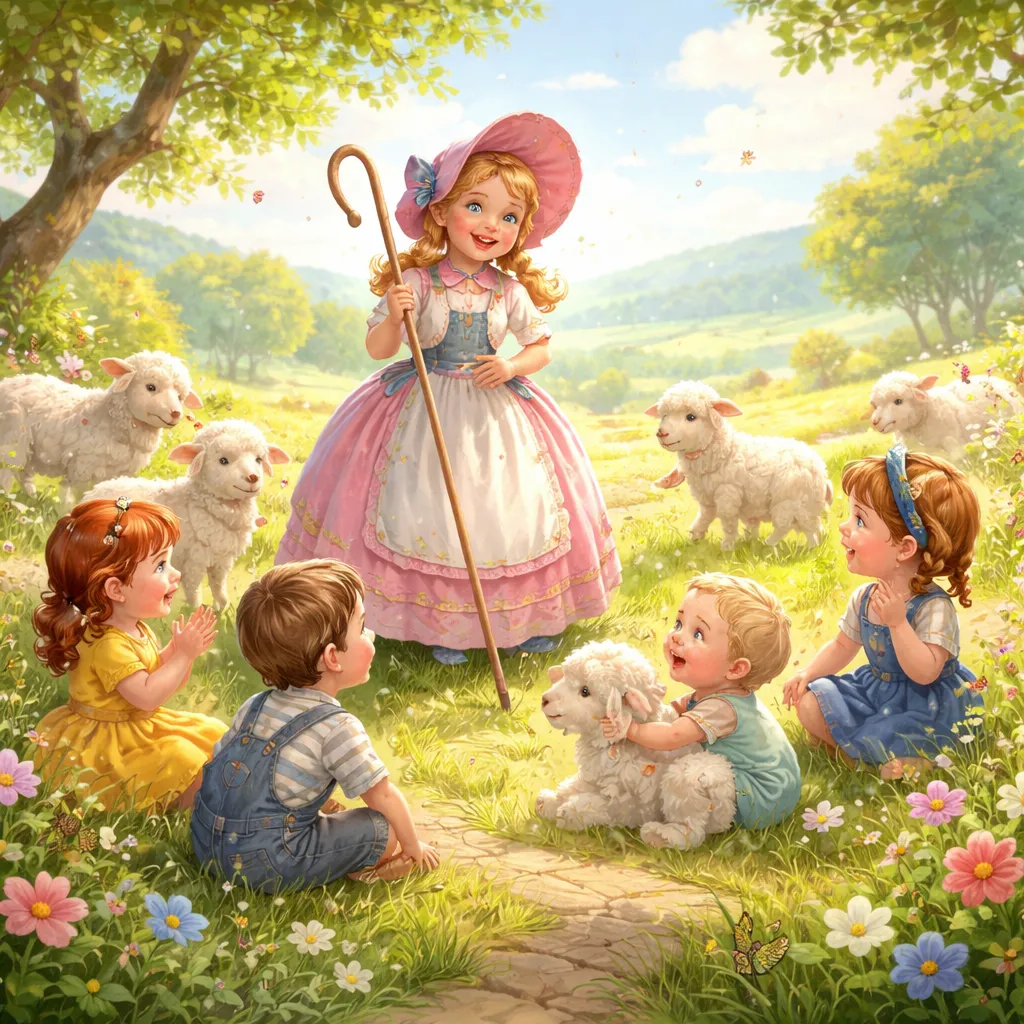

What is the Rhyme "Little Bo-Peep"? "Little Bo-Peep" is a gentle and beloved English nursery rhyme about a little shepherdess who loses her sheep. The song tells the story of Bo-Peep searching everywhere for her flock. The rhyme gives her comfort and advice. Leave them alone and they will come home, wagging their tails behind them. The English song: Little Bo-Peep has been sung to children for centuries. It teaches a gentle lesson about patience and trust. Sometimes when you lose something, worrying too much does not help. If you wait calmly, what you lost may come back on its own. The sweet melody and comforting message make this rhyme perfect for quiet moments with little ones. Children love the image of sheep with their tails wagging as they return home.
The Complete Lyrics of the Nursery Rhyme Let us look at the words together. The full rhyme has several verses telling the complete story.
Little Bo-Peep has lost her sheep, And doesn't know where to find them. Leave them alone, and they'll come home, Wagging their tails behind them.
Little Bo-Peep fell fast asleep, And dreamt she heard them bleating. But when she awoke, she found it a joke, For they were still a-fleeting.
Then up she took her little crook, Determined for to find them. She found them indeed, but it made her heart bleed, For they'd left their tails behind them.
It happened one day, as Bo-Peep did stray Into a meadow hard by, There she espied their tails side by side, All hung on a tree to dry.
She heaved a sigh and wiped her eye, And over the hillocks went rambling, And tried what she could, as a shepherdess should, To tack each tail on its lambkin.
Vocabulary Learning from the Song This English song: Little Bo-Peep introduces children to lovely old words about shepherding and animals. Each word builds their understanding of language and farm life.
First, we meet "Little Bo-Peep." This is the name of the shepherdess. A shepherdess is a girl or woman who takes care of sheep. You can explain that long ago, children often worked taking care of animals.
The song teaches about "sheep." Sheep are fluffy animals that live in flocks. They give us wool for making clothes. "Flock" means a group of sheep. You can show your child pictures of sheep and talk about where they live.
The word "bleating" is the sound sheep make. Baa baa! This is a fun word to say and act out. Practice making sheep sounds together.
A "crook" is a long stick with a hook at the end that shepherds use to guide sheep. You can make a pretend crook from a cardboard tube or wrapping paper roll.
The song teaches patience with the line "leave them alone, and they'll come home." This is a comforting message for children who lose things.
Phonics Points to Practice Let us listen for special sounds in the song. Phonics helps children connect letters to the sounds they hear. This English song: Little Bo-Peep gives us many sounds to explore.
Listen to the "l" sound at the beginning of "little." It is a light sound made with the tongue touching the roof of the mouth. Say "Little Bo-Peep" slowly. Feel how your tongue moves. Practice other "l" words like "lamb," "leaf," and "lullaby."
The "b" sound appears in "Bo-Peep" and "bleating." It is a strong sound made by pressing lips together. Practice other "b" words like "ball," "book," and "bubble."
Listen to the long "e" sound in "sheep" and "bleating" and "behind." It says its own name. You can hear it in words like "bee," "tree," and "me."
The "sh" sound in "sheep" and "shepherdess" is important. Put your finger to your lips and say "shhh." That is the sound! Practice other "sh" words like "shoe," "ship," and "fish."
Grammar Patterns We Can Learn This gentle story song teaches important grammar in a very natural way. The English song: Little Bo-Peep introduces present tense, future tense, and the comforting "will" pattern.
The song begins with present tense. "Little Bo-Peep has lost her sheep." "Has lost" is present perfect tense, showing something that happened recently and still matters. You can use this pattern in daily life. "The dog has lost his toy." "Mommy has lost her keys."
The song gives comfort with future tense. "They'll come home." "They'll" is short for "they will." This teaches children how we talk about things that will happen later. You can make comforting promises. "You'll feel better soon." "Daddy'll be home later."
The phrase "leave them alone" is an imperative, telling someone what to do. Children hear imperatives all day. "Sit down." "Be quiet." "Come here." This adds another example to their understanding.
Learning Activities to Do at Home Bringing this English song: Little Bo-Peep into your daily life is simple and joyful. Here are some activities you can try with materials you already have.
A wonderful activity is the "Lost Sheep" game. Hide several stuffed animals or cotton ball "sheep" around the room. Your child is Little Bo-Peep and must find them. When they find one, they can bring it back to the "fold" (a box or basket). This builds observation skills and connects to the story.
Another activity is the "Cotton Ball Sheep" craft. Give your child a sheep shape cut from paper. Let them glue cotton balls all over to make fluffy wool. Add a face and legs. This builds fine motor skills and creates a visual reminder of the song.
You can also have a "Patience Practice" conversation. Talk about times when waiting is hard. When you want a snack. When you want to go outside. When you lose a toy. Practice waiting calmly, knowing that sometimes things work out, just like Bo-Peep's sheep came home.
Printable Materials for Learning Creating simple printables can make this English song: Little Bo-Peep more visual and engaging. You can make these materials together with your child.
Story sequencing cards are perfect for this rhyme. Draw simple pictures on separate cards. Bo-Peep looking for sheep. Bo-Peep asleep dreaming. Bo-Peep with her crook searching. Finding tails on a tree. Tacking tails back on sheep. Your child can arrange the cards in order and retell the whole story. This builds sequencing and narrative skills.
A coloring page is always popular. Draw Little Bo-Peep with her crook, surrounded by fluffy sheep. Let your child color the scene. Write "Little Bo-Peep" at the top. Display their artwork proudly.
You can also create simple word cards. Write words from the song on cards. "Bo-Peep," "sheep," "lost," "find," "home," "tails," "crook," "bleating." Show each card as you sing that word. This builds early reading skills.
A counting page helps with number practice. Draw several sheep and have your child count them. How many sheep did Bo-Peep have? How many tails? This builds early math skills.
Educational Games for Deeper Learning Games make learning active and exciting. They encourage children to use the language from the English song: Little Bo-Peep in new and creative ways.
The "New Animal" game encourages creativity. Ask your child, "What if Bo-Peep lost something else?" Little Bo-Peep lost her cat. Little Bo-Peep lost her puppy. Create new verses together. "Little Bo-Peep has lost her kitten, and doesn't know where to find them. Leave them alone, and they'll come home, with little mews behind them." This shows children how to extend the pattern.
The "Tail Tracing" game uses the funny part of the story where the tails are left behind. Draw sheep without tails. Give your child yarn or string to add tails. Count the tails together. This builds fine motor skills and connects to the story.
The "Patience Game" practices the song's lesson. Set a timer for a short time. Tell your child you are waiting for something, just like Bo-Peep waited for her sheep. When the timer rings, celebrate that waiting is over. This builds self-regulation.
The "Shepherd's Crook" game uses a pretend crook (a cardboard tube). Try to guide soft toys or balls into a goal using the crook. This builds coordination and connects to the shepherd's job.
The "Bleating Sounds" game practices animal sounds. Make sheep sounds together. Baa baa! Then try other animal sounds. What sound does a cow make? A horse? A pig? This builds phonemic awareness through play.
The "Lost and Found" discussion builds problem-solving skills. Talk about what to do when you lose something. Retrace your steps. Ask for help. Stay calm. Sometimes waiting helps, like Bo-Peep's sheep coming home.
The "Dream Game" connects to Bo-Peep falling asleep and dreaming. Ask your child what they dream about. Draw pictures of dreams together. This builds imagination and emotional expression.
The "Wagging Tails" movement activity is pure fun. Attach a ribbon or scarf to the back of your child's pants as a tail. Run around wagging tails. When the song says "wagging their tails behind them," wiggle and dance. This builds gross motor skills and adds joy to the song.