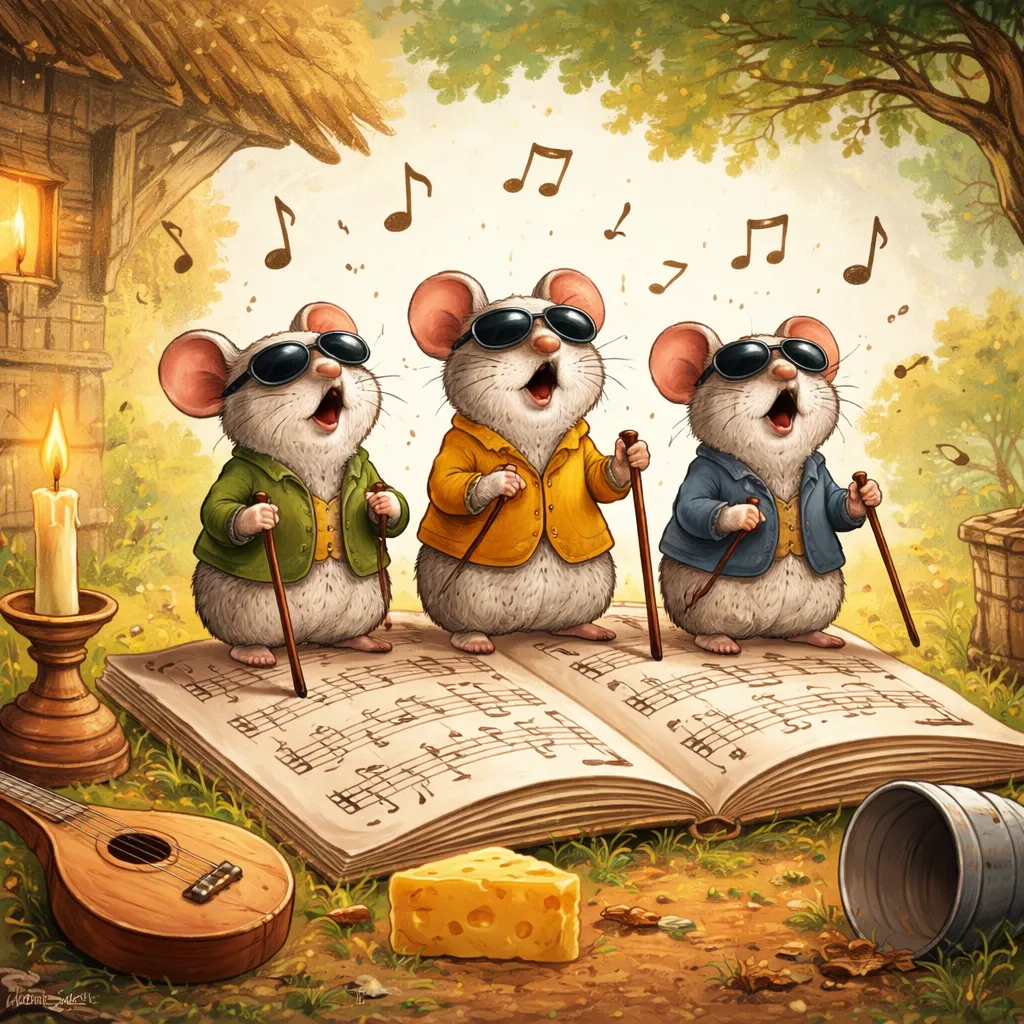

What is the Rhyme "Three Blind Mice"? "Three Blind Mice" is one of the oldest and most recognized English nursery rhymes in the world. The song tells a simple story about three mice who cannot see. They run after a farmer's wife who cuts off their tails with a carving knife. The English song: Three Blind Mice has been sung to children for hundreds of years. The repetitive melody makes it easy to learn. The short story has a clear beginning, middle, and end. Children are fascinated by the mice and their unfortunate adventure. The song introduces the concept of consequences in a way that young minds can understand. The mice ran after something they should not have, and something happened to them. This simple cause and effect is a building block for understanding stories and life.
The Complete Lyrics of the Nursery Rhyme Let us look at the words together. The rhyme is short and very repetitive.
Three blind mice, three blind mice, See how they run, see how they run! They all ran after the farmer's wife, Who cut off their tails with a carving knife. Did you ever see such a sight in your life, As three blind mice?
Vocabulary Learning from the Song This English song: Three Blind Mice introduces children to words about animals, body parts, and actions. Each word builds their understanding of language and story.
First, the song teaches about "mice." Mice are small animals with long tails. They are known for running quickly and quietly. You can show your child pictures of mice. Talk about where they live and what they eat. This builds animal vocabulary.
The word "blind" means unable to see. This is a sensitive word to introduce. You can explain that some people and animals cannot see. They use other senses to understand the world. This builds empathy and awareness.
The song teaches action words. "Run" means moving quickly on feet. "Ran after" means chasing someone. "Cut off" means removing with a sharp tool. These verbs help children describe movement and events.
A "farmer's wife" is the woman who lives on a farm with the farmer. This introduces family roles and farm life. A "carving knife" is a sharp knife used for cutting meat. These are old-fashioned words that spark curiosity.
The question "Did you ever see such a sight?" means have you ever seen something like this? This invites children to think and imagine.
Phonics Points to Practice Let us listen for special sounds in the song. Phonics helps children connect letters to the sounds they hear. This English song: Three Blind Mice gives us many sounds to explore.
Listen to the "th" sound at the beginning of "three." Put your tongue between your teeth and blow air. Practice other "th" words like "thumb," "thank," and "bath."
The "m" sound appears in "mice" and "more." It is a humming sound made with lips together. Say "three blind mice" slowly. Feel how your lips press together for "m." Practice other "m" words like "mommy," "milk," and "moon."
Listen to the "r" sound in "run" and "ran." It is a rolling sound made with the tongue. Practice other "r" words like "rabbit," "red," and "rain."
The "f" sound in "farmer's" and "wife" and "knife" is made by putting top teeth on bottom lip and blowing air. Practice other "f" words like "fish," "fun," and "family."
The long "i" sound in "blind" and "wife" and "knife" says its own name. You can hear it in words like "kite," "bike," and "sky."
Grammar Patterns We Can Learn This classic story song teaches important grammar in a very natural way. The English song: Three Blind Mice introduces present tense, past tense, and question forms.
The song begins with present tense. "See how they run." This describes what the mice are doing now. You can use present tense to talk about things happening right now. "Look how the dog runs." "See how the baby plays."
Then the song shifts to past tense. "They all ran after the farmer's wife." "Who cut off their tails." These are past tense verbs describing what already happened. You can talk about past events in daily life. "We ran in the park yesterday." "Daddy cut the bread this morning."
The song ends with a question. "Did you ever see such a sight?" This teaches the question form with "did." You can practice asking questions. "Did you see the bird?" "Did you eat your snack?" "Did you have fun today?"
Learning Activities to Do at Home Bringing this English song: Three Blind Mice into your daily life is simple and joyful. Here are some activities you can try with materials you already have.
A wonderful activity is the "Mouse Running" game. Pretend to be mice running around the room. When the song says "see how they run," run in place or around the room. When it mentions the farmer's wife, freeze. This brings the story to life through movement.
Another activity is the "Tail Drawing" craft. Give your child paper and crayons. Draw three mice together. Give them long tails. Then talk about what happened in the song. This builds comprehension and creativity.
You can also have a "Farm Play" activity. Use toy animals to create a farm scene. Include mice, a farmer, and a farmer's wife. Act out the story gently. Talk about what the mice should do instead of running after people.
Printable Materials for Learning Creating simple printables can make this English song: Three Blind Mice more visual and engaging. You can make these materials together with your child.
Story sequencing cards are perfect for this rhyme. Draw simple pictures on separate cards. Three mice running. Mice running after farmer's wife. Farmer's wife with a knife. Mice with no tails. Your child can arrange the cards in order and retell the story. This builds sequencing and narrative skills.
A coloring page is always popular. Draw three mice running together. Add a farmhouse in the background. Let your child color the scene. Write "Three Blind Mice" at the top. Display their artwork proudly.
You can also create simple word cards. Write words from the song on cards. "Three," "blind," "mice," "run," "farmer's," "wife," "tails," "knife." Show each card as you sing that word. This builds early reading skills.
A mouse puppet craft adds fun. Cut out mouse shapes from gray paper. Add ears, eyes, and a long yarn tail. Attach to craft sticks. Use the puppets to act out the song. This builds fine motor skills and imagination.
Educational Games for Deeper Learning Games make learning active and exciting. They encourage children to use the language from the English song: Three Blind Mice in new and creative ways.
The "New Animal" game encourages creativity. Ask your child, "What if it was three blind kittens?" Create new verses. "Three blind kittens, three blind kittens, see how they run, see how they run. They all ran after the farmer's wife, who shooed them away with a broom in fright. Did you ever see such a sight in your life, as three blind kittens?" Try puppies, bunnies, or ducklings. This shows children how to adapt the story pattern.
The "Safe Choices" conversation explores the story's lesson. Why did the mice lose their tails? They ran after someone they should not have. What should they have done instead? Stayed hidden. Run away. This builds safety awareness and problem-solving.
The "Sound Effects" game adds fun sounds. Make mouse squeaking sounds. Make running footsteps sounds. Make a "snip" sound for the knife. This builds vocal play and creativity.
The "Question Time" game practices the ending question. Ask your child silly questions using the "Did you ever see" pattern. "Did you ever see a cat wearing a hat?" "Did you ever see a dog jogging in fog?" Take turns asking and answering. This builds language play and imagination.
The "Tail Counting" game uses the three mice. Count their tails. Three mice have three tails. After the farmer's wife, they have no tails. Count zero tails. This builds counting skills and story comprehension.
The "Farmer's Wife" role play explores different endings. What if the farmer's wife was kind? What if she gave the mice some cheese instead? Act out a kinder version together. This builds empathy and shows that stories can change.
The "Hide and Seek" game connects to the mice running. Play hide and seek together. When found, run away squeaking like mice. This adds physical fun to the song's theme.
The "Sight and Sound" discussion explores the word "blind." Talk about how blind people experience the world. They use their ears and hands to understand. Close your eyes and guess sounds together. This builds empathy and sensory awareness.