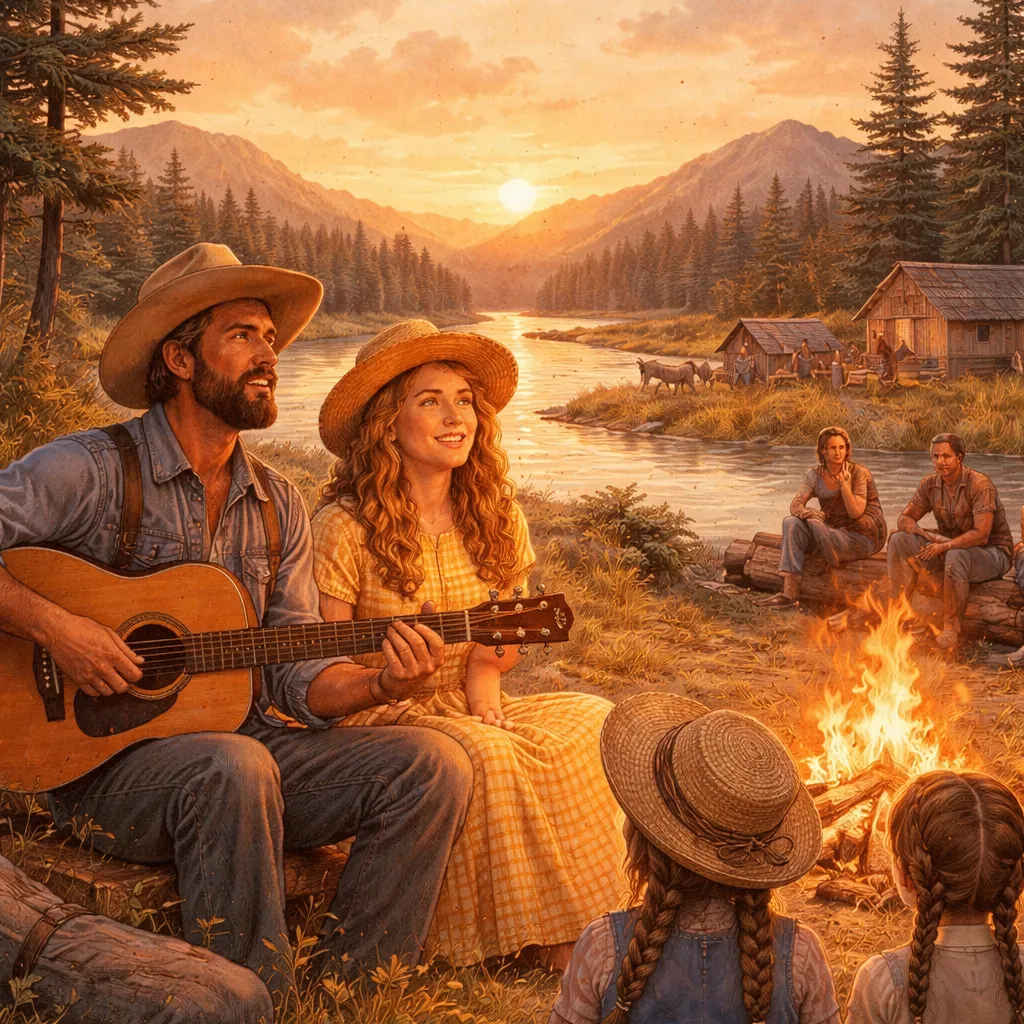

What is the Story "Clementine"? "Clementine" is a classic American folk ballad that tells a sad but memorable story. The song is about a miner's daughter named Clementine who lives near a canyon. She tends her ducks and wears strange footwear. One day she trips and falls into the water. Her lover tries to save her but cannot swim well. The English song: Clementine has been sung in America for over a hundred years. Despite the sad story, children love the catchy melody and the chorus. The song introduces American frontier life, mining towns, and the hard realities of pioneer days. The name "Clementine" also reminds us of the sweet fruit, adding a layer of gentle irony to the tale.
The Complete Lyrics of the Nursery Rhyme Let us look at the words together. The song has many verses telling the full story.
In a cavern, in a canyon, excavating for a mine, Dwelt a miner, forty-niner, and his daughter Clementine.
Chorus: Oh my darling, oh my darling, oh my darling Clementine, You are lost and gone forever, dreadful sorry, Clementine.
Light she was and like a fairy, and her shoes were number nine, Herring boxes without topses, sandals were for Clementine.
Drove she ducklings to the water every morning just at nine, Stubbed her toe upon a splinter, fell into the foaming brine.
Ruby lips above the water, blowing bubbles soft and fine, But alas, I was no swimmer, so I lost my Clementine.
In the churchyard, near the canyon, where the myrtle doth entwine, Grow the roses in their places, dressed in calico, for Clementine.
Vocabulary Learning from the Song This English song: Clementine introduces children to words about mining, clothing, and pioneer life. Each word builds their understanding of American history.
First, the song teaches about a "cavern" and "canyon." A cavern is a large cave. A canyon is a deep valley with steep sides. These are natural features where miners looked for gold.
A "miner" is someone who digs for minerals like gold or silver. The "forty-niner" refers to people who came to California in 1849 during the Gold Rush. This is a real historical event you can explain simply.
The song teaches clothing words. "Her shoes were number nine" means she had large feet. "Herring boxes without topses" means she used fish boxes as sandals. This shows how pioneers made do with what they had.
"Ducklings" are baby ducks. Clementine took care of them. "Foaming brine" means the rushing water in the canyon.
The chorus repeats "Oh my darling" and "dreadful sorry." These are expressions of love and sadness. Children learn that songs can express deep feelings.
Phonics Points to Practice Let us listen for special sounds in the song. Phonics helps children connect letters to the sounds they hear. This English song: Clementine gives us many sounds to explore.
Listen to the "c" sound at the beginning of "cavern" and "canyon." It is made at the back of the throat. Practice other "c" words like "cat," "cake," and "car."
The "m" sound appears in "miner" and "Clementine." It is a humming sound made with lips together. Practice other "m" words like "mommy," "milk," and "moon."
Listen to the "d" sound in "darling" and "dreadful." It is a soft sound made with the tongue behind the teeth. Practice other "d" words like "dog," "daddy," and "door."
The long "i" sound in "mine" and "forty-niner" says its own name. You can hear it in words like "kite," "bike," and "sky."
The "sh" sound in "shoes" and "should" but here it is "shoes." Practice other "sh" words like "ship," "fish," and "shop."
Grammar Patterns We Can Learn This folk ballad teaches important grammar in a very natural way. The English song: Clementine introduces past tense verbs, descriptive language, and poetic word order.
The song uses past tense throughout. "Dwelt a miner." "Drove she ducklings." "Stubbed her toe." "Fell into the brine." These are all past tense verbs. You can talk about past events in daily life. "We dwelt in that house." "You drove your toy car." "I stubbed my toe."
The song uses poetic word order. "Dwelt a miner" instead of "a miner dwelt." "Drove she ducklings" instead of "she drove ducklings." This shows children that songs and poems can arrange words differently for rhythm and rhyme.
The song uses descriptive language. "Light she was and like a fairy." "Ruby lips above the water." These beautiful descriptions help children imagine the scene. You can practice describing things. "The sky was blue like the ocean." "Her smile was bright like the sun."
Learning Activities to Do at Home Bringing this English song: Clementine into your daily life is simple and joyful. Here are some activities you can try with materials you already have.
A wonderful activity is the "Mining for Gold" game. Hide gold-colored coins or rocks in a sandbox or sensory bin. Let your child be a miner and dig for gold. Count how many pieces they find. Talk about the forty-niners looking for gold. This builds fine motor skills and connects to history.
Another activity is the "Duckling Counting" game. If you have toy ducks, count them. How many ducklings did Clementine have? Line them up and practice counting. This builds early math skills.
You can also have a "Herring Box Sandals" craft. Use small boxes or cardboard to make pretend sandals. Decorate them. Talk about how pioneers used what they had to make shoes. This builds creativity and historical understanding.
Printable Materials for Learning Creating simple printables can make this English song: Clementine more visual and engaging. You can make these materials together with your child.
Story sequencing cards are perfect for this ballad. Draw simple pictures on separate cards. Miner in cavern with Clementine. Clementine with ducklings. Clementine stubbing toe and falling. Man trying to save her. Graveyard with roses. Your child can arrange the cards in order and retell the story. This builds sequencing and narrative skills.
A mining scene coloring page is always popular. Draw a canyon with a miner's cabin, a stream, and ducklings. Add Clementine in her funny shoes. Let your child color the scene. Write "Clementine" at the top. Display their artwork proudly.
You can also create simple word cards. Write words from the song on cards. "Cavern," "canyon," "miner," "forty-niner," "Clementine," "darling," "ducklings," "splinter," "brine," "bubbles," "churchyard." Show each card as you sing that word. This builds early reading skills.
A herring box template lets children design their own "shoes." Draw a simple shoe outline. Let your child decorate it with fish patterns or box designs.
Educational Games for Deeper Learning Games make learning active and exciting. They encourage children to use the language from the English song: Clementine in new and creative ways.
The "New Character" game encourages creativity. Ask your child, "What if the miner's daughter had a different name?" Create new verses with new names that fit the rhythm. "Oh my darling, oh my darling, oh my darling Rosaline." This shows children how to adapt the song pattern.
The "Safety Discussion" explores what happened. Clementine fell into the water. The man could not swim. Talk about water safety. Always swim with a grown-up. Wear a life jacket. This builds safety awareness.
The "Miner's Life" conversation builds historical understanding. What was it like to be a miner? They worked hard digging for gold. They lived in small cabins. They missed their families. This builds empathy and historical thinking.
The "Duck Herding" game adds movement. Pretend to herd ducklings (soft toys) into a pen. Count them as they go. Quack like ducks. This builds gross motor skills and imagination.
The "Silly Shoes" parade is creative fun. Put on the strangest shoes you can find or make. Have a parade while singing the song. This builds creativity and confidence.
The "Fairy Descriptions" game practices descriptive language. Clementine was "light like a fairy." Describe other things using "like." "Fluffy like a cloud." "Sparkly like a diamond." This builds language skills.
The "Churchyard Garden" activity connects to the ending. Plant a small flower or draw a garden. Talk about how people remember loved ones with flowers. This builds understanding of traditions.
The "Dreadful Sorry" feelings discussion explores the song's sadness. The man was sorry he lost Clementine. Talk about times we feel sorry. How do we show we care? This builds emotional intelligence.