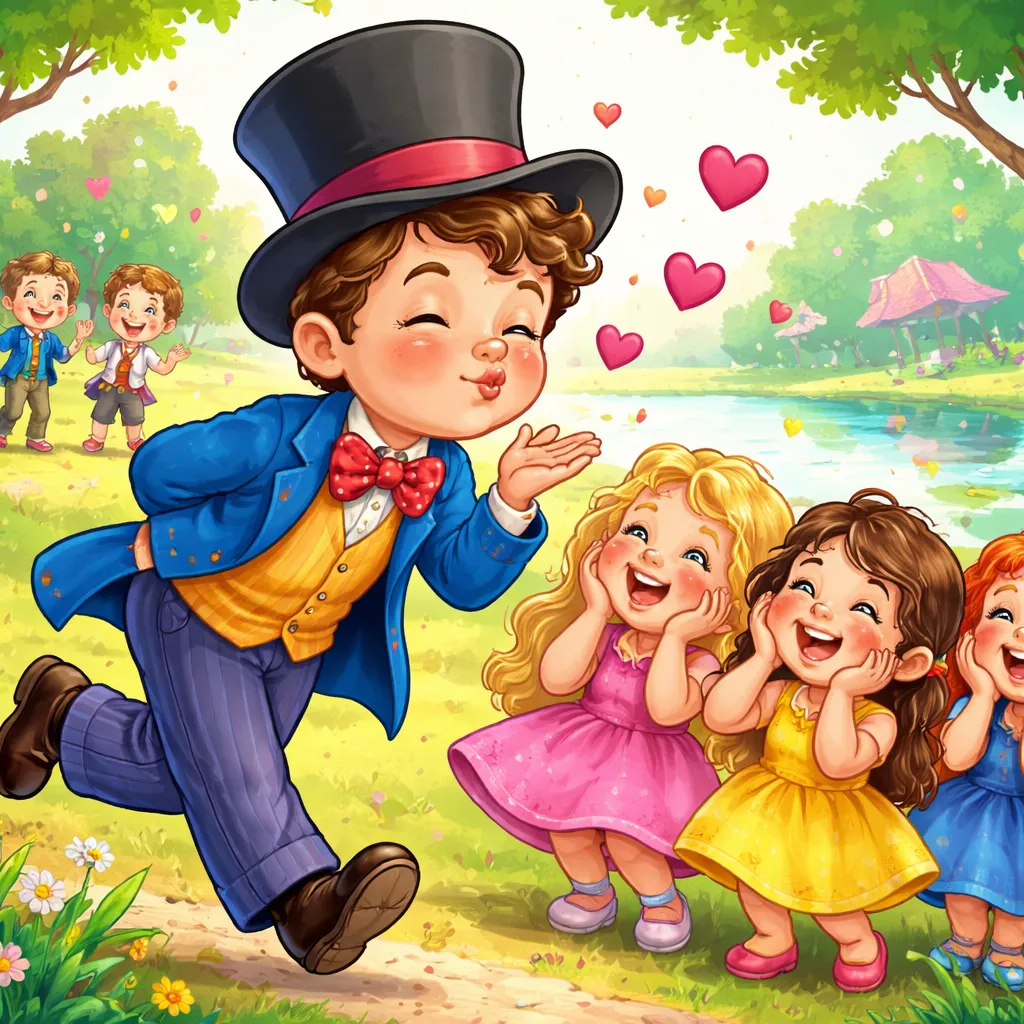

What is the Rhyme "Georgie Porgie"? "Georgie Porgie" is a cheerful and playful English nursery rhyme that children love to sing. The song tells a short story about a boy named Georgie Porgie who kisses the girls and makes them cry. When the boys come out to play, Georgie runs away. The English song: Georgie Porgie has been part of playground culture for generations. Children giggle at the idea of someone getting kissed and running away. The simple rhyme captures a common childhood experience. Someone does something silly, and then runs away when others chase them. The rhythm is bouncy and easy to remember. This little rhyme opens conversations about feelings, play, and what happens when we do things that surprise others.
The Complete Lyrics of the Nursery Rhyme Let us look at the words together. The rhyme is short and very easy to learn.
Georgie Porgie, pudding and pie, Kissed the girls and made them cry. When the boys came out to play, Georgie Porgie ran away.
Vocabulary Learning from the Song This English song: Georgie Porgie introduces children to a fun character name and simple action words. Each word builds their understanding of language and social situations.
First, we meet "Georgie Porgie." This is a playful, rhyming name. Georgie is short for George. Adding "Porgie" makes it sound fun and silly. Children love names that rhyme and sound funny.
The phrase "pudding and pie" describes sweet treats. Pudding is a soft dessert. Pie is a baked dish with filling. These words sound good together and add to the playful feel of the rhyme.
The song teaches action words. "Kissed" means touching someone gently with lips as a sign of affection. "Made them cry" means causing tears. "Came out to play" means joining a game. "Ran away" means fleeing quickly. These verbs help children describe social interactions.
The song introduces feelings. The girls cry because they are upset or surprised. Georgie runs away because he is scared or embarrassed. This simple cause and effect helps children understand emotions and reactions.
Phonics Points to Practice Let us listen for special sounds in the song. Phonics helps children connect letters to the sounds they hear. This English song: Georgie Porgie gives us many sounds to explore.
Listen to the "g" sound at the beginning of "Georgie." It is made at the back of the throat. Say "Georgie Porgie" slowly. Feel where the sound comes from. Practice other "g" words like "game," "garden," and "good."
The "p" sound appears in "Porgie" and "pudding" and "pie." It is a quick sound made by pressing lips together. Practice other "p" words like "pig," "pan," and "pretty."
Listen to the "k" sound in "kissed" and "came" has a different sound but "kissed" gives us the "k." Practice other "k" words like "kite," "kangaroo," and "kiss."
The "r" sound in "ran" and "away" has an "r" in the middle but "ran" gives us the beginning "r." Practice other "r" words like "rabbit," "red," and "run."
The long "i" sound in "cry" and "pie" says its own name. You can hear it in words like "my," "sky," and "fly." Pointing out these sound patterns builds phonemic awareness.
Grammar Patterns We Can Learn This playful rhyme teaches important grammar in a very natural way. The English song: Georgie Porgie introduces past tense verbs, conjunctions, and cause and effect.
The song uses past tense throughout. Georgie "kissed" the girls. He "made" them cry. The boys "came" out. Georgie "ran" away. These are all past tense verbs. You can talk about past events in daily life. "You kissed the baby." "You made me laugh." "We ran in the park." This helps children understand how we talk about things that already happened.
The word "and" connects ideas. "Pudding and pie" connects two foods. "Kissed the girls and made them cry" shows two actions in sequence. You can practice using "and" in daily life. "We had apples and bananas." "I jumped and clapped."
The rhyme shows cause and effect. Georgie kissed the girls, so they cried. The boys came out, so Georgie ran away. This simple cause and effect helps children understand why things happen.
Learning Activities to Do at Home Bringing this English song: Georgie Porgie into your daily life is simple and joyful. Here are some activities you can try with materials you already have.
A wonderful activity is the "Playful Chase" game. Take turns being Georgie Porgie. One person pretends to kiss (blow a kiss) or gently tap others. The others pretend to cry dramatically. Then someone says "the boys are coming!" and Georgie runs away while others chase gently. This brings the rhyme to life through physical play.
Another activity is the "Feeling Faces" discussion. After singing, talk about how the girls felt. Sad? Surprised? How did Georgie feel when the boys came? Scared? Embarrassed? Draw feeling faces together. This builds emotional vocabulary.
You can also have a "Pudding and Pie" snack time. Make a simple pudding or have a small pie. Talk about the words in the song while you eat. This connects the rhyme to a tasty treat.
Printable Materials for Learning Creating simple printables can make this English song: Georgie Porgie more visual and engaging. You can make these materials together with your child.
A story sequencing page is perfect for this rhyme. Draw simple pictures showing the four parts. Georgie with pudding and pie. Georgie kissing girls, girls crying. Boys coming out to play. Georgie running away. Your child can point to each picture as you sing. This builds sequencing and comprehension.
A coloring page is always popular. Draw Georgie Porgie with a pie, some girls nearby, and boys in the background. Let your child color the scene. Write "Georgie Porgie" at the top. Display their artwork proudly.
You can also create simple word cards. Write words from the rhyme on cards. "Georgie," "Porgie," "pudding," "pie," "kissed," "girls," "cry," "boys," "play," "ran." Show each card as you sing that word. This builds early reading skills.
A feelings chart helps with emotional vocabulary. Draw simple faces showing happy, sad, surprised, scared. Point to sad for the crying girls. Point to scared for Georgie running away. This builds emotional awareness.
Educational Games for Deeper Learning Games make learning active and exciting. They encourage children to use the language from the English song: Georgie Porgie in new and creative ways.
The "New Name" game encourages creativity. Ask your child, "What if the character had a different rhyming name?" Sammy Lammy? Danny Fanny? Bobby Lobby? Create new verses with the new name. "Sammy Lammy, pudding and pie, kissed the girls and made them cry." This shows children how to play with language patterns.
The "What Happens Next?" game builds prediction skills. After Georgie runs away, what happens next? Does he come back? Do the boys catch him? Do the girls stop crying? Create a new ending together. This builds narrative skills and imagination.
The "Kiss Alternatives" game explores other actions. What if Georgie did something else instead of kissing? Tickle the girls? Tell a joke? Share his pie? How would they react? This builds problem-solving and social thinking.
The "Emotion Match" game uses the feelings in the song. Show different emotion faces. Match them to parts of the story. Sad face for crying girls. Scared face for running Georgie. Happy face for boys playing. This builds emotional intelligence.
The "Rhyming Words" game explores other words that rhyme with parts of the song. "Pie" rhymes with my, sky, fly, cry. "Play" rhymes with day, say, way, may. List rhymes together. This builds phonemic awareness.
The "Run Away" game adds movement. Practice running away in different ways. Tip-toe away. Hop away. Skip away. Crawl away. This builds gross motor skills and adds fun to the game.
The "Boys and Girls" discussion explores the characters. The song mentions girls and boys. Talk about friends of all genders. What do you like to play with your friends? This builds social awareness.
The "Pudding and Pie" taste test is a fun sensory activity. If possible, try a small taste of pudding and a small taste of pie. Which do you like better? Talk about the tastes and textures. This connects the song to real sensory experiences.