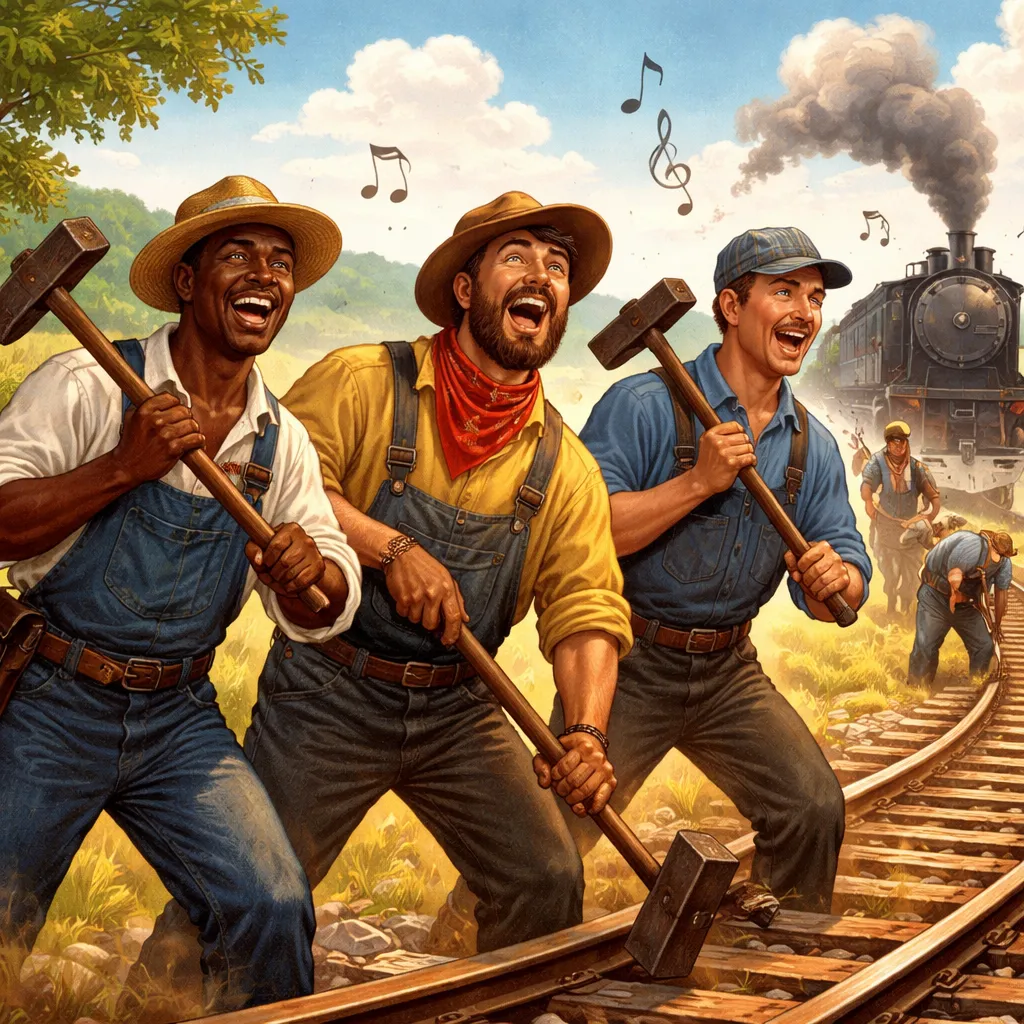

What is the Story "I've Been Working on the Railroad"? "I've Been Working on the Railroad" is one of America's most beloved folk songs. It began as a work song sung by railroad workers who spent long days laying tracks across the country. The English song: I've Been Working on the Railroad captures the rhythm of manual labor and the longing for rest. The song tells of a worker who labors all day long and wishes for his love, Dinah, to come by. Children love the lively tune and the fun "fee fie fiddly eye oh" chorus. The song introduces an important part of American history when railroads connected the nation. It teaches about hard work, trains, and the songs that helped workers pass the time. The whistle-blowing section at the end is always a favorite, with everyone shouting "someone's in the kitchen with Dinah!"
The Complete Lyrics of the Nursery Rhyme Let us look at the words together. The song has several well-known verses.
I've been working on the railroad, All the live-long day. I've been working on the railroad, Just to pass the time away. Can't you hear the whistle blowing? Rise up so early in the morn. Can't you hear the captain shouting, "Dinah, blow your horn!"
Dinah, won't you blow, Dinah, won't you blow, Dinah, won't you blow your horn? Dinah, won't you blow, Dinah, won't you blow, Dinah, won't you blow your horn?
Someone's in the kitchen with Dinah, Someone's in the kitchen I know. Someone's in the kitchen with Dinah, Strumming on the old banjo. Fee fie fiddly eye oh, Fee fie fiddly eye oh, Fee fie fiddly eye oh, Strumming on the old banjo.
Vocabulary Learning from the Song This English song: I've Been Working on the Railroad introduces children to words about trains, work, and music. Each word builds their understanding of American history and language.
First, the song teaches about a "railroad." A railroad is a path made of metal tracks that trains run on. Long ago, workers built railroads across America by hand. This was very hard work.
"All the live-long day" means the entire day, from morning until night. This shows how long the workers labored.
The song mentions a "whistle" and a "horn." Trains have loud whistles to warn people they are coming. The "captain" is the boss who tells everyone what to do.
"Dinah" is the name of a woman. Perhaps she is the worker's sweetheart. The song asks her to blow the horn.
The second part introduces "someone's in the kitchen with Dinah." This is a fun, silly addition. "Strumming on the old banjo" means playing music. The banjo is a string instrument.
"Fee fie fiddly eye oh" are nonsense words that are fun to sing. Children love making these silly sounds.
Phonics Points to Practice Let us listen for special sounds in the song. Phonics helps children connect letters to the sounds they hear. This English song: I've Been Working on the Railroad gives us many sounds to explore.
Listen to the "r" sound at the beginning of "railroad." It is a rolling sound made with the tongue. Practice other "r" words like "rabbit," "red," and "run."
The "w" sound appears in "working" and "whistle." It is made with rounded lips. Practice other "w" words like "water," "window," and "wagon."
Listen to the "b" sound in "been" and "blow." It is a strong sound made by pressing lips together. Practice other "b" words like "ball," "book," and "baby."
The long "i" sound in "I've" and "eye" says its own name. You can hear it in words like "kite," "bike," and "sky."
The "sh" sound in "shouting" and "Dinah" has an "sh" in "shouting." Practice other "sh" words like "shoe," "ship," and "fish."
Grammar Patterns We Can Learn This work song teaches important grammar in a very natural way. The English song: I've Been Working on the Railroad introduces present perfect continuous tense, questions, and contractions.
The song uses "I've been working." This is present perfect continuous tense. It shows an action that started in the past and is still happening now. You can use this pattern in daily life. "I've been playing all day." "You've been growing so fast." "We've been waiting for the bus."
The song asks questions. "Can't you hear the whistle blowing?" "Dinah, won't you blow your horn?" These are question forms. You can practice asking questions. "Can you hear the bird singing?" "Won't you come play with me?"
The song uses contractions. "I've" for "I have." "Can't" for "cannot." "Won't" for "will not." These are common in spoken English. Practice using contractions. "I'm hungry." "You're funny." "We'll go soon."
Learning Activities to Do at Home Bringing this English song: I've Been Working on the Railroad into your daily life is simple and joyful. Here are some activities you can try with materials you already have.
A wonderful activity is the "Train Track" building game. Use blocks, books, or even tape on the floor to make train tracks. Let your child be the worker building the tracks. Sing the song while you work together. This builds engineering thinking and imagination.
Another activity is the "Whistle Sounds" game. Practice making whistle sounds with your voice. High and low. Loud and soft. Long and short. When you hear "blow your horn," make your best train whistle sound. This builds vocal skills and phonemic awareness.
You can also have a "Kitchen Band" activity. Go to the kitchen and find things that make sounds. Pots and pans for drums. Spoons for rhythm. Strum a rubber band banjo. Sing "someone's in the kitchen with Dinah" while you play. This builds musical awareness and creativity.
Printable Materials for Learning Creating simple printables can make this English song: I've Been Working on the Railroad more visual and engaging. You can make these materials together with your child.
A train scene coloring page is perfect. Draw a railroad with a train coming, workers laying tracks, and a kitchen scene in the corner. Add a banjo for Dinah. Let your child color the scene. Write "I've Been Working on the Railroad" at the top. Display their artwork proudly.
Story sequencing cards help with comprehension. Draw simple pictures on separate cards. Worker on railroad tracks. Whistle blowing. Captain shouting. Dinah with horn. Kitchen scene with banjo. Your child can arrange the cards in order and retell the story. This builds sequencing and narrative skills.
You can also create simple word cards. Write words from the song on cards. "Working," "railroad," "live-long," "day," "whistle," "blowing," "captain," "shouting," "Dinah," "horn," "kitchen," "banjo." Show each card as you sing that word. This builds early reading skills.
A train whistle craft lets children make their own whistle. Use a cardboard tube. Decorate it. Practice blowing through it to make sound.
Educational Games for Deeper Learning Games make learning active and exciting. They encourage children to use the language from the English song: I've Been Working on the Railroad in new and creative ways.
The "Train Sounds" game explores all the sounds trains make. Choo choo! Whistle! Wheels on track! Make each sound together. This builds phonemic awareness through play.
The "Work Song Rhythm" game adds movement. Do work actions while singing. Hammering, shoveling, laying tracks. Match the rhythm to the song. This builds coordination and understanding of work songs.
The "New Verses" game encourages creativity. Ask your child, "What else could someone be doing in the kitchen?" Baking a cake? Washing dishes? Eating a snack? Create new verses. "Someone's in the kitchen baking bread, someone's in the kitchen I know." This shows children how to extend the pattern.
The "Dinah's Horn" discussion explores the horn. Why did Dinah need to blow a horn? To signal something? To call workers? This builds imagination and storytelling.
The "Train History" conversation builds historical knowledge. Long ago, trains were the main way people traveled across the country. Workers built tracks through mountains and prairies. It was very hard work. This builds understanding of American history.
The "Banjo Craft" is creative fun. Make a simple banjo from a paper plate and rubber bands. Stretch rubber bands across the plate. Pluck them to make sounds. This builds fine motor skills and connects to the song.
The "Fee Fie Fiddly" nonsense words game is pure fun. Make up your own silly sound combinations. "La la loo." "Zig zig zee." Sing them to the tune. This builds vocal play and creativity.
The "All the Live-Long Day" discussion explores time. What does it mean to work all day? Talk about your daily routine. Morning, afternoon, evening. This builds understanding of time concepts.