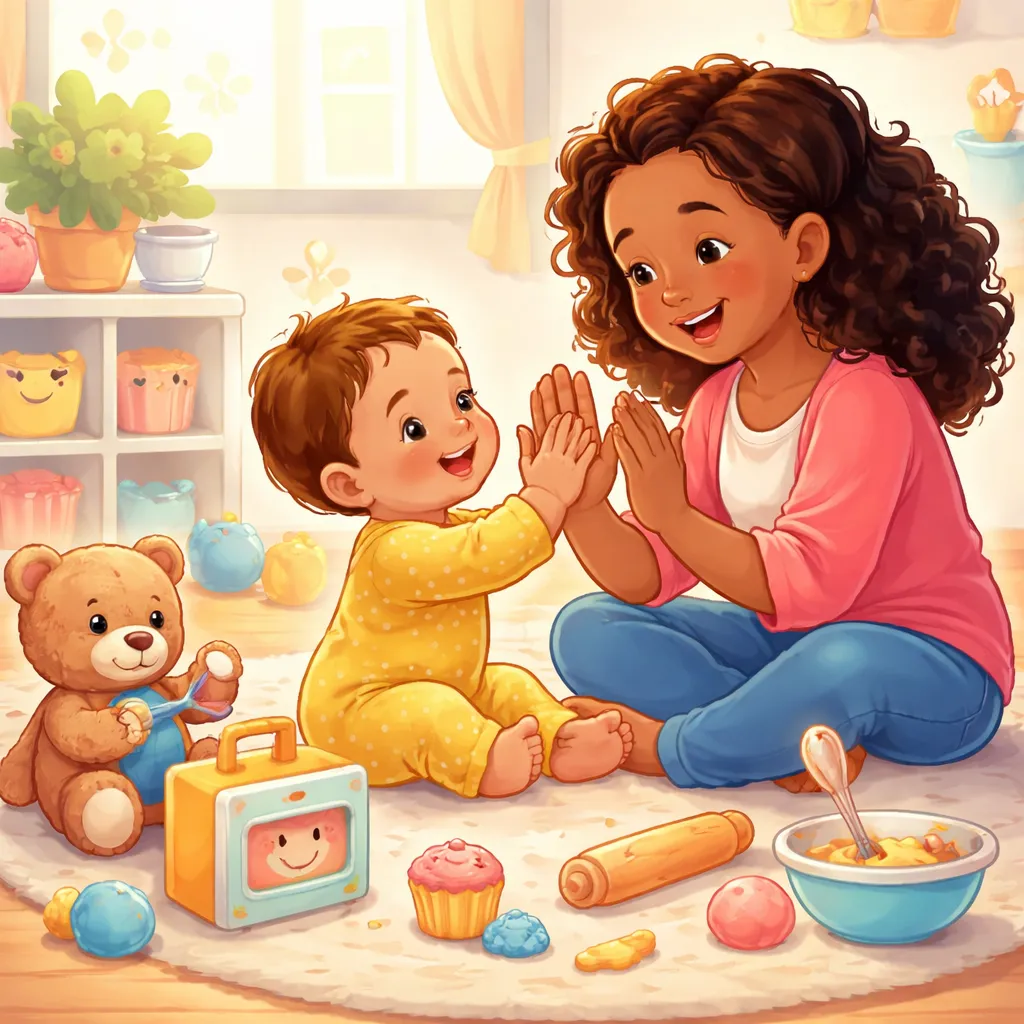

What is the Rhyme "Pat-a-Cake"? "Pat-a-Cake" is one of the oldest and most cherished English nursery rhymes for babies and young children. It is a gentle hand-clapping game that adults play with little ones. The song describes the process of baking a cake. Pat it, roll it, mark it with a letter, and put it in the oven. The English song: Pat-a-Cake has been passed down through families for hundreds of years. It creates a special moment of connection between parent and child. The simple hand motions help babies develop coordination and body awareness. The rhyming words build early language skills. Most importantly, the song creates loving eye contact and physical closeness that babies need to feel safe and loved.
The Complete Lyrics of the Nursery Rhyme Let us look at the words together. The rhyme is short and sweet. Many families add their own baby's name to make it personal.
Pat-a-cake, pat-a-cake, baker's man. Bake me a cake as fast as you can. Pat it and roll it and mark it with a B, And put it in the oven for baby and me!
For baby, the letter often changes to match their name. For a child named Tom, you would sing "mark it with a T." For a child named Lily, "mark it with an L."
Vocabulary Learning from the Song This English song: Pat-a-Cake introduces children to important words about baking, actions, and family. Each word builds their understanding of the world.
First, the song teaches about baking. A "baker's man" is a person who bakes bread and cakes for a living. You can talk about what bakers do. They mix flour, eggs, and sugar. They put things in the oven. They make delicious treats for us to eat.
The word "cake" is a special food for celebrations. Cakes are sweet and soft. You can talk about times when your family eats cake. Birthdays. Holidays. Special visits from grandma.
Action words are very important in this rhyme. "Pat" means tapping gently with your hand. "Roll" means moving your hands in a circle to shape the dough. "Mark" means writing or drawing on something. These verbs help children describe the baking process.
The song teaches family words. "Baby" and "me" show who the cake is for. When you add your child's name, it becomes even more personal. "For Sophie and me!" This makes the song feel like it belongs to your child.
Phonics Points to Practice Let us listen for special sounds in the song. Phonics helps children connect letters to the sounds they hear. This English song: Pat-a-Cake gives us many sounds to explore.
Listen to the "p" sound at the beginning of "pat" and "pat-a-cake." It is a quick sound made by pressing lips together and releasing. Say "pat-a-cake" slowly. Feel how your lips pop open for each "p." Practice other "p" words like "pig," "pan," and "pretty."
The "b" sound appears in "baker" and "baby." It is also made with the lips, but it is a little softer than "p." Practice other "b" words like "ball," "book," and "bubble."
Listen to the "k" sound in "cake" and "baker" has the "b" but "cake" gives us the hard "c" sound. It is made at the back of the throat. Practice other "k" words like "cat," "kite," and "kiss."
The "r" sound in "roll" and "mark" is a rolling sound made with the tongue. Practice other "r" words like "rabbit," "red," and "run." The long "a" sound in "bake" and "cake" says its own name. You can hear it in words like "make," "take," and "play."
Grammar Patterns We Can Learn This sweet baking song teaches important grammar in a very natural way. The English song: Pat-a-Cake introduces imperatives, pronouns, and prepositions.
The song uses imperative forms. "Pat it," "roll it," "mark it," "put it." These are commands that tell us what to do. You use imperatives every day with your child. "Eat your food." "Wash your hands." "Give me a hug." The song reinforces this common sentence pattern in a loving way.
The word "it" is a pronoun that replaces the noun "cake." Instead of saying "pat the cake" each time, we say "pat it." This teaches children how we use pronouns to avoid repeating words. You can practice using pronouns in daily life. "Where is your toy? Can you find it?"
The preposition "in" appears in "put it in the oven." This shows location. You can practice using "in" with other objects. "The milk is in the fridge." "The toy is in the box." "The baby is in the bath."
Learning Activities to Do at Home Bringing this English song: Pat-a-Cake into your daily life is simple and joyful. Here are some activities you can try with materials you already have.
A wonderful activity is the "Hand Clapping Game" itself. Sit facing your baby or child. Take their hands in yours and clap them together gently while singing. Pat their little hands together. Roll them in a circle. Pretend to mark a letter on their palm. Then gently put their hands in your lap like putting them in the oven. This builds coordination and creates loving connection.
Another activity is "Real Baking" together. Make simple cookies or a cake with your child. Let them help pat the dough and roll it. Use a cookie cutter to make shapes. If you are making a cake for a special person, mark it with their first letter using icing or sprinkles. Sing the song while you bake. This connects the words to real sensory experiences.
You can also have a "Play Dough Bakery." Use play dough to pretend bake. Pat it and roll it. Use a plastic knife to mark letters. Put the pretend cakes in a toy oven. Sing the song as you play. This builds imagination and fine motor skills.
Printable Materials for Learning Creating simple printables can make this English song: Pat-a-Cake more visual and engaging. You can make these materials together with your child.
Baking sequence cards are perfect for this song. Draw simple pictures on separate cards. A baker mixing dough. Someone patting the dough. Someone rolling the dough. Someone marking a letter. Putting the cake in the oven. Taking out a finished cake. Your child can arrange the cards in order and explain the baking process. This builds sequencing and narrative skills.
A letter marking page is wonderful for name practice. Draw simple cake shapes on paper. Write a letter in the center of each cake. Ask your child to decorate the cake around the letter. For younger children, you can write the first letter of their name. This builds letter recognition in a playful way.
You can also create simple word cards. Write words from the rhyme on cards. "Pat," "cake," "baker," "roll," "mark," "oven," "baby." Show each card as you sing that word. This builds early reading skills in a gentle, supportive way.
A play dough mat adds sensory fun. Draw a simple outline of a cake on cardstock and laminate it or cover it with clear contact paper. Your child can use play dough on the mat to shape their cake. They can practice patting and rolling right on the picture.
Educational Games for Deeper Learning Games make learning active and exciting. They encourage children to use the language from the English song: Pat-a-Cake in new and creative ways.
The "Name Letter" game makes the song personal. Sing the song with your child's name. "Pat-a-cake, pat-a-cake, baker's man. Bake me a cake as fast as you can. Pat it and roll it and mark it with an [first letter of child's name], and put it in the oven for [child's name] and me!" This helps children recognize the first letter of their own name, an important early literacy skill.
The "Different Foods" game encourages creativity. Ask your child, "What else could the baker make?" Bread? Cookies? Muffins? Create new verses together. "Pat-a-cake, pat-a-cake, baker's man. Bake me a cookie as fast as you can. Pat it and roll it and mark it with a C, and put it in the oven for baby and me!" This shows children how they can adapt songs to include their favorite things.
The "Letter Hunt" game connects to the letter marking. After singing, go on a hunt around the house for the letter from the song. If you marked with B, find things that start with B. Ball. Book. Blanket. Banana. This builds letter-sound connections.
The "Oven Timer" game practices listening and waiting. Pretend to put the cake in the oven. Set a timer for one minute. Your child must wait patiently until the timer rings to take the cake out. This builds self-regulation and understanding of time.
The "Baker Says" game is like Simon Says but with baking actions. "Baker says pat the dough." "Baker says roll the dough." "Mark the dough with an M." If you don't say "baker says," they should not do the action. This builds listening skills and following directions.
The "Real Letter Cookies" activity is a wonderful extension. Make sugar cookie dough with your child. Roll it out and use letter-shaped cookie cutters. Bake the cookies and decorate them. As you eat them, sing the song together. This creates a beautiful memory and connects all the learning from the song to a delicious real-world experience.