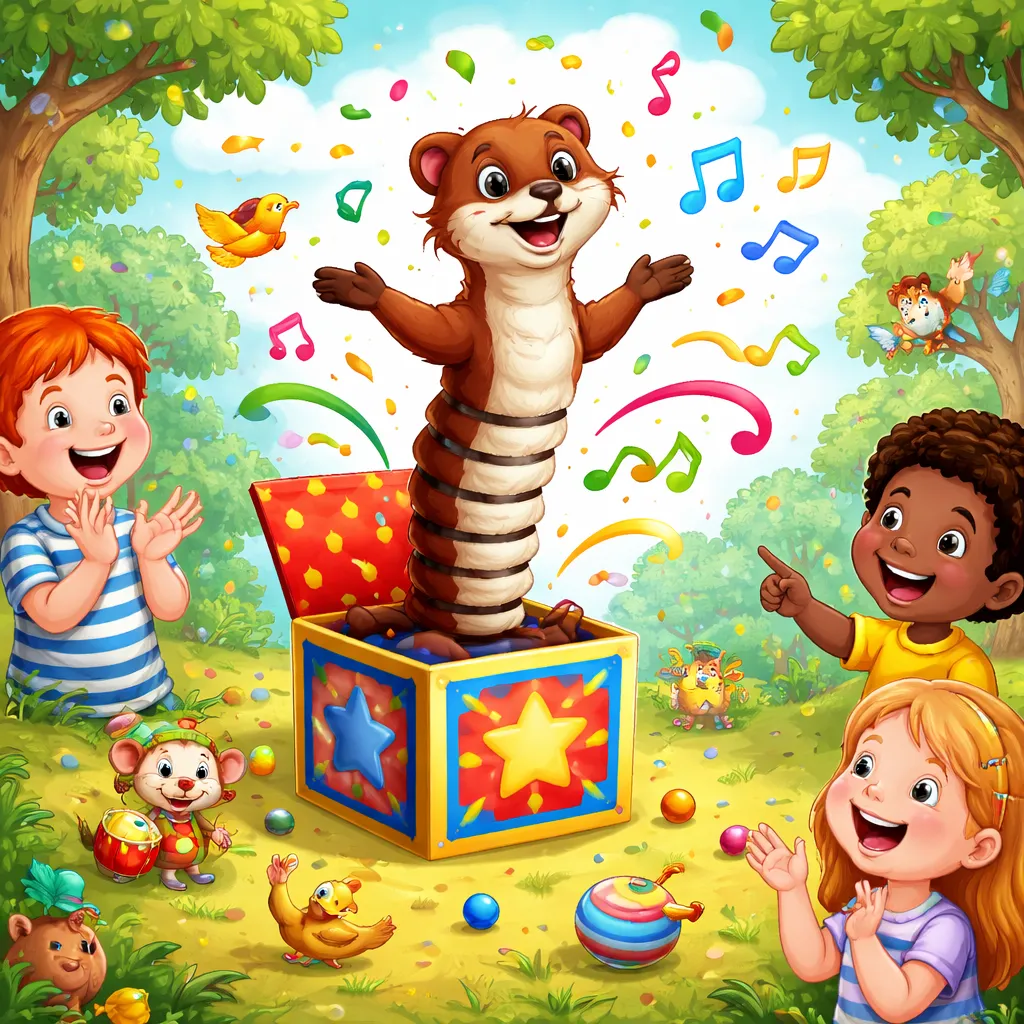

What is the Rhyme "Pop! Goes the Weasel"? "Pop! Goes the Weasel" is a lively and surprising English nursery rhyme that has entertained children for generations. The song tells a little story about a monkey chasing a weasel around a mulberry bush. The weasel suddenly pops up, surprising everyone. The English song: Pop! Goes the Weasel is full of action and a wonderful surprise moment. Children love to jump or clap when they hear the word "pop." The song has a bouncy rhythm that makes everyone want to move. The simple story follows a clear pattern. Up and down the city road, in and out the eagle, that is the way the money goes, and then POP! The surprise ending never fails to delight.
The Complete Lyrics of the Nursery Rhyme Let us look at the words together. There are several versions of this rhyme. Here is the most common one.
Half a pound of tuppenny rice, Half a pound of treacle. That's the way the money goes, Pop! goes the weasel.
Up and down the City road, In and out the Eagle. That's the way the money goes, Pop! goes the weasel.
A penny for a spool of thread, A penny for a needle. That's the way the money goes, Pop! goes the weasel.
Vocabulary Learning from the Song This English song: Pop! Goes the Weasel introduces children to interesting old words and fun action words. Each word builds their understanding of language and stories.
First, the song teaches about money and shopping. "Half a pound" means a small amount by weight. "Tuppenny rice" is rice that costs two pennies. "Treacle" is a sweet syrup like molasses. These are old-fashioned words that spark curiosity. You can explain that people long ago bought small amounts of food with pennies.
The song teaches direction words. "Up and down" means moving in both directions. "In and out" means going inside and then outside again. These prepositions help children understand movement and location.
"The Eagle" was a real pub or inn in London long ago. For children, it becomes any place the monkey and weasel visit.
The best word in the song is "Pop!" It is a sound word that means something suddenly appears or bursts. Children love to shout it out. The surprise makes everyone laugh.
Phonics Points to Practice Let us listen for special sounds in the song. Phonics helps children connect letters to the sounds they hear. This English song: Pop! Goes the Weasel gives us many sounds to explore.
Listen to the "p" sound at the beginning of "pop" and "pound." It is a quick sound made by pressing lips together and releasing. Say "pop" slowly. Feel how your lips pop open. Practice other "p" words like "puppy," "party," and "play."
The "w" sound appears in "weasel" and "way." It is made with rounded lips. Practice other "w" words like "water," "window," and "wagon."
Listen to the long "e" sound in "weasel" and "eagle" and "needle." It says its own name. You can hear it in words like "bee," "tree," and "me." Pointing out these sound patterns builds phonemic awareness.
The "tr" blend in "treacle" and "thread" is important. Say "treacle" slowly. First the "t," then quickly the "r." Practice other "tr" words like "truck," "train," and "tree."
Grammar Patterns We Can Learn This surprising song teaches important grammar in a very natural way. The English song: Pop! Goes the Weasel introduces present tense verbs, prepositions, and the concept of surprise.
The song uses present tense throughout. "That's the way the money goes." "Goes" is a present tense verb. You can use present tense to talk about things that happen regularly. "The sun goes down at night." "The car goes fast." "Mommy goes to work."
Prepositions show movement and location. "Up and down" the road. "In and out" the Eagle. You can practice using these prepositions in daily life. "Let's go up the stairs." "The cat goes in and out of the house."
The word "pop" is an example of onomatopoeia, a word that sounds like its meaning. This teaches children that words can imitate sounds. You can find other sound words. Buzz, splash, bang, boom. This builds vocabulary through sound play.
Learning Activities to Do at Home Bringing this English song: Pop! Goes the Weasel into your daily life is simple and joyful. Here are some activities you can try with materials you already have.
A wonderful activity is the "Pop Jump" game. Sing the song together. Every time you get to the word "pop," everyone jumps up or claps loudly. This builds listening skills and adds physical fun to the song. The surprise of the pop never gets old.
Another activity is the "Monkey and Weasel" puppet show. Make simple puppets of a monkey and a weasel using socks or paper bags. Act out the song. The monkey chases the weasel around a mulberry bush (a plant or pillow). When the weasel pops out, everyone cheers. This brings the story to life.
You can also have a "Money Goes" game. Use pretend pennies or coins. Count them out as you sing about the money going. Spend them on different things. This builds early math skills while connecting to the song.
Printable Materials for Learning Creating simple printables can make this English song: Pop! Goes the Weasel more visual and engaging. You can make these materials together with your child.
Story sequencing cards are perfect for this rhyme. Draw simple pictures on separate cards. Monkey chasing weasel around bush. Going up and down the road. Going in and out the Eagle. Spending money. The weasel popping out. Your child can arrange the cards in order and retell the story. This builds sequencing and narrative skills.
A coloring page is always popular. Draw a monkey chasing a weasel around a mulberry bush. Add an eagle building in the background. Let your child color the scene. Write "Pop! Goes the Weasel" at the top. Display their artwork proudly.
You can also create simple word cards. Write words from the song on cards. "Pop," "weasel," "monkey," "eagle," "money," "rice," "treacle," "needle." Show each card as you sing that word. This builds early reading skills in a gentle, supportive way.
A pop-up card is wonderful for this song. Cut a slit in a card and attach a weasel picture on a spring or folded strip. When you open the card, the weasel pops up! Write the song inside. This connects the craft to the surprise in the song.
Educational Games for Deeper Learning Games make learning active and exciting. They encourage children to use the language from the English song: Pop! Goes the Weasel in new and creative ways.
The "New Pop Animals" game encourages creativity. Ask your child, "What animal could pop up instead of a weasel?" A rabbit? A frog? A mouse? Create new verses together. "Pop! goes the rabbit!" "Pop! goes the frog!" Each new animal brings new sounds and movements. This shows children how to extend the pattern.
The "Surprise Sound" game practices the pop. Take turns making surprise sounds. Pop, bang, boo, zap. The other person jumps when they hear the sound. This builds listening skills and adds fun to the game.
The "Up and Down" movement game uses the direction words. When you say "up," everyone stands tall. When you say "down," everyone crouches low. When you say "in," everyone steps forward. When you say "out," everyone steps back. This builds listening and gross motor skills.
The "Money Counting" game uses the spending theme. Give your child a few pretend pennies. Sing about spending them. What can you buy for a penny? A small treat? A sticker? This builds early math and decision-making skills.
The "Hide and Pop" game is pure fun. One person hides while others sing. When the song gets to "pop," the hidden person jumps out and shouts "pop!" This connects the song to a real game of surprise.
The "Eagle Visit" game uses imagination. The song mentions going in and out the Eagle. Ask your child, "What do you think the Eagle looks like?" A building? A bird? A store? Draw it together. This builds imagination and creative thinking.
The "Shopping List" game extends the money theme. The song spends money on rice and treacle and thread and needles. What would your child buy? Make a shopping list together. Draw pictures of the items. Count how many things you can buy. This builds vocabulary and early writing skills.
The "Pop Dance" adds choreography. Create simple dance moves for each line. Circle for "up and down." Open and close arms for "in and out." Money gesture for "that's the way the money goes." And a big jump for "pop!" This builds coordination and makes the song a full-body experience.