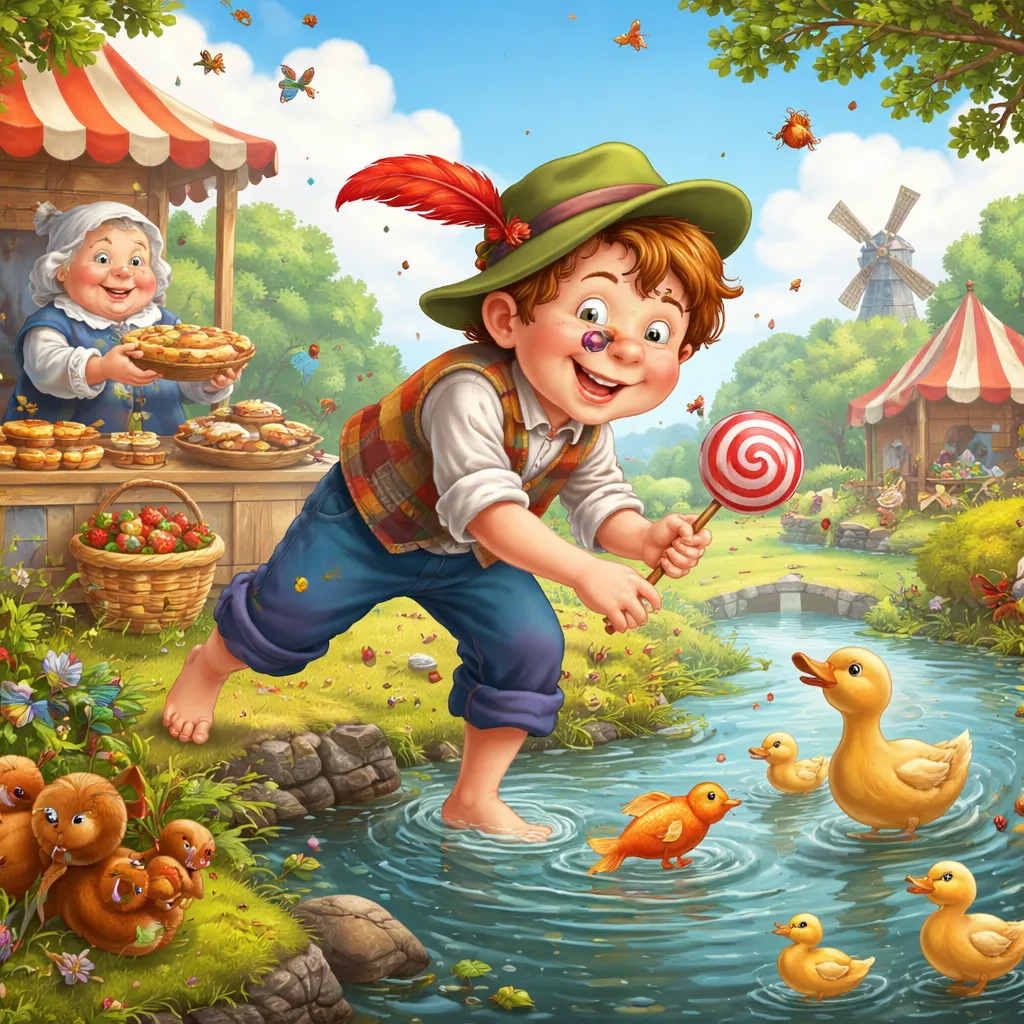

What is the Rhyme "Simple Simon"? "Simple Simon" is a classic English nursery rhyme about a boy who does many silly things. The song tells the story of Simon meeting a pieman and wanting to taste his pies. But Simon has no money to pay. The pieman tells him to show his penny first. The English song: Simple Simon has been entertaining children for generations with its gentle humor. Simon tries to catch a whale in a bucket and other foolish adventures. Children laugh at Simon's silly ideas while learning about cause and effect. The rhyme teaches that you need money to buy things and that some plans are just too silly to work. The repetitive structure makes it easy to remember and join in.
The Complete Lyrics of the Nursery Rhyme Let us look at the words together. The full rhyme has several verses about Simon's adventures.
Simple Simon met a pieman, Going to the fair. Said Simple Simon to the pieman, "Let me taste your ware."
Said the pieman to Simple Simon, "Show me first your penny." Said Simple Simon to the pieman, "Indeed I have not any."
Simple Simon went a-fishing, For to catch a whale. All the water he had got Was in his mother's pail.
Simple Simon went to look If plums grew on a thistle. He pricked his fingers very much, Which made poor Simon whistle.
Vocabulary Learning from the Song This English song: Simple Simon introduces children to words about food, money, and silly situations. Each word builds their understanding of language and humor.
First, we meet "Simple Simon." "Simple" here means silly or not very smart, but in a gentle, funny way. Simon is a boy who does foolish things. Children enjoy laughing at his mistakes while feeling clever themselves.
The song teaches about a "pieman." A pieman is someone who makes and sells pies. Long ago, pie men walked around selling their pies at fairs and markets. You can explain that this was like a food truck long ago.
"Ware" means the things someone sells. The pieman's ware is his pies. This is an old word that children enjoy learning.
The song teaches about money. A "penny" is a small coin. Simon has no penny, so he cannot buy a pie. This teaches a simple lesson about trading. You need money to buy things.
A "thistle" is a prickly plant with purple flowers. Plums do not grow on thistles, so Simon gets hurt trying to pick them. This silly idea makes children laugh.
Phonics Points to Practice Let us listen for special sounds in the song. Phonics helps children connect letters to the sounds they hear. This English song: Simple Simon gives us many sounds to explore.
Listen to the "s" sound at the beginning of "Simple" and "Simon." It is a soft sound made by pushing air through the teeth. Say "Simple Simon" slowly. Feel the air. Practice other "s" words like "sun," "sand," and "silly."
The "p" sound appears in "pieman" and "penny" and "plums." It is a quick sound made by pressing lips together. Practice other "p" words like "pig," "pan," and "pretty."
Listen to the "m" sound in "met" and "mother's." It is a humming sound made with lips together. Practice other "m" words like "mommy," "milk," and "moon."
The "f" sound in "fair" and "fishing" and "fingers" is made by putting top teeth on bottom lip and blowing air. Practice other "f" words like "fish," "fun," and "family."
The "wh" sound in "whale" and "whistle" is special. It starts with a little breath. Practice other "wh" words like "wheat," "wheel," and "whisper."
Grammar Patterns We Can Learn This silly story song teaches important grammar in a very natural way. The English song: Simple Simon introduces dialogue, past tense verbs, and conditionals.
The song uses dialogue between Simon and the pieman. "Said Simple Simon to the pieman, 'Let me taste your ware.'" This teaches children how we show conversation in stories. You can practice using dialogue in daily life. "You said, 'I want a snack.'" "Mommy said, 'Time to play.'"
The song uses past tense throughout. Simon "met" a pieman. He "went" a-fishing. He "pricked" his fingers. These are all past tense verbs. You can talk about past events. "We met Grandma yesterday." "You went to the park." "You pricked your finger on that thorn."
The phrase "let me taste" is a request, using "let me" to ask permission. Children use this pattern naturally. "Let me see." "Let me try." "Let me do it."
Learning Activities to Do at Home Bringing this English song: Simple Simon into your daily life is simple and joyful. Here are some activities you can try with materials you already have.
A wonderful activity is the "Pie Shop" pretend play. Set up a pretend pie shop with play dough pies or paper pies. Take turns being Simon and the pieman. Simon asks to taste the pies. The pieman asks for a penny. Practice the conversation from the song. This builds social skills and imagination.
Another activity is the "Fishing in a Pail" game. Fill a small bucket or pail with water. Add some toy fish or other small waterproof toys. Give your child a small net or spoon to fish with. This connects to Simon trying to catch a whale in his mother's pail. It is silly and fun.
You can also have a "Thistle Drawing" activity. Draw a thistle plant together. Talk about how it is prickly and plums do not grow on it. Draw plums on a plum tree instead. This builds plant vocabulary and observation skills.
Printable Materials for Learning Creating simple printables can make this English song: Simple Simon more visual and engaging. You can make these materials together with your child.
Story sequencing cards are perfect for this rhyme. Draw simple pictures on separate cards. Simon meeting pieman. Simon asking to taste. Pieman asking for penny. Simon fishing in pail. Simon touching thistle. Your child can arrange the cards in order and retell the whole story. This builds sequencing and narrative skills.
A coloring page is always popular. Draw Simple Simon talking to the pieman at his pie stand. Add a pail of water and a thistle in the background. Let your child color the scene. Write "Simple Simon" at the top. Display their artwork proudly.
You can also create simple word cards. Write words from the song on cards. "Simple," "Simon," "pieman," "fair," "taste," "ware," "penny," "fishing," "whale," "pail," "thistle." Show each card as you sing that word. This builds early reading skills.
A money matching game uses the penny theme. Draw or use real pennies. Count them together. How many pennies does Simon need to buy a pie? Just one! This builds early math skills.
Educational Games for Deeper Learning Games make learning active and exciting. They encourage children to use the language from the English song: Simple Simon in new and creative ways.
The "New Adventures" game encourages creativity. Ask your child, "What other silly thing could Simple Simon do?" Try to catch a star in a jar? Plant lollipops? Create new verses together. "Simple Simon went to catch a star, in a jar so small. But the star was far too high, and Simon had a fall." This shows children how to extend the story.
The "Penny Search" game uses the money theme. Hide a penny somewhere in the room. Give your child clues to find it. When they find it, they can "buy" a pretend pie from the pie shop. This builds observation and following directions.
The "Silly or Smart?" game builds critical thinking. After each verse, ask your child, "Was that a silly idea or a smart idea?" Trying to catch a whale in a pail is silly. Trying to pick plums from a thistle is silly. What would be a smart way to get pie? Save up pennies! This builds reasoning skills.
The "Pie Tasting" activity is fun if possible. Try different kinds of pies or pastries. Apple pie, pumpkin pie, chicken pot pie. Talk about the tastes and textures. This connects the song to real sensory experiences.
The "Whale in a Pail" craft is a fun project. Decorate a small bucket or container to look like a pail. Make a small whale from paper or clay. Act out Simon's silly fishing adventure. This builds creativity and fine motor skills.
The "Market Day" game extends the pieman theme. Set up a pretend market with different sellers. A fruit seller, a toy seller, a book seller. Take turns buying and selling with pretend pennies. This builds social skills and early math.
The "Prickly Plants" nature walk connects to the thistle. Go for a walk and look for prickly plants. Touch them carefully (with supervision) to feel how they are prickly. Talk about why plants have prickles. This builds nature awareness.
The "Whistle Practice" game uses the last line. Simon whistled when he pricked his fingers. Practice whistling together. If your child cannot whistle yet, practice making other sounds with the mouth. This builds oral motor skills.