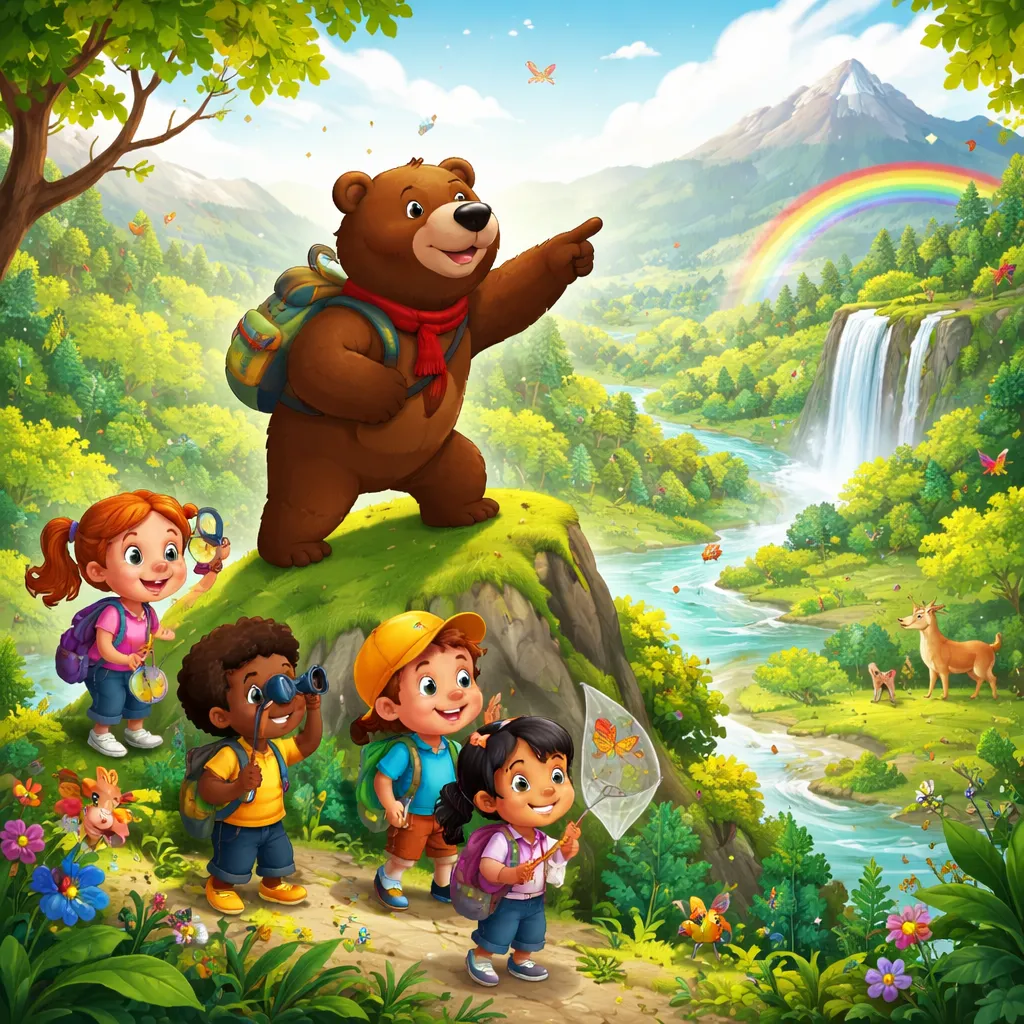

What is the Story "The Bear Went Over the Mountain"? "The Bear Went Over the Mountain" is a delightful and simple English folk song that children adore. The song tells the story of a curious bear who climbs over a mountain to see what he can see. The English song: The Bear Went Over the Mountain uses a wonderfully repetitive pattern. The bear goes over the mountain, looks on the other side, and discovers that the other side looks just like the one he left! Children love the silly ending. After all that climbing, the bear sees the same thing. The song teaches about curiosity and exploration. Sometimes we travel far just to discover that home is pretty great too. The gentle repetition makes it easy for even very young children to learn and sing along.
The Complete Lyrics of the Nursery Rhyme Let us look at the words together. The song is short and very repetitive.
The bear went over the mountain, The bear went over the mountain, The bear went over the mountain, To see what he could see.
And all that he could see, And all that he could see, Was the other side of the mountain, The other side of the mountain, The other side of the mountain, Was all that he could see.
Vocabulary Learning from the Song This English song: The Bear Went Over the Mountain introduces children to words about nature, animals, and exploration. Each word builds their understanding of language and the world.
First, the song teaches about a "bear." Bears are large, furry animals that live in forests and mountains. They are strong and curious. You can show your child pictures of bears and talk about where they live.
The song teaches about a "mountain." A mountain is a very tall, steep hill. Mountains are big and take a long time to climb. You can show pictures of mountains or point to hills and explain that mountains are even bigger.
The phrase "went over" means climbing to the other side. The bear traveled across the mountain. This teaches movement and direction.
The song asks "to see what he could see." This shows curiosity and exploration. The bear wanted to discover something new. This is a wonderful message for children. Being curious and exploring is good!
The ending teaches that sometimes things look the same on the other side. This can lead to gentle discussions about expectations and discovery.
Phonics Points to Practice Let us listen for special sounds in the song. Phonics helps children connect letters to the sounds they hear. This English song: The Bear Went Over the Mountain gives us many sounds to explore.
Listen to the "b" sound at the beginning of "bear." It is a strong sound made by pressing lips together. Say "bear" slowly. Feel your lips press together. Practice other "b" words like "ball," "book," and "baby."
The "m" sound appears in "mountain" and "more." It is a humming sound made with lips together. Practice other "m" words like "mommy," "milk," and "moon."
Listen to the "w" sound in "went" and "was." It is made with rounded lips. Practice other "w" words like "water," "window," and "wagon."
The "s" sound in "see" and "side" is a soft sound made by pushing air through the teeth. Practice other "s" words like "sun," "sand," and "sing."
The long "e" sound in "see" and "he" says its own name. You can hear it in words like "bee," "tree," and "me."
Grammar Patterns We Can Learn This curious bear song teaches important grammar in a very natural way. The English song: The Bear Went Over the Mountain introduces past tense verbs, prepositions, and the phrase "to see."
The song uses past tense throughout. "The bear went over the mountain." "All that he could see." "Was the other side." These are all past tense forms. You can talk about past events. "We went to the park." "I could see the birds." "It was a sunny day."
The preposition "over" shows movement across something. The bear climbed over the mountain. You can practice using "over" in daily life. "The ball went over the fence." "We drove over the bridge." "Jump over the pillow."
The phrase "to see" shows purpose. The bear climbed the mountain to see what he could see. This teaches children how we explain why we do things. "We go to the store to buy food." "You read books to learn new things."
Learning Activities to Do at Home Bringing this English song: The Bear Went Over the Mountain into your daily life is simple and joyful. Here are some activities you can try with materials you already have.
A wonderful activity is the "Mountain Climbing" game. Use pillows and cushions to build a mountain. Let your child be the bear and climb over it. When they reach the other side, ask "What can you see?" They can describe what they see. This brings the song to life through physical play.
Another activity is the "Bear Walk" movement game. Walk like a bear on hands and feet. Stomp around the room. Growl like a bear. Sing the song while moving. This builds gross motor skills and imagination.
You can also have a "What Can You See?" game. Go to a window or outside. Look around and describe what you see. "I see a tree. I see a car. I see a bird." This builds observation and language skills.
Printable Materials for Learning Creating simple printables can make this English song: The Bear Went Over the Mountain more visual and engaging. You can make these materials together with your child.
A mountain scene coloring page is perfect. Draw a big mountain with a bear climbing up one side and looking over the top. Add trees and clouds. Let your child color the scene. Write "The Bear Went Over the Mountain" at the top. Display their artwork proudly.
Story sequencing cards help with comprehension. Draw simple pictures on separate cards. Bear at bottom of mountain. Bear climbing. Bear at top looking. Bear on other side. The other side looks the same. Your child can arrange the cards in order and retell the story. This builds sequencing and narrative skills.
You can also create simple word cards. Write words from the song on cards. "Bear," "went," "over," "mountain," "see," "could," "other," "side." Show each card as you sing that word. This builds early reading skills.
A "what can you see?" drawing page lets children draw what the bear might see. Provide a blank frame. Let them fill it with their own ideas.
Educational Games for Deeper Learning Games make learning active and exciting. They encourage children to use the language from the English song: The Bear Went Over the Mountain in new and creative ways.
The "New Animal" game encourages creativity. Ask your child, "What if a different animal went over the mountain?" A rabbit? A fox? A elephant? Create new verses. "The rabbit went over the mountain, to see what he could see." This shows children how to adapt the song pattern.
The "New Place" game changes the destination. Over the river? Through the woods? Across the field? Create new verses. "The bear went through the woods, to see what he could see." This builds vocabulary about different places.
The "Curiosity Discussion" explores the bear's motivation. Why did the bear go over the mountain? He was curious! Talk about times when you are curious. What do you wonder about? This builds emotional vocabulary.
The "Same or Different?" game connects to the ending. The bear saw the same thing on both sides. Look at two things. Are they the same or different? Two apples? Same. An apple and a banana? Different. This builds comparison skills.
The "Mountain Building" activity uses blocks. Build a mountain with blocks. Make it as tall as you can. Count the blocks. This builds engineering thinking and math skills.
The "Bear Facts" conversation builds science knowledge. What do bears eat? Where do they live? What sounds do they make? Learn real facts about bears. This builds nature knowledge.
The "Other Side Drawing" is creative. Draw what you imagine is on the other side of a mountain. A castle? An ocean? A playground? This builds imagination.
The "Perspective Talk" explores the idea of seeing the same thing differently. The bear saw the same kind of land. But maybe it felt different to be on the other side. This builds critical thinking.