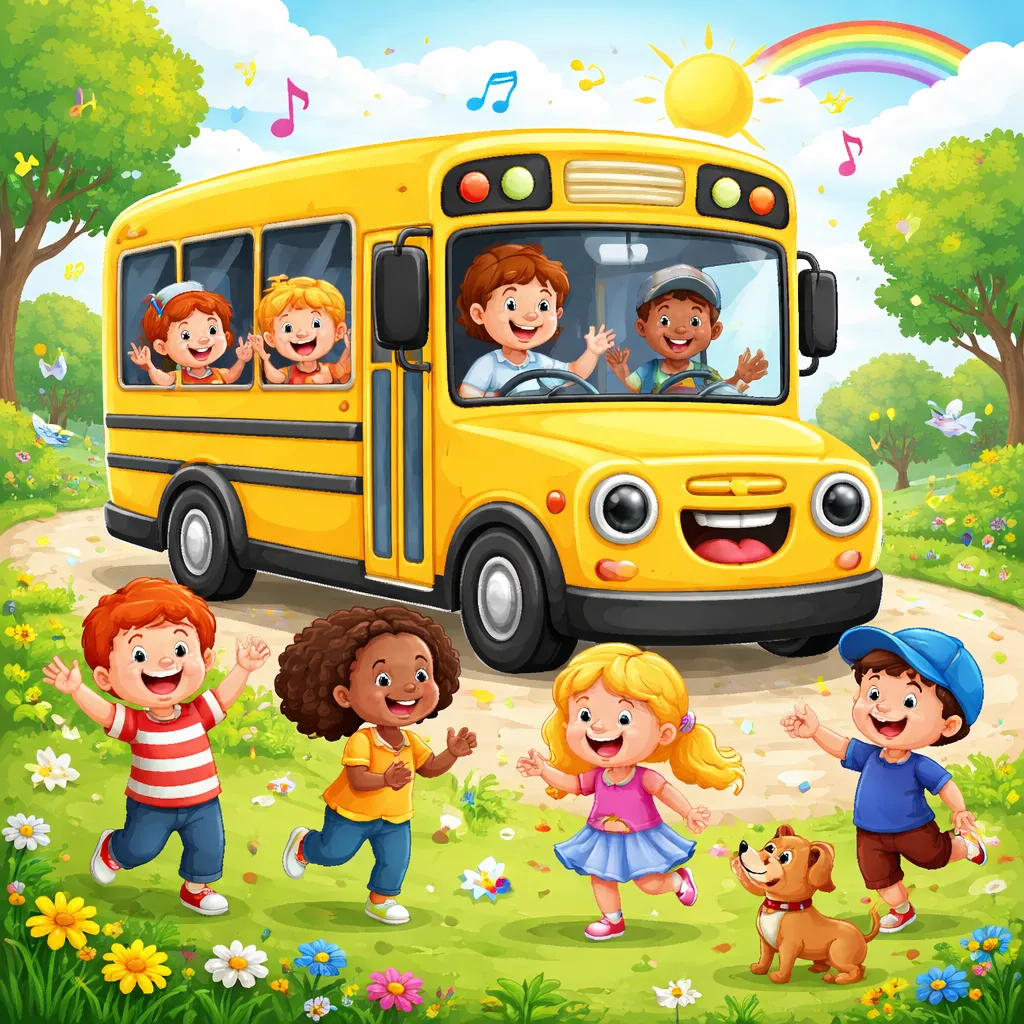

What is the Rhyme "The Wheels on the Bus"? "The Wheels on the Bus" is a classic English nursery rhyme that has entertained children for decades. It is an energetic, participatory song that describes the different sounds and actions happening on a busy bus ride. Unlike a quiet lullaby, this song invites everyone to move and make noises together. The melody is simple and repetitive, which makes it incredibly easy for young children to sing along. When you share this English song: The Wheels on the Bus with your child, you are opening the door to learning through movement, sound imitation, and lots of laughter. It turns a simple vehicle ride into a joyful language lesson.
The Complete Lyrics of the Nursery Rhyme Let us explore the words together. The beauty of this song is that you can add endless verses. Here are the most common and beloved verses to get you started.
The wheels on the bus go round and round, Round and round, round and round. The wheels on the bus go round and round, All through the town!
The wipers on the bus go swish, swish, swish, Swish, swish, swish, swish, swish, swish. The wipers on the bus go swish, swish, swish, All through the town!
The horn on the bus goes beep, beep, beep, Beep, beep, beep, beep, beep, beep. The horn on the bus goes beep, beep, beep, All through the town!
The doors on the bus go open and shut, Open and shut, open and shut. The doors on the bus go open and shut, All through the town!
The people on the bus go up and down, Up and down, up and down. The people on the bus go up and down, All through the town!
Vocabulary Learning from the Song This English song: The Wheels on the Bus is a fantastic tool for building a child's vocabulary. It introduces words for parts of a vehicle, action verbs, and very important sound words. Learning through song makes these words stick.
First, we learn the names of parts on a bus. Words like "wheels," "wipers," "horn," and "doors" become meaningful. You can point to these parts on a real bus or a toy bus. Next, the song is full of action verbs. "Go round" shows movement in a circle. "Open and shut" describes the movement of the doors. "Up and down" shows the bouncing of the people.
Most exciting are the sound words, or onomatopoeia. "Swish" sounds like the wipers moving. "Beep" sounds exactly like a horn. These words are fun to say and help children connect sounds with actions. They are building blocks for future reading and writing.
Phonics Points to Practice Let us listen closely to the sounds in the song. Focusing on phonics helps children understand that letters make specific sounds. This English song: The Wheels on the Bus gives us great examples.
Listen to the "sw" sound at the beginning of "swish." This is a common sound blend. Practice it together. Say "swish" slowly. Now try other words that start with "sw" like "swing," "swim," and "sweet." Making these connections strengthens reading skills.
Another wonderful sound is the "b" in "bus" and "beep." It is a short, strong sound made by pressing your lips together. Can you think of other words that start with this sound? "Big," "ball," and "boy" are great examples. When you point out these sounds during a fun song, your child learns without even realizing they are studying.
Grammar Patterns We Can Learn Even a playful song teaches important grammar. This English song: The Wheels on the Bus shows children how sentences are built. The pattern is very clear: [Thing] on the bus goes [sound/action].
Look at the sentence, "The wipers on the bus go swish, swish, swish." The subject is "the wipers." The verb is "go." The sound words describe how they go. This is a complete idea. You can use this same pattern in everyday life. Say to your child, "The baby in the house goes wah, wah, wah!" or "The dog in the park goes woof, woof, woof!"
This helps children understand sentence structure intuitively. They learn that we put words in a certain order to share ideas. The song provides a comfortable, repetitive framework for this important concept.
Learning Activities to Do at Home Bringing this English song: The Wheels on the Bus into your daily life is simple and fun. Here are some activity ideas that require little to no preparation.
A wonderful activity is the "Bus Ride Adventure." The next time you ride a bus or even a car, sing the song. Point out the wheels moving round and round. If the driver uses the windshield wipers, sing the "swish" verse. If you hear a horn, add a "beep" verse right away. This connects the song directly to the real world.
You can also have a "Move Like the Bus" session at home. Clear a little space. Ask your child to roll their arms like the wheels. They can move their arms back and forth like the wipers. They can jump up and down like the people on the bus. This kinesthetic learning helps embed the vocabulary through physical movement.
Printable Materials for Learning Creating simple printables can make learning this English song: The Wheels on the Bus more interactive and visual. You do not need a printer to make these materials.
You can create a set of simple picture cards. Draw a wheel on one card. Draw wipers on another. Draw a horn on a third. On a fourth card, draw some simple faces for the people. As you sing each verse, hold up the matching card. This helps your child associate the word with the image. It is a very effective way to build comprehension.
Another idea is a "Bus Scene" drawing. Take a large piece of paper and draw a big bus outline with your child. Then, together, draw the round wheels, the swishing wipers, the beeping horn, and the people inside. You can label each part with a simple word. Displaying this picture and singing the song together reinforces the learning every time you see it.
Educational Games for Deeper Learning Games turn the song into an active, engaging experience. They encourage children to use the language from the English song: The Wheels on the Bus in a creative way.
The "Sound Detective" game is always a hit. You make a sound from the song, and your child guesses which part of the bus makes it. Say "swish, swish, swish" in a quiet voice. Does your child guess the wipers? Then it is their turn to make a sound for you to guess. This game strengthens listening skills and memory.
Another fun game is "Add a New Verse." Ask your child, "What else is on the bus?" Maybe the babies go "wah, wah, wah." Maybe the parents go "shh, shh, shh." Maybe the money goes "clink, clink, clink." Creating new verses together is a powerful way for children to own the song. It shows them they can play with language and create new ideas. This builds incredible confidence and a love for words.