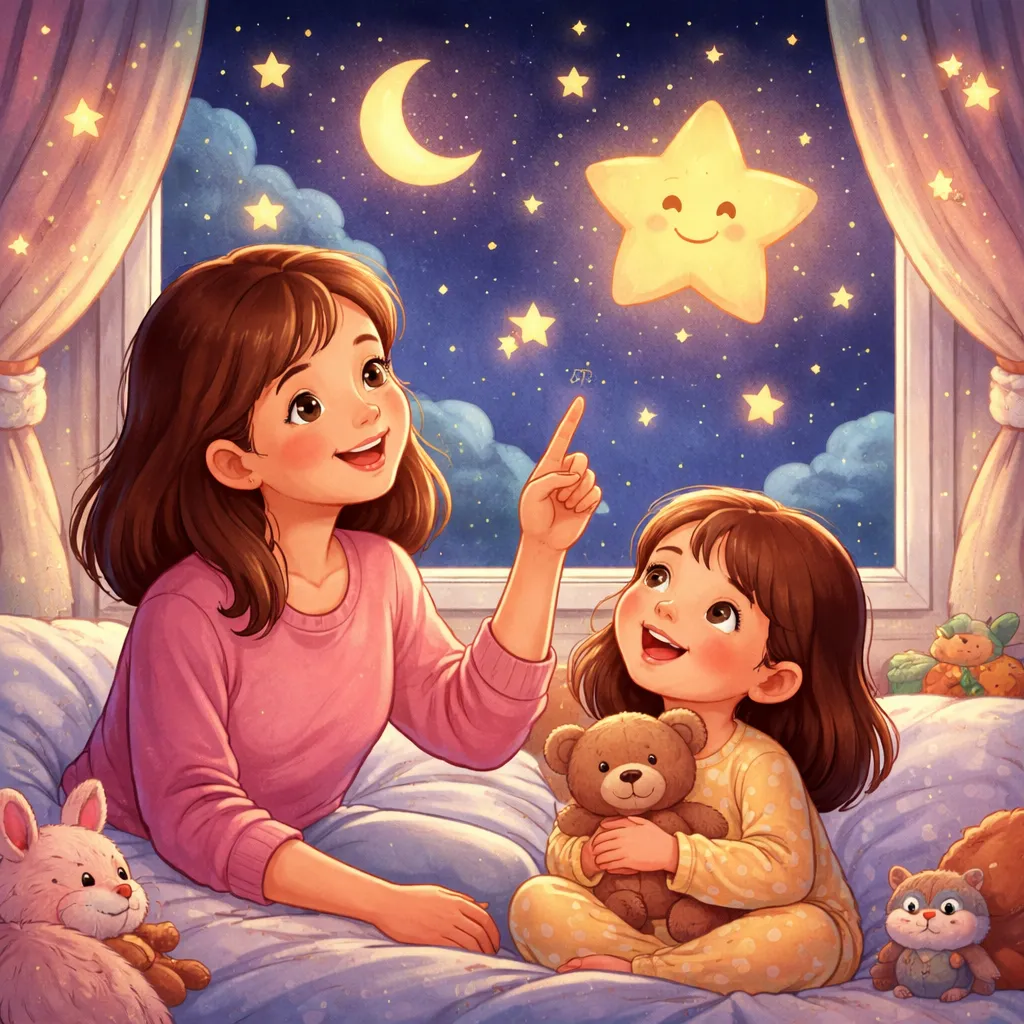

What is the Rhyme "Twinkle, Twinkle, Little Star"? "Twinkle, Twinkle, Little Star" is one of the most beloved English nursery rhymes in the world. It is a gentle, melodic song that asks a simple question about the stars in the night sky. For generations, parents have sung this lullaby to their little ones at bedtime. Its soothing tune comes from a classic French melody called "Ah! vous dirai-je, maman." You might recognize the same music from other famous songs like "The Alphabet Song" and "Baa, Baa, Black Sheep." This familiarity makes it incredibly easy for children to learn. When you introduce this English song, you are giving your child a key to a vast world of language and music.
The Complete Lyrics of the Nursery Rhyme Let's look at the full text of the song. Reading the words together is the first step to understanding. The lyrics are simple, repetitive, and full of beautiful images.
Twinkle, twinkle, little star, How I wonder what you are! Up above the world so high, Like a diamond in the sky.
Twinkle, twinkle, little star, How I wonder what you are!
When the blazing sun is gone, When he nothing shines upon, Then you show your little light, Twinkle, twinkle, all the night.
Twinkle, twinkle, little star, How I wonder what you are!
Vocabulary Learning from the Song This English song: Twinkle, Twinkle, Little Star introduces wonderful, descriptive words. Learning vocabulary through music helps children remember words more easily. The melody acts as a memory aid. Let's explore some key words together.
First, we have the verb "twinkle." It describes a soft, flickering light. You can turn a flashlight on and off to show what twinkling looks like. Next, the song calls the star a "diamond." A diamond is a very hard, shiny, precious stone. This comparison helps children understand that the star sparkles brightly in the dark sky. The word "blazing" describes something very, very hot and bright, like the sun. We can talk about how the sun "blazes" during the day, but at night, the stars come out.
Phonics Points to Practice Now, let's look at some fun sounds. Focusing on phonics helps children connect letters with their sounds. This English song: Twinkle, Twinkle, Little Star is perfect for this.
Listen to the beginning sound of "twinkle." It starts with the 'tw' sound. Can you feel how your tongue moves? Practice other 'tw' words like "twin," "twice," and "tweet." This builds strong sound awareness.
Another great sound is the long 'i' in "sky" and "high." Say these words slowly. Hear how the 'i' says its own name? You can find this sound in other words like "fly," "my," and "cry." Pointing out these patterns in a song makes learning feel like a game, not a lesson.
Grammar Patterns We Can Learn Even a simple rhyme has valuable grammar lessons. This English song: Twinkle, Twinkle, Little Star introduces sentence structures naturally. Let's look at the line, "How I wonder what you are!" This expresses a feeling. You can use this pattern in daily life. Say to your child, "Look at that big truck. How I wonder where it is going!"
The song also uses descriptive words, or adjectives. "Little star" and "blazing sun" are great examples. "Little" describes the size of the star. "Blazing" describes the heat of the sun. Ask your child to describe things around the house. What color is the "big ball"? Is the soup "hot"? This simple exercise builds descriptive language skills.
Learning Activities to Do at Home Learning should be full of joy and play. Here are some activities to bring this English song to life. You do not need special materials, just a little imagination.
One fun activity is a "Twinkling Hunt." When it gets dark, turn off the lights and use a small flashlight. Shine it on the ceiling and say, "Twinkle, twinkle, little light." Move the flashlight around. Let your child hold it and make the light "twinkle" on and off.
Another great idea is the "Diamond in the Sky" craft. Give your child some dark blue or black paper. Then, provide star-shaped stickers or small pieces of aluminum foil. Let them stick the "stars" onto their "night sky." As they work, sing the song together. This connects the words to a fun, hands-on activity.
Printable Materials for Learning Having some simple printables can make learning this English song: Twinkle, Twinkle, Little Star even more engaging. You can easily create these at home.
A set of picture flashcards is very useful. On one card, draw or print a picture of a star. On another, a diamond. On a third, a shining sun. Show the card to your child and say the word. Then, see if they can point to the correct card when you sing the song. For example, when you sing "Like a diamond in the sky," hold up two cards and ask them to choose the diamond.
You can also create a simple lyric sheet. Print the words in a large, clear font. Let your child decorate the borders with star drawings. As you sing, you can point to the words. This helps build early literacy skills and shows them that the marks on the page have meaning.
Educational Games for Deeper Learning Games turn passive listening into active participation. They are a wonderful way to reinforce the language from the English song: Twinkle, Twinkle, Little Star.
Try the "What Am I?" game. Think of something from the song. Say, "I am very, very hot. I shine during the day. What am I?" Your child guesses "the sun!" Then, switch roles. Let your child think of something, like a star, and give you clues. This builds critical thinking and comprehension.
Another simple game is "Finish the Line." You start singing a line from the song but stop before the last word. For example, sing, "Twinkle, twinkle, little..." and wait for your child to shout "star!" This game is excellent for building memory and confidence. It proves to them that they know the song and its words. These small successes are incredibly motivating for young language learners.