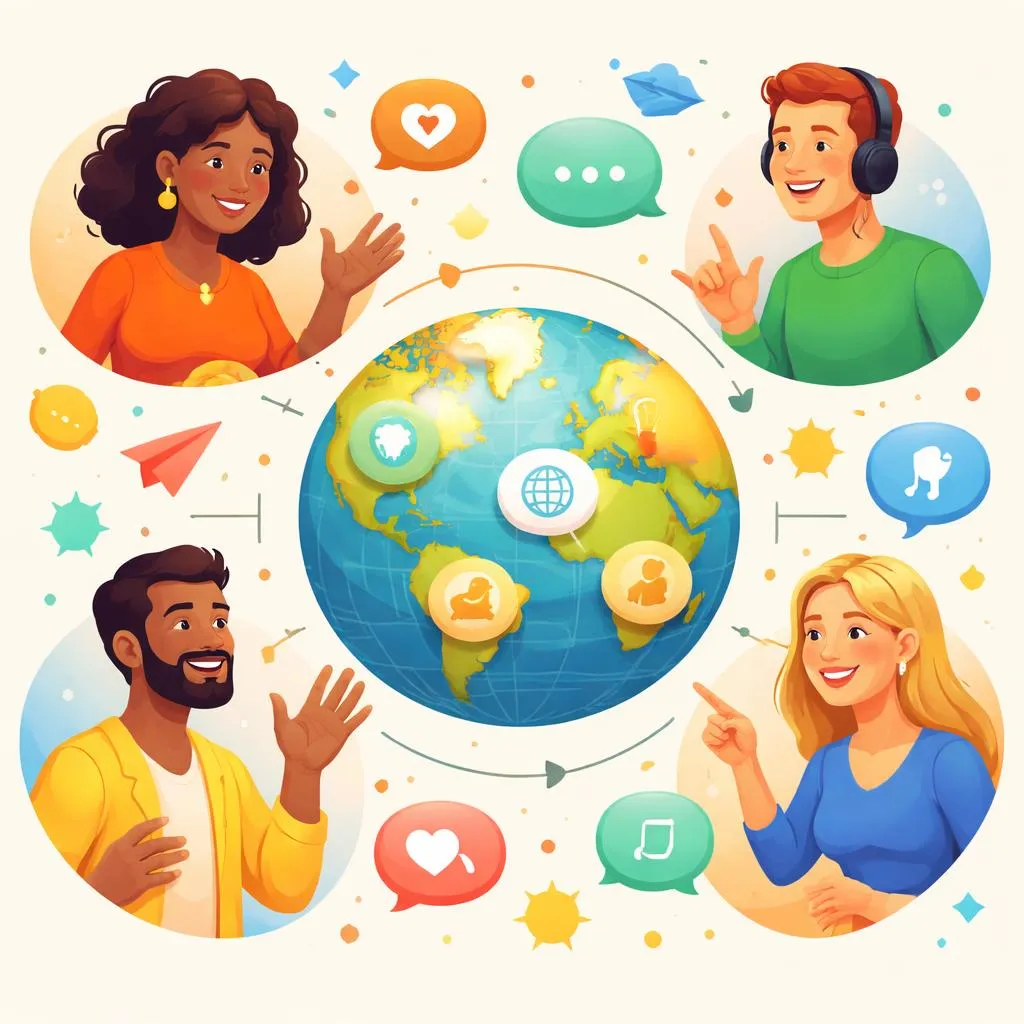

Languages are everywhere.
People speak different languages. People come from different places.
Sometimes, people do not share the same language. They still want to talk.
This is where the idea of a lingua franca begins.
The lingua franca meaning is simple.
A lingua franca is a shared language. It helps people understand each other.
People may not be from the same country. They may not have the same first language.
But they use one language to communicate.
Children understand sharing very well.
They share toys. They share games.
A lingua franca is like a shared toy. Everyone can use it.
The word lingua means language.
The word franca comes from history. Together, they describe a common language.
The lingua franca meaning is about connection.
A lingua franca is not always the first language.
It is often learned later. It is chosen because it helps.
People use it to talk. People use it to work together.
English is a common lingua franca today.
People use English around the world. They use it in travel.
They use it in school. They use it online.
Children may hear English in many places.
In songs. In games. In videos.
English helps people from different countries talk.
The lingua franca meaning is about function.
It is not about being perfect. It is about being understood.
People focus on meaning. They focus on communication.
A lingua franca does not belong to one group.
It belongs to everyone who uses it. Each speaker may sound different.
That is okay.
Children learn that accents are normal.
People speak differently. That difference is natural.
A lingua franca allows many voices.
In the past, other languages were lingua francas.
Latin was used in schools. French was used in diplomacy.
Languages change over time.
The lingua franca meaning stays the same.
It always helps people connect. It always supports understanding.
The language may change. The purpose stays.
Children often play with others.
They may not speak the same home language. They still find a way to talk.
A shared language helps them play together.
Teachers sometimes use a lingua franca in class.
Students come from different places. A shared language helps learning.
Everyone follows the lesson.
The lingua franca meaning is also about choice.
People choose a language that works. They choose what helps communication.
The goal is clarity.
Children do not need long explanations.
They learn by seeing. They learn by hearing.
They notice when language helps.
A lingua franca is used in travel.
People ask for directions. People order food.
They use simple words. They use clear sentences.
The focus is not grammar rules.
The focus is meaning. The focus is understanding.
This makes communication easier.
Children often simplify language naturally.
They use short sentences. They use gestures.
This is similar to using a lingua franca.
The lingua franca meaning includes flexibility.
People adjust their speech. They speak slowly.
They repeat if needed.
Listening is important too.
People listen carefully. They try to understand.
A lingua franca works both ways.
Children learn that communication is shared work.
One person speaks. One person listens.
Both help meaning grow.
A lingua franca is common online.
People chat across countries. They play games together.
A shared language connects them.
Children may type messages.
They use simple words. They use emojis.
They still communicate.
The lingua franca meaning also includes respect.
People respect different backgrounds. They respect different accents.
Language becomes a bridge.
In classrooms, teachers may explain this gently.
They talk about shared language. They show examples.
Children understand through use.
Stories help explain ideas.
A story shows characters from different places. They use one language to talk.
The story feels real.
Children enjoy stories about travel.
They imagine meeting others. They imagine talking.
A lingua franca makes the story work.
The idea also supports cooperation.
People work together. They solve problems.
A shared language helps teamwork.
Children see this in group work.
They share ideas. They explain thoughts.
Language helps cooperation.
The lingua franca meaning is practical.
It is about use. It is about need.
People use what works.
Children learn that language can change.
They see new words. They hear new accents.
Language is alive.
A lingua franca grows with its users.
People add expressions. They shape the language.
This makes it flexible.
Children may mix words sometimes.
This shows creativity. This shows learning.
Meaning still comes through.
Teachers often encourage clarity.
They encourage simple speech. They encourage listening.
This supports shared understanding.
The lingua franca meaning connects language and culture.
People bring their own culture. They meet in one language.
This creates exchange.
Children learn about the world this way.
They hear stories. They hear experiences.
Language opens doors.
A lingua franca is not about replacing languages.
Home languages matter. Local languages matter.
A lingua franca adds another tool.
Children can have more than one language.
They switch when needed. They choose what works.
This is powerful.
The idea of a lingua franca supports inclusion.
More people can join the conversation. More voices are heard.
Language becomes welcoming.
Children feel confident when understood.
They want to speak more. They want to share more.
Language builds confidence.
The lingua franca meaning is simple at heart.
It helps people talk. It helps people connect.
That is its purpose.
Children learn best through experience.
They use language. They listen.
They feel connection.
A shared language creates moments.
Moments of help. Moments of laughter.
Language supports human contact.
Over time, children understand this naturally.
They see language as a tool. They see language as a bridge.
The lingua franca meaning stays clear.
It is about sharing. It is about understanding.
Language brings people together.
And each conversation shows its value.
Children often notice language differences early.
They hear different sounds. They hear different words.
They also notice when people still understand each other.
This is where the idea of a lingua franca feels real.
In playgrounds, children meet others.
Some speak another home language. Some speak the same one.
A shared language helps play begin.
Games need communication.
Rules are explained. Turns are taken.
A lingua franca helps everyone join.
Children often adjust their speech.
They speak slower. They use simple words.
This is a natural skill. It supports shared understanding.
Teachers sometimes point this out gently.
They show how language helps groups work. They show how meaning matters more than perfection.
Children learn through experience.
A lingua franca also appears in songs.
Children sing together. They follow the same words.
Music supports shared language.
Movies and cartoons show this too.
Characters from different places talk. They understand each other.
Children accept this easily.
The lingua franca meaning includes openness.
People try to understand. They do not judge mistakes.
This makes communication safe.
Children feel safe when speaking.
They try new words. They take chances.
Language grows this way.
In school projects, children share ideas.
They explain drawings. They explain plans.
A shared language helps ideas move.
Sometimes children ask questions.
Why do we use this language. Why not another one.
Teachers explain simply.
The answer is about help.
A lingua franca helps many people. It helps learning move forward.
Children see examples online.
Videos show people talking across countries. Comments appear in one shared language.
This feels normal to them.
Technology supports lingua francas.
Games connect players. Messages travel fast.
A shared language makes connection easy.
Children learn that language is flexible.
It changes with use. It adapts to people.
This idea feels natural.
The lingua franca meaning also supports patience.
People repeat ideas. They explain again.
Understanding grows slowly.
Children learn to listen carefully.
They wait. They think.
Listening is part of communication.
Stories about travel show this idea clearly.
A traveler meets others. They find a shared language.
The story moves forward.
Children imagine themselves traveling.
They imagine speaking. They imagine being understood.
Language feels exciting.
A lingua franca helps with friendship.
Children make friends. They share games.
Language connects them.
The idea supports kindness.
People try to help each other. They try to understand.
Language becomes cooperation.
Children learn that mistakes are okay.
Meaning matters more. Effort matters more.
This builds confidence.
The lingua franca meaning stays simple.
It is about sharing words. It is about sharing meaning.
Children understand this through use.
Each shared sentence builds connection.
Each conversation matters.
Language continues to bring people together.