What Is the Rhyme “Twinkle Twinkle Little Star”? The rhyme little star twinkle twinkle little star “ is one of the most famous English nursery rhymes in the world. Many classrooms use this song to introduce English sounds and simple sentences. The melody feels calm and soothing. The words describe a bright star in the night sky. This rhyme supports early language learning through rhythm, repetition, and imagery. It also connects language with science and imagination. The Lyrics of Twinkle Twinkle Little Star Here are the traditional lyrics of the rhyme. Twinkle, twinkle, little star, How I wonder what you are. Up above the world so high, Like a diamond in the sky. When the blazing sun is gone, When he nothing shines upon, Then you show your little light, Twinkle, twinkle, all the night. Then the traveler in the dark Thanks you for your tiny spark, He could not see which way to go, If you did not twinkle so. In the dark blue sky you keep, And often through my curtains peep, For you never shut your eye, Till the sun is in the sky. As your bright and tiny spark Lights the traveler in the dark, Though I know not what you are, Twinkle, twinkle, little star. These verses show poetic language and rhythm. Short lines make reading and singing easy. Vocabulary Learning with Little Star Twinkle Twinkle Little Star “ This rhyme introduces many useful words. The word “star” refers to a shining object in the sky. The word “twinkle” means to shine with a flickering light. The word “diamond” describes a bright jewel. The word “traveler” refers to a person on a journey. The word “curtain” names fabric that covers windows. These words connect with real objects and experiences. Teachers often pair words with pictures to support understanding. Meaning and Explanation of the Rhyme The rhyme describes a small star shining in the night sky. The speaker wonders what the star is. The star helps travelers find their way. The star stays awake while the world sleeps. This poem builds curiosity about nature and science. It also encourages imagination and wonder. Phonics Points in Twinkle Twinkle Little Star Phonics practice appears naturally in this rhyme. The sound /t/ appears in “twinkle” and “tiny.” The sound /s/ appears in “star” and “sky.” The long vowel sound /ar/ appears in “star.” The long vowel sound /ai/ appears in “high” and “sky.” Repeating these sounds strengthens pronunciation. Clapping on each beat supports rhythm awareness. Grammar Patterns in Little Star Twinkle Twinkle Little Star “ This rhyme includes simple grammar structures. The question “What you are” introduces question form. The phrase “Up above the world so high” shows prepositions and direction. The sentence “You show your little light” shows subject and verb agreement. These patterns appear in early reading materials and conversations. Daily Life and Science Connections Stars connect with astronomy and space topics. Travelers connect with journeys and navigation. Curtains connect with homes and daily routines. Teachers can show pictures of stars, telescopes, and night skies. This builds background knowledge and curiosity. Printable Flashcards for Twinkle Twinkle Little Star Flashcards can include star, sky, diamond, traveler, and light. Each card can show a picture and a word. Matching games with flashcards strengthen vocabulary recall. Sentence cards can show phrases like “little star” and “bright light.” Learning Activities Based on the Rhyme Singing with hand motions builds engagement. Hands can move like twinkling stars in the sky. Drawing activities can include night sky scenes with stars and moon. Storytelling activities can describe a traveler guided by a star. These activities integrate language with creativity. Educational Games for Twinkle Twinkle Little Star A star hunt game can hide star cards around the room. Students find stars and say the word in English. A phonics game can focus on /t/ and /s/ sounds. A memory game can match words and pictures. Games make repetition enjoyable and meaningful. Classroom Lesson Structure with the Rhyme A lesson can begin with listening to the song. Next, introduce key vocabulary with images. Then practice phonics sounds through chanting. Finally, sing together and complete a simple worksheet. This structure supports comprehension and retention. Using Music to Support Language Learning Music helps with memory and pronunciation. Melody and rhythm support natural speech patterns. Singing reduces anxiety and builds confidence. Twinkle Twinkle Little Star is calm and repetitive. That makes it ideal for early learners. Printable Materials for Teachers and Parents Worksheets can include tracing words like star and sky. Coloring pages can show a night sky scene. Fill-in-the-blank exercises can practice simple sentences. Printable mini-books can include lyrics and illustrations. These materials support reading practice. Story Extensions with Twinkle Twinkle Little Star A story can describe a child looking at the night sky. The child wonders about stars and planets. The story can include a traveler guided by a star. Storytelling builds comprehension and imagination. Cross-Curricular Connections Science lessons can explain stars and the sun. Art lessons can include star crafts with glitter and paper. Math lessons can count stars and compare sizes. This approach integrates language with other subjects. Technology Integration in Learning Animated videos can show stars twinkling in the night sky. Interactive apps can reinforce vocabulary and phonics. Digital flashcards can appear on tablets or smartboards. Technology adds visual and interactive support. Encouraging Creative Language Use New verses can replace “star” with moon, sun, or cloud. Students can create lines like “Twinkle, twinkle, little moon.” Creative writing builds confidence and grammar awareness. Family Learning at Home Families can sing the rhyme at bedtime. Pointing to the sky during evening walks supports real-world connection. Parents can ask simple questions like “What is in the sky?” This encourages speaking practice. Cultural Background of Twinkle Twinkle Little Star This rhyme originated in England in the 18th century. It connects with poetry and classical music traditions. Learning cultural context adds depth to language study. Language Skills Developed Through the Rhyme Listening skills improve through repeated singing. Speaking skills improve through choral reading. Reading skills develop when lyrics appear in print. Writing skills develop through labeling and short sentences. This rhyme supports balanced language development. Phonemic Awareness and Early Literacy Twinkle Twinkle Little Star supports rhyme and rhythm recognition. Recognizing rhyming words like star and are supports phonemic awareness. This skill is essential for reading development. Building Confidence Through Repetition Repeated singing builds familiarity and confidence. Short lines allow quick success. Positive reinforcement encourages participation. Adapting the Rhyme for Different Levels Beginners can focus on key words and singing. Intermediate learners can analyze grammar and meaning. Advanced learners can write new verses and explore poetry. Flexibility makes the rhyme useful across age groups. Structured Classroom Activities A star chart can track new vocabulary words. A night sky mural can decorate the classroom. Group singing builds teamwork and social skills. These activities create an immersive learning environment. Using the Rhyme for Pronunciation Practice Slow repetition of each line improves clarity. Choral reading supports rhythm and intonation. Individual practice builds speaking confidence. Encouraging Curiosity About the World Stars inspire questions about space and science. The rhyme encourages wonder and inquiry. Language learning becomes a gateway to broader knowledge. Long-Term Benefits of Nursery Rhymes Nursery rhymes improve memory, rhythm, and language patterns. Early exposure supports reading readiness. Music and poetry nurture creativity and emotional expression. The phrase little star twinkle twinkle little star “ opens a door to language, science, and imagination. Songs, stories, and activities based on this rhyme create joyful and meaningful English learning experiences.
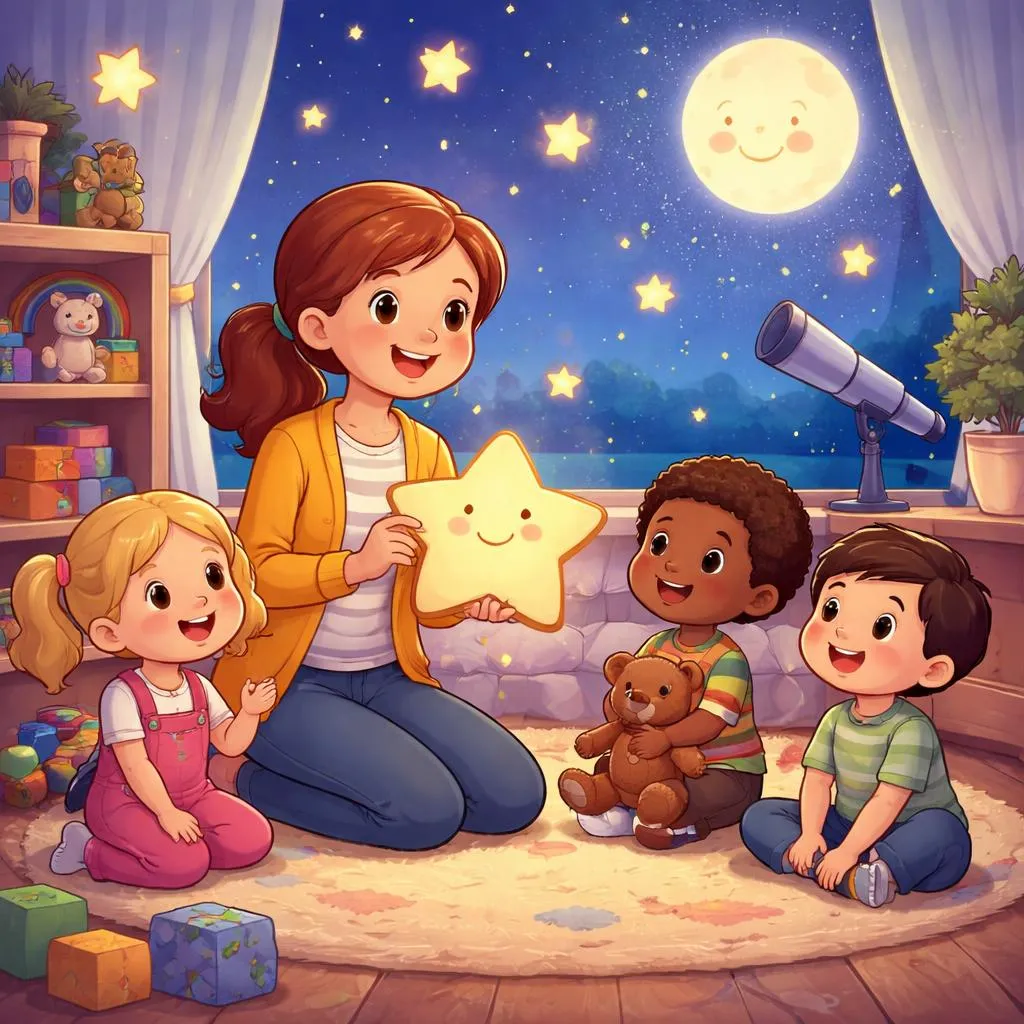
Little Star Twinkle Twinkle Little Star “: A Warm Teacher Guide to Learning English with This Classic Nursery Rhyme
